Degritter ultrasonic record cleaner

Hi y’all, just a few words on what I think is a worthy alternative to the Audio Desk Systeme and KLAudio ultrasonic cleaners.

http://degritter.com/media-kit/

I’ve been a beta tester on the Degritter for the last few weeks, and am happy to offer my opinions and answer any qs for those interested.

I believe official launch is in early May, and at this stage after a couple of quibbles in day to day use, I’m planning to keep my unit, it’s been a pretty good success, and invaluable addition to day to day life as a vinyl addict.
 
Last edited by a moderator:
  • Like
Reactions: LeoR and V_W
The machine is new, the filters are new, and the water is ultrapure reverse osmosis water, free of ions, bacteria, and viruses. My hypothesis is that the degritter dissolves the dirt at the bottom of the groove but isn't able to remove it while the VPI vacuums it up.

The quality of Reverse Osmosis (RO) filtered water is dependent on the quality (total dissolve solids - TDS) of your tap water which can vary from less than 100-ppm to over 600-ppm depending on where you live. It is not uncommon for people to install a demineralizer/deionizer cartridge after the RO filter to get high purity water (<3 ppm TDS). The easy residue test that @rDin recommended is a quick check. Some people do monitor the water TDS, and this meter is about the cheapest accurate meter you can buy: https://hmdigital.com/com-100/. The meter is available from many companies with a price of about $50.

Are you using the cleaning agent that Degritter supplies, and if so, how much are you adding to a tank? Although Degritter may indicate that the cleaning agent used as recommended requires no-rinse, the experience of users indicates otherwise. To determine, clean a record as you have, then dump the cleaning fluid from the tank, partly fill with your RO-water only, and flush the tank to remove most residue from the cleaning agent, and then fill as required with your RO-water and clean + dry the record a 2nd time. The 2nd cleaning should remove/rinse any cleaning agent residue from the 1st clean provided the RO water is reasonable pure. Not that many people buy a 2nd tank so that they can clean/rinse; and the Degritter has a function that stops are the 1st clean without drying to allow the user to install the rinse tank.

Alternatively, switch to a no-rinse cleaning agent concentration, which will provide only wetting with no detergency. In this case, with the right cleaning agent such as Tergitol 15-S-9 (https://www.talasonline.com/Tergitol-15-S-3-and-15-S-9?quantity=1&size=32&quality=15) used at only 0.005%, the cleaning agent concentration is very low and most people use as a no-rinse cleaning solution. Note that 15--S-9 at 0075% will provide wetting rinsing is recommended. If you decide on using Tergitol 15-S-9 (or an equivalent), see Table XXIII in this free book - https://thevinylpress.com/precision-aqueous-cleaning-of-vinyl-records-3rd-edition/ for good directions on how to prepare and use.

Good Luck,
 
  • Like
Reactions: rDin
The quality of Reverse Osmosis (RO) filtered water is dependent on the quality (total dissolve solids - TDS) of your tap water which can vary from less than 100-ppm to over 600-ppm depending on where you live. It is not uncommon for people to install a demineralizer/deionizer cartridge after the RO filter to get high purity water (<3 ppm TDS). The easy residue test that @rDin recommended is a quick check. Some people do monitor the water TDS, and this meter is about the cheapest accurate meter you can buy: https://hmdigital.com/com-100/. The meter is available from many companies with a price of about $50.

Are you using the cleaning agent that Degritter supplies, and if so, how much are you adding to a tank? Although Degritter may indicate that the cleaning agent used as recommended requires no-rinse, the experience of users indicates otherwise. To determine, clean a record as you have, then dump the cleaning fluid from the tank, partly fill with your RO-water only, and flush the tank to remove most residue from the cleaning agent, and then fill as required with your RO-water and clean + dry the record a 2nd time. The 2nd cleaning should remove/rinse any cleaning agent residue from the 1st clean provided the RO water is reasonable pure. Not that many people buy a 2nd tank so that they can clean/rinse; and the Degritter has a function that stops are the 1st clean without drying to allow the user to install the rinse tank.

Alternatively, switch to a no-rinse cleaning agent concentration, which will provide only wetting with no detergency. In this case, with the right cleaning agent such as Tergitol 15-S-9 (https://www.talasonline.com/Tergitol-15-S-3-and-15-S-9?quantity=1&size=32&quality=15) used at only 0.005%, the cleaning agent concentration is very low and most people use as a no-rinse cleaning solution. Note that 15--S-9 at 0075% will provide wetting rinsing is recommended. If you decide on using Tergitol 15-S-9 (or an equivalent), see Table XXIII in this free book - https://thevinylpress.com/precision-aqueous-cleaning-of-vinyl-records-3rd-edition/ for good directions on how to prepare and use.

Thanks, the reverse osmosis water I use comes from a kidney dialysis unit and is controlled, free of any residue because it comes into contact with patients' blood. I'm using two trays and rinsing them. Today I washed two LPs without detergent and they came out clean. We'll see.

 
@Nefro

"...the reverse osmosis water I use comes from a kidney dialysis unit...".

I cannot say for certain that the following is accurate - https://www.netsolwater.com/what-is...-much-water-is-used-in-dialysis.php?blog=5655, but it addresses a TDS limit of 200 mg/L which is close to 200-ppm. The published limits https://mcpur.com/wp-content/uploads/2024/09/Lit_AAMI-Water-Std_Brochure_W3T575827e.pdf are specific to bacteria, etc. This paper indicates that deionizers have been used in the past, but no longer - https://aci.health.nsw.gov.au/__data/assets/pdf_file/0007/306088/ACI-Water-dialysis.pdf.

Allowing a few drops of the water to evaporate is a very simple test, and that way it's easy to eliminate the water as a source. However, enough has been said, and will not be repeated.
 
  • Like
Reactions: mtemur
I used to maintain some small RO units as part of my job. The early models from Purite had a ball valve in the tank to cut off the mains feed when the tank was full. The valve itself was above the water level but when it failed with age mains water would drip into the tank of purified water, though flow was still cut off when the usual level vas reached and as the conductivity meter to monitor quality was on line feeding the tank there was no obvious indication anything was amis.
The devil is in the detail.
 
That sounds like a reasonable hypothesis and from what you've said thus far my speculation is that the record has residue on it after the wash. While the Degritter has filters, they are only so effective. When the record drys, remaining residue from the water on the record gets dried onto the record.

If I recall correctly the Degritter II has a second tank for a clean water rinse -- there is a reason they added that function. I think you swap in the rinse tank after the wash. From my experience, rinsing is a very important step. Ideally the rinse tank should take distilled or purified water and be changed regularly. Then dry with the Degritter after the rinse.

Are you rinsing with the Degritter II? If no, then try that with a fresh tank of distilled or pure water. If yes, consider an alternative: Although it is a bit inconvenient, wash a record in the ultrasonic Degritter, do not dry it, then use the VPI to do a clean water rinse immediately after the wash. No need to re-wash on the VPI. You may want to swish the rinse water around the record before vacuuming.

PS @djsina2 's suggestion to get a TDS meter is worthwhile.
you don't swap it in it sits externally then draws from it. Cumbersome to say the least and IMO erodes the all-in-one convenience of this over priced machine. My opinion on these things is the tech is still evolving and if you buy one be prepared to live in an early adopter environment when it comes to support and questions on functionality. To me paying $3k+ for a machine to clean records is a waste of money and better spent upping your cartridge budget. I have about 300 records, most of them are newish, maybe a tiny % of records that were super dirty and would truly benefit from this type of cleaning apparatus, mind you I've owned the Degritter Mark II. Is it a nice to have? Sure...Does it satisfy audiophile nervosa more than anything, absolutely. To me the most convenient thing about this unit was the fact you can clean while you sit on your couch, but there are new units that do the same thing now (knosti, humminguru Nova).

The reality is, we don't need to clean our records as much as we want to think we do if they are being stored properly (or unless you smoke have pets and live like a complete slob ) so investing top $ into a machine is law of diminishing returns as they say..But spend your money as you see fit, this type of behavior is par for the course in this hobby anyway I suppose. We often spend (waste) money to acheive only marginal improvements in audio, this is a prime example.. And splitting hairs over water is ridiculous, use distilled water case closed..I personally found the machine to be a waste of money considering the reality of how much we need to clean records. Now if it were half the price it is thats a different story I might pay for the convenience.

PS- the only surfactant you need is the L'Art Du Son concentrate, it's hands down the best out there and leaves no residue in my experience.
 
Last edited:
  • Sad
Reactions: abeidrov
My opinion on these things is the tech is still evolving and if you buy one be prepared to live in an early adopter environment when it comes to support and questions on functionality.
Ultrasonic tanks have been used to clean records for over 50-years based on my personal conversations with people who did. However, UT has only recently become mainstream. In the meantime, the major UT-DIY players like Elmasonic have excellent customer support, and the various forums all discuss how well DG and HG respond to customer questions and problems
And splitting hairs over water is ridiculous, use distilled water case closed..
Not everyone has easy, cheap access to distilled water. It's readily available and cheap in the US, but not in the EU/UK which are much more energy conscious, so they have ready + cheap access to demineralized water. For record cleaning, either is acceptable.
The reality is, we don't need to clean our records as much as we want to think we do if they are being stored properly (or unless you smoke have pets and live like a complete slob ) so investing top $ into a machine is law of diminishing returns as they say..But spend your money as you see fit, this type of behavior is par for the course in this hobby anyway I suppose. We often spend (waste) money to acheive only marginal improvements in audio, this is a prime example..
Everyone's journey in audio is different, and that also goes for record cleaning. Some are perfectly happy just using a AT6012 brush, others use a full wet process such as a Spin-Clean, others want the speed of a vacuum-RCM, others want the convenience of a DG or HG; and then there are those that want the best achievable with multiple steps forming a complete precision cleaning process. The science says that the effort of best achievable can yield beneficial results for those that seek the very best, and those that have, report likewise. You are free to express your opinion, but after all is said and done, what is best, is what is best for you.
PS- the only surfactant you need is the L'Art Du Son concentrate, it's hands down the best out there and leaves no residue in my experience.
The details of that cleaning solution https://soundapproach.com/pub/media/pdfs/l-art-du-son-record-cleaner-instructions.pdf such as the insoluble particles that are an active part of the cleaning would not fare well with any UT tank that is filtered such as the DG, HG and many DIY UT cleaning systems. Additionally, the statement that it "...contains...nor emulsifying additives" would imply it contained no nonionic surfactant since nonionic surfactants are emulsifying agent, which does not make sense. Nonionic surfactants beside acting as wetting agents their primary detergency is as an emulsifying agent. If you are curious, this ebook is a good introduction to the science of soap even if intended for a younger audience - https://www.cleaninginstitute.org/sites/default/files/assets/1/AssetManager/ScienceofSoap.pdf.
 
1766173158729.jpeg

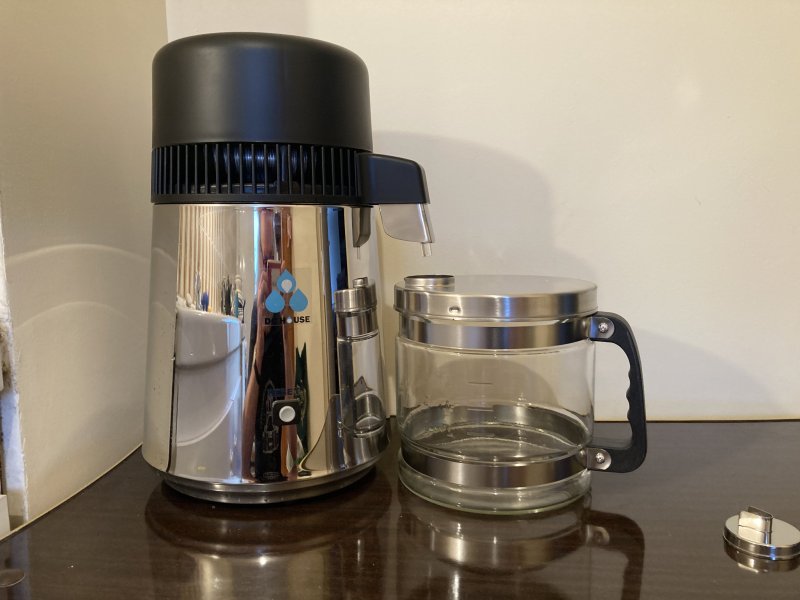
This has supplied my distilled water these last 4 + years. They’re on Amazon but made in China and not all are CE marked, the first one I ordered didn’t get past the EU border but the second one has the magic mark on it, though whether it actually qualifies I haven’t dug too deeply into, just checks with a meter. I run it outside in case of trouble as there’s an outside socket.
 

About us

  • What’s Best Forum is THE forum for high end audio, product reviews, advice and sharing experiences on the best of everything else. This is THE place where audiophiles and audio companies discuss vintage, contemporary and new audio products, music servers, music streamers, computer audio, digital-to-analog converters, turntables, phono stages, cartridges, reel-to-reel tape machines, speakers, headphones and tube and solid-state amplification. Founded in 2010 What’s Best Forum invites intelligent and courteous people of all interests and backgrounds to describe and discuss the best of everything. From beginners to life-long hobbyists to industry professionals, we enjoy learning about new things and meeting new people, and participating in spirited debates.

Quick Navigation

User Menu

Steve Williams
Site Founder | Site Owner | Administrator
Ron Resnick
Site Owner | Administrator
Julian (The Fixer)
Website Build | Marketing Managersing