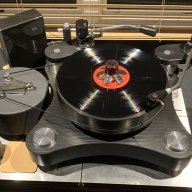



The importance of measuring VTF at the right height when using the Kuzma 4-point etc

Adagio

Well-Known Member
Jun 8, 2019
63
71
123
52
At what height you measure VTF is very important, if you measure above the height of the record surface you will get the wrong VTF.
On some balanced tone arms this isn’t a problem but with the 4-point the most of the arms mass is so above the record surface, that it’s what they call a negatively balanced arm.
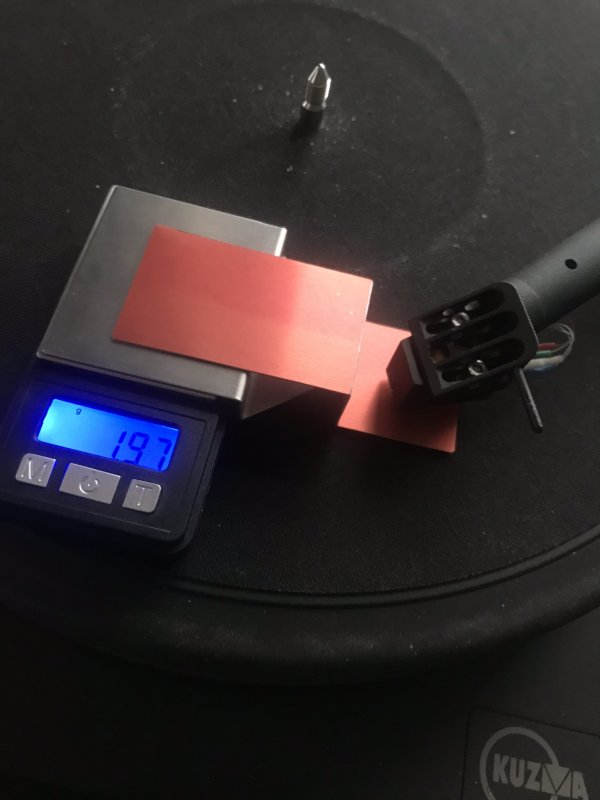
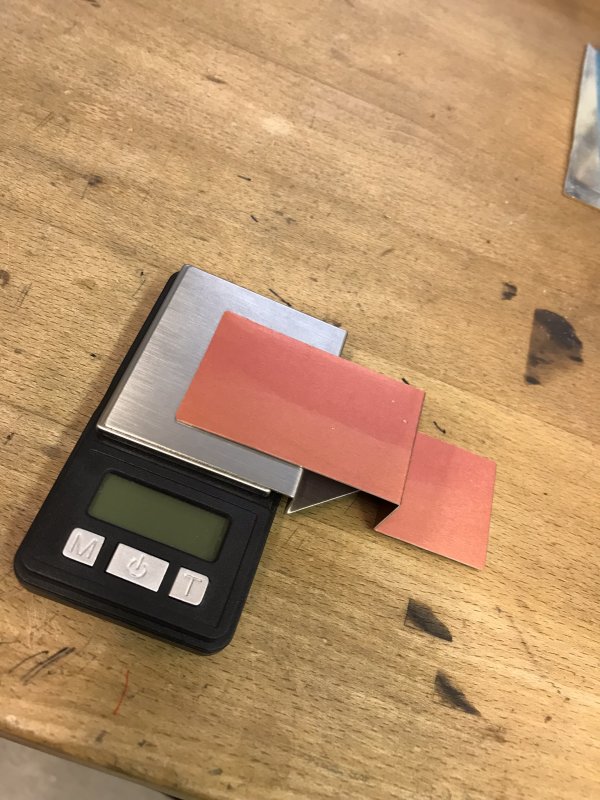
Anyway my gauge was way to high so I modified it slightly to get it to work properly with my 4-point.
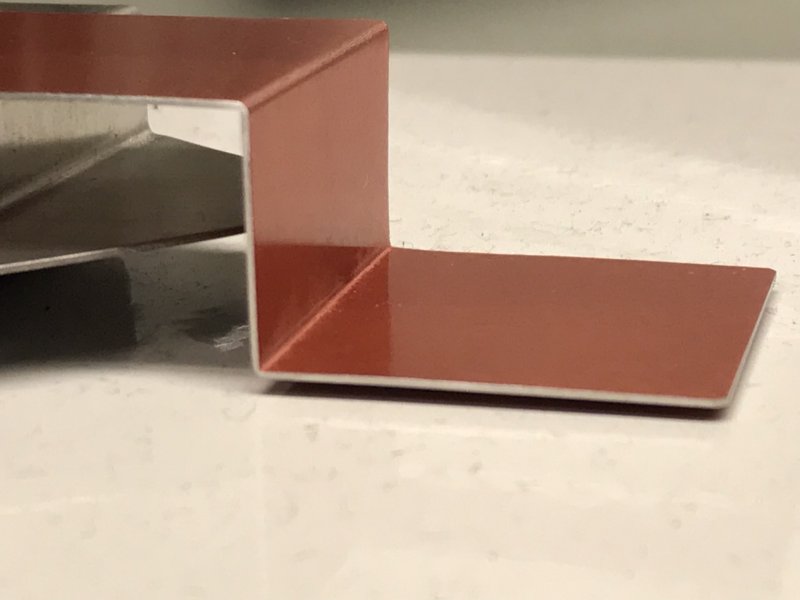
I just cut a piece of thin aluminum and bent it in perfect angle, then glued it on the gauge. Since it automatically resets itself each time it’s turned of the extra weight doesn’t affect it.
 

Attachments

  • 2E2CED9B-174E-44BC-946A-7DAB9405BBEF.jpeg
    2E2CED9B-174E-44BC-946A-7DAB9405BBEF.jpeg
    767.1 KB · Views: 30
  • 3D5123C4-66E8-4DAA-90C9-C2F78AE7532E.jpeg
    3D5123C4-66E8-4DAA-90C9-C2F78AE7532E.jpeg
    269.6 KB · Views: 30
  • 20A70D41-2824-420A-B8C4-BFC971CF7360.jpeg
    20A70D41-2824-420A-B8C4-BFC971CF7360.jpeg
    434.1 KB · Views: 30
I bent original plate of the VTF gauge in order to lower measuring height to vinyl level. Works fine.
 
  • Like
Reactions: Adagio
I suggest counterbalancing that scale surface. The strain gauge may throw off bad readings when it is subject to rotational torque force as your setup surely will do more than the original design. Other than that, you are perfectly right to want to improve what you have for a tonearm that has its center of gravity so much higher than the horizontal pivot axis!
 
  • Like
Reactions: sbo6
I suggest counterbalancing that scale surface. The strain gauge may throw off bad readings when it is subject to rotational torque force as your setup surely will do more than the original design. Other than that, you are perfectly right to want to improve what you have for a tonearm that has its center of gravity so much higher than the horizontal pivot axis!
Well 5g is the reference weight and is measures the Sam wherever I use it on the scale. 2.0 g is much less so I think is still accurate.
 
Well 5g is the reference weight and is measures the Sam wherever I use it on the scale. 2.0 g is much less so I think is still accurate.
It's possible but the degree of accuracy (or inaccuracy) may not be linear up to 5g, the cart being at ~2 g.
 
If you use a thick(ish) mat on your platter you can measure the height of the stylus on a record, including that mat, then remove the mat and use thinner ones/spare records to elevate the scale's platform to the exact same height as the stylus on the normal mat + record. My mat is 5mm height: by using a 3mm mat, my scale sits at exactly the same height as the stylus normally does.
 
That would be correct for a static balanced tonearm, but a dynamically balanced would probably not care.. I can check VTF on my SME V with different mat thickness and see..V sets VTF be a spring so it is not statically balanced.

The effect on angle on a static arm is estimated by simplified trigonometry.. 1mm thicker mat affects the VTF by a factor of 0.9999906 , so no scale would notice it…
 
Last edited:
That would be correct for a static balanced tonearm, but a dynamically balanced would probably not care
Incorrect. How VTF is applied, whether by spring or counterweight, does not matter. It only depends on the location of the arm’s CG in relation to the vertical pivot. If the CG lies below the pivot, the arm is said to be in stable balance so that upward displacement of the arm causes an increase in VTF. If the arm CG lies above the pivot, it is in unstable balance so that upward displacement of the arm causes a decrease in VTF. If the arm CG is coincident with the pivot the arm is in neutral balance so that no change occurs in VTF for any vertical position of the stylus.
 
The question I answered was not during dynamic behavior,but static position when setting the VTF, I think that will be different.
Considering that an arm is balanced to a given VTF with a slope and stylus below playing surface, bringing the arm horizontal at level with the playing surface will give a higher VTF . So correct VTF is set on a static arm with the stylus at the correct playing level.
 
I think we can all agree that changes in vertical tracking force are audible. I am curious that there is there so much focus on an actual number and how accurate it is. Once you’re close to the middle of the range of the manufacturer’s recommended tracking force, why not just make very small adjustments until it sounds right? Why not judge by listening as the record is playing rather than try to reach some target value? And then just leave it at that. If you want to record it for later reference, just use the same scale for repeatability. Accuracy is less vital than consistency.

Whenever I am setting up a cartridge, I do everything by listening, except for alignment. For me, the target is what sounds right not adjusting to some specific number.

There seems to be enough variance from sample to sample to simple repeat settings. I find I want to adjust each individual cartridge by ear for best performance.
 
Last edited:
index.php
VTF and crosstalk AT33PTGii
 
index.php
VTF and crosstalk AT33PTGii
Dear BC, very interesting graf. Over the last weeks i have been working on optimizing crosstalk on my lyra Atlas Lambda-SL and reached values below -40db both chanels. I related it more to that i changed the VTA and thought the connection was due to that. But when i then measured VTF it was on 1,5g, wich is well below range of 1,62-1,72. When i then adjusted VTF the astouneshing crosstalk values went back to normal around -35db. The Kuzma 4Point has that anoying thing with VTF being severely influenced by VTA. Now i have worked by starting with leveling the arm measured on the headshel. Then adjusted the crosstalk values to having the phase aligned. Then by measuring the THD 3rd order distortion of interest i adjusted the VTF to lowest value that does not change that distortion part. I got around to 0,5 and 0,2 3rd harmonic distortion and total about 3% each chanal. I have no idea if these numbers are good or bad.
Any thoughts?
 
Which test record are you using?Numbers seem low for any record I think.Maybe if you change VTA your crosstalk improves again , higher aVTF would lower VTA/SRA
 
Feickert Adjust+ Pro software and the record that came with it.
The thing is, my observations are that when i lower the tonearm the crosstalk gets better values, when the VTF is then measured it is well below the recomended 1,62-1,72g.
 

About us

  • What’s Best Forum is THE forum for high end audio, product reviews, advice and sharing experiences on the best of everything else. This is THE place where audiophiles and audio companies discuss vintage, contemporary and new audio products, music servers, music streamers, computer audio, digital-to-analog converters, turntables, phono stages, cartridges, reel-to-reel tape machines, speakers, headphones and tube and solid-state amplification. Founded in 2010 What’s Best Forum invites intelligent and courteous people of all interests and backgrounds to describe and discuss the best of everything. From beginners to life-long hobbyists to industry professionals, we enjoy learning about new things and meeting new people, and participating in spirited debates.

Quick Navigation

User Menu

Steve Williams
Site Founder | Site Owner | Administrator
Ron Resnick
Site Owner | Administrator
Julian (The Fixer)
Website Build | Marketing Managersing