power conditioner

There are interesting reads on the Furutech NCF as well as GC-303 emf absorption formula used in their passive devices. People can do their own research.

Professional reviewers laud the Furutech power strips. ASR measured no change. Who to believe???? Is it the emf coating. The ncf. Or simply a well made, all copper duplex with solid clamps that hold a cord well. Probably a bit of it all. Is it a filter? If there is no measurable change??? Or has no one figured out what to measure for.

I do believe in a good power strip when one is needed. A good strip with 6 x NCR Rhodium duplex for $2000 is not unreasonable.

I like the Furutech wall mount plate, mostly because they extend well beyond the crumbly drywall that dupex ears rest against that fails and results in a floppy mount.
 
So its $10k for the premium power strip I was thinking of. Still a lot for a power strip.
Are there published spec on what is being filtered and what the attenuation levels are?

The PurePower 6 is ridiculous, the chassis is one chunk of billet aluminum, the receptacles are NOT the GTX NCF, they are a dedicated unit. Even the $2k tp609 is massive overkill with a special mounting system for the receptacles that puts pressure on them from the back. If you try out footers on an AC power strip or distributor, you'll hear significant differences so the chassis and mounting are not trivial.

There are no specs because the NCF and GC303 materials work just by being in proximity to AC power lines so the results aren't as easy to calculate or characterize, otoh regular LCR based EMI/RFI filters can be calculated and simulated... I don't own AC power quality test equipment to share my own experiments, but I've sold dozens of people NCF gear and the feedback is the same across the board. 3 of my customers have shared their measurements and there are significant improvements in power quality, to the point it's not just an improvement but an ~80% attenuation in noise. The best bang for the buck is installing one GTX receptacle in your wall and plugging your distributor into it, everything else has an effect but there are diminishing effects.

I have no idea what ASR is testing but they are very biased and I wouldn't trust them to do fair testing. Despite credentials, we've seen Amir be less than honest when he was here at WBF. There's a thread on testing NCF here too, which showed a significant effect.

At the low end you're looking at <$2k for a distributor, $250 for a wall receptacle, and about $60 each for the least expensive rhodium plated copper plugs. IECs are around $100. The high end NCF plugs are pricey at $380 and $10k for the best distributor is expensive but you can see and hear what you're getting for the money. Relative to high end gear these days it's downright cheap, lol.
 
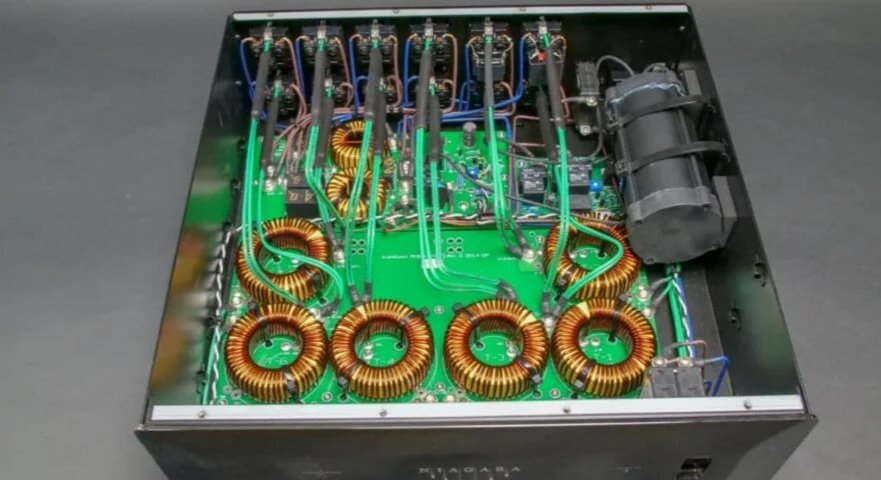
The interior shots show a lot of chokes, so I imagine the cap is used as part of a filter. Being a passive unit, I would not call it a 'conditioner' since I have a pretty strict definition of that term (that most of 'high end audio' seems to not use). The 90A thing is mysterious to me: how would you measure that and what exactly does it mean? I was not able to tell from their website.
Are you sure those capacitors are uesd for low pass filters?

I asked this question because I have no idea how they inject 90A current!!

Do you think it is just marketing hype ?
 
Last edited:
As far as I can tell from a search, the living voice battery supply goes back all the way to 2004! Battery technology has come a long way since then.

I would not want to use lead acid batteries for audio.
Tube technology is older than solidstate amplification so I am not sure lead acid battery is better or Lifepo4.

Audio is not simple and I found most of my theories/ideas were wrong. The only way is testing and listening to both Lifepo4 and Lead acid.
 
  • Like
Reactions: mtemur
As well as harmonic noise, max current delivery. I would love to get a spectrograph and look at the fundimental as well as harmonics from the inverter. They seem to be about $2500 for a basic one.

Measurements also include listening. Taking it to other locations and comparing to other power supplies at other homes. I have 2 reviewers, and 3 other serious audiophile local, with quality systems to listen at. Problem is, most people would rather spend $50,000 for a Stromtank. If they have the $15,000 to get one built up, they have the big money.

And for the most part, if you have a big system, I still really like using utility power properly. Maybe a few point source filters. Or a large wall mount. Amir is an anomaly with the issues he is having. But come on. Hes in Iran. Who knows whats gping on with electrical infrastructure there. My perception is, the biggest danger to audiophiles is the current climate of electrify everything. The electrical grids are straining and Brown outs are all to often. A Brown out or drop in voltage to say 90 volts or less is the real danger for a stereo.
Yes I am in Iran and also in big complex (more than 200 apartments) but I also listened to my friends’ playback in their home.

I think this subject is complex and finding the perfect solution is not easy.

Romy asked his friend to design a perfect sinewave ac regenerator and compared that ac generator to purepower 3000, the test result was funny, purepower’s sound was better but measurements of purepower was less ideal.

Higher THD or lower THD of ac regenerators has no relation to better sound.

Finally the audio is a complex subject and I believe a good designer like Friedrich should put time and effort to design a good AC power regenerator
 
Batteries are both audible and have non-zero impedance, so they need filters and caps to sound ok just like a regular PS. No free lunch.

In most homes the passive Furutech NCF distributors are the best solution. I've compared Equitech vs my modded SurgeX at audio shows and the Equitech is not a noise filter, which is why they and Torus offer noise filters and (non-MOV) surge suppressors to go with their trafos. If you have really noisy AC power you need a decent EMI/RFI filter.
Dave, Furutech ac solution is far from a proper way to perfect sound.
 
The interior shots show a lot of chokes, so I imagine the cap is used as part of a filter. Being a passive unit, I would not call it a 'conditioner' since I have a pretty strict definition of that term (that most of 'high end audio' seems to not use). The 90A thing is mysterious to me: how would you measure that and what exactly does it mean? I was not able to tell from their website.
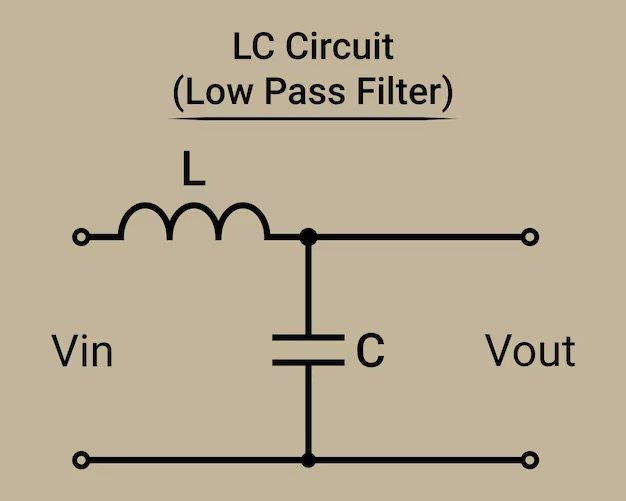
I could imagine an C filter to compensate for the inductive reactive load of the connected devices and this capacitor is designed for max peak current of 90 amps.

P.S
Or a part of dc blocker
 
Last edited:
  • Like
Reactions: Atmasphere
I could imagine an C filter to compensate for the inductive reactive load of the connected devices and this capacitor is designed for max peak current of 90 amps.

P.S
Or a part of dc blocker
I know niagara 5000 does not block dc so those capacitors are not in series.

Niagara 7000 block dc with isolation transformer
 
LC filter :

IMG_5567.jpeg
 
  • Like
Reactions: Atmasphere
Tube technology is older than solidstate amplification so I am not sure lead acid battery is better or Lifepo4.

Audio is not simple and I found most of my theories/ideas were wrong. The only way is testing and listening to both Lifepo4 and Lead acid.
Are you going to go to the trouble to correctly set up a battery system and then a/b lead acid and LIFeP?

I certainly wouldn’t want lead acid batteries in my listening space just for safety reasons alone!

Unless you’ve heard from a reliable source that lead acid sounds better, I wouldn’t waste my time.
 
  • Like
Reactions: Atmasphere
If I were Amir I would land a Torus AVR90 wallmount isolation transformer. I would pull the branches in twisted wire. Twist the hot and neutral only. Ground loose in pipe. I would terminated in a Furutech GTX Rhodium duplex and plug directly into that. Or I would use a Furutech power strip with the RF coating on the inside.

Or, build a battery power supply and do the same. A Torus and a Furutech power strip.

FWIW, I can have Torus factory loaded with Furutech outlets. OMG. A GTX duplex at the wall with a custom power cord to a RM20. A GTX outlet in the first position in the RM20 going to a Furutech power strip with RF coating inside. I bet that would be out of this world better than most any filter setup.
 
  • Like
Reactions: DaveC
Or has no one figured out what to measure for.
Of course they have, although ASR isn't one of them.
You measure Voltage drop across the device while under load. I think you can see where ASR dropped the ball.
Then you measure the 'before' and 'after' power, distortion and output impedance of the amp used as the load (since amps usually draw the most power). The thing about this is the amp must be at full power and one that draws a bit of power at that. It should also be an amp where the line Voltage can be shown to really affect the amp, which is a thing you can sort out using a variac with the proposed amp prior to the actual testing.

You can see that the particular amp loading the device is an important variable which can't be nailed down in actual use. People using tubes will find that AC power is a lot more important to the sound than people using high feedback class D amps. It will also make a difference as to how well the power supplies are regulated in the preamp and sources. Well regulated supplies are pretty resilient to AC power problems; the most you might get is the occasional mechanical noise out the power transformer.
Are you sure those capacitors are uesd for low pass filters?

I asked this question because I have no idea how they inject 90A current!!

Do you think it is just marketing hype ?
They don't 'inject' 90Amps. The marketing text really doesn't tell you what that number really means. So without knowing more about the device I think it unwise to draw a conclusion.
Higher THD or lower THD of ac regenerators has no relation to better sound.
Actually it does, but there are some things to consider. One is that amps with high feedback and low power draw (class D) will be far more immune to AC line issues. Tube amps are usually the most sensitive, especially those lacking feedback and running class A. But an amp that has some sort of design problem might actually 'sound' better with AC power that isn't as clean. Can't say what that problem might be, but I can't think of how a more distorted AC sine wave might benefit a power supply either.

You also need a much larger sample size than 'one'!
P.S
Or a part of dc blocker
A DC blocker, even one that handles a lot of current, is a relatively small device. That cap looks pretty big.
That would mean one coil for each socket and only capacitor for all sockets. I don't think that would be strange, it will have a different function i think
It won't deal with changes in AC line Voltage. Plus you have the issue of the Voltage drop across the one power cord it uses. This is one of my objections to power strips, even glorified ones, as Voltage drop is one of the main reasons people hear differences between power cords, fuses and AC outlets.
Are you going to go to the trouble to correctly set up a battery system and then a/b lead acid and LIFeP?
There wouldn't be much point would there? The inverter circuit would have to be terrible for the battery to actually have an audible effect.

 
  • Like
Reactions: Amir
Dave, Furutech ac solution is far from a proper way to perfect sound.

Why? Can you give me any reasoning or tell me what you think is far better?

You think YOUR solution is anywhere near good? It's NOT. I know because I'VE DONE IT MYSELF. You have no clue what you're talking about and I've been reading your comments and literally laughing.

Can you show us such data?

Apparently you didn't read the rest of my post. There's some info right here on WBF if you want to look it up.
 
If I were Amir I would land a Torus AVR90 wallmount isolation transformer. I would pull the branches in twisted wire. Twist the hot and neutral only. Ground loose in pipe. I would terminated in a Furutech GTX Rhodium duplex and plug directly into that. Or I would use a Furutech power strip with the RF coating on the inside.

Or, build a battery power supply and do the same. A Torus and a Furutech power strip.

FWIW, I can have Torus factory loaded with Furutech outlets. OMG. A GTX duplex at the wall with a custom power cord to a RM20. A GTX outlet in the first position in the RM20 going to a Furutech power strip with RF coating inside. I bet that would be out of this world better than most any filter setup.

This is generally what I recommend.

Torus subpanel > GTX NCF in-wall > NCF power distributor. And use rhodium plated copper connectors everywhere.

If you need or want EMI/RFI or surge protection, Torus can add it.


Batteries have both noise and output impedance, you need to design a filter around it just like any other PS... it's not a magic bullet but of course it can work if the implementation is correct.
 
I think Atmasphere just told us how to measure a power strips performance. It does beg a question. What was the cost of the cord feeding the power strip. And what is the cord.
 
I think Atmasphere just told us how to measure a power strips performance. It does beg a question. What was the cost of the cord feeding the power strip. And what is the cord.

He thinks resistance is the ONLY thing that matters.

I read it, but assumed you had other people data - can you post a link to such data in WBF?

You can look it up if you're interested.
 

About us

  • What’s Best Forum is THE forum for high end audio, product reviews, advice and sharing experiences on the best of everything else. This is THE place where audiophiles and audio companies discuss vintage, contemporary and new audio products, music servers, music streamers, computer audio, digital-to-analog converters, turntables, phono stages, cartridges, reel-to-reel tape machines, speakers, headphones and tube and solid-state amplification. Founded in 2010 What’s Best Forum invites intelligent and courteous people of all interests and backgrounds to describe and discuss the best of everything. From beginners to life-long hobbyists to industry professionals, we enjoy learning about new things and meeting new people, and participating in spirited debates.

Quick Navigation

User Menu

Steve Williams
Site Founder | Site Owner | Administrator
Ron Resnick
Site Owner | Administrator
Julian (The Fixer)
Website Build | Marketing Managersing