Active Crossovers

At 120Hz the sub is likely to attract attention to itself, so it will likely need to be near the main speakers.
I think its set around 70 or 80Hz now. It has the ability to go higher. I only want to leave options.
 
  • Like
Reactions: Atmasphere
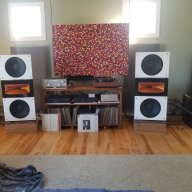
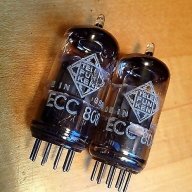
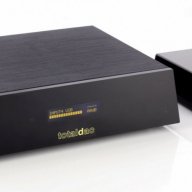
I went with the Marchand XM26 crossover because it is the simplest active crossover that I could find. It uses eight tubes total. I’m using new Genalex Gold Lion 12aX7 and 12aT7’s. This system is just as quiet with unbalanced interconnects as it is with balanced interconnects. No need for the added complexity of a balanced unit here.

If you only use one or two pole filters, the signal goes through three triode stages from input to each output. If you need three or four pole filters or require a notch filter, then the signal goes through four triode stages. According to Phil there are only two blocking capacitors in the signal path. I opted for the 0.5dB 24 step attenuators that he offers. They track within 0.01dB of each other so the imaging never shifts when fine tuning settings. It’s a great sounding minimalist design.

At my request, he customized it using HEXFRED diodes for the B+ bridge rectifier. Those provide the best midrange and most open high frequencies of any SS diodes that I have used. He also provided the frequency modules with Bessel filters and changed the circuit to optimize the output stage for a 12aT7 instead of 12aX7 so it can drive full output level into a 10k Ohm load. This was important because I use remote controlled attenuators with a 10k Ohm input impedance at the input of each power amp. This arrangement leaves the DAC’s full line level output connected directly to the crossover all the way through the 15’ interconnects to the mono-block amps located at the speakers. Having the volume control after the crossover and interconnects attenuates both the signal and any possible noise from everything upstream of the amps. It’s so quiet that even with my ears right up to the 107dB H.F. driver and 99dB L.F. driver, I can’t tell if the amps are turned on or off.

Before this a Pass Labs XVR-1 crossover was used in the system. Which is no slouch. In comparison the XM26 beats it in every regard. It sounds more transparent, more like a straight wire. With better low-level detail retrieval, dynamics, imaging and much more realistic bass and tone. Overall, everything sounds more real. I can definitely recommend it for a minimalist active crossover solution.

Phil is working on my second custom project as we speak. I have found Phil to be supremely knowledgeable, extremely experienced, patient and flexible to brainstorm with and to work with on various custom solutions.

I know that David Karmeli works with Phil on David's Bionor crossovers, which is a very strong endorsement of Phil's work.

Did you specify for Phil any fancy capacitors for the blocking capacitors in the single path?

As you did I'm looking for a Pass Labs XVR1 to experiment with and to figure out the crossover frequencies I want and the slopes I want. Don uses an XVR1 permanently in his system, and he's an expert with it, so he will be able to help me figure out the crossover frequencies and the slopes, before commissioning Phil to build crossovers with those parameters hard-wired.
 
Phil is working on my second custom project as we speak. I have found Phil to be supremely knowledgeable, extremely experienced, patient and flexible to brainstorm with and to work with on various custom solutions.

I know that David Karmeli works with Phil on David's Bionor crossovers, which is a very strong endorsement of Phil's work.

Did you specify for Phil any fancy capacitors for the blocking capacitors in the single path?

As you did I'm looking for a Pass Labs XVR1 to experiment with and to figure out the crossover frequencies I want and the slopes I want. Don uses an XVR1 permanently in his system, and he's an expert with it, so he will be able to help me figure out the crossover frequencies and the slopes, before commissioning Phil to build crossovers with those parameters hard-wired.
Why not start with something like a digital DSP from DEQX… etc.
Then you can try all the slopes freqs, delays that you’d ever want to try

If you want to got to wires and solder, then you can do that after all the quick A/B testing has been done digitally.
 
Why not start with something like a digital DSP from DEQX… etc.
Then you can try all the slopes freqs, delays that you’d ever want to try

If you want to got to wires and solder, then you can do that after all the quick A/B testing has been done digitally.
Thank you for the suggestion!

I didn't think of digital for this purpose. With the XVR1 I would have the option of just making it the permanent solution, whereas I would not want to introduce digital into the system permanently with a DEQX.
 
Phil is working on my second custom project as we speak. I have found Phil to be supremely knowledgeable, extremely experienced, patient and flexible to brainstorm with and to work with on various custom solutions.

I know that David Karmeli works with Phil on David's Bionor crossovers, which is a very strong endorsement of Phil's work.

Did you specify for Phil any fancy capacitors for the blocking capacitors in the single path?

As you did I'm looking for a Pass Labs XVR1 to experiment with and to figure out the crossover frequencies I want and the slopes I want. Don uses an XVR1 permanently in his system, and he's an expert with it, so he will be able to help me figure out the crossover frequencies and the slopes, before commissioning Phil to build crossovers with those parameters hard-wired.
How many amps are you using?
What speaker are you driving?
 
Did you specify for Phil any fancy capacitors for the blocking capacitors in the single path?
I didn't. He uses Wima capacitors. Metalized Polyester for the blocking caps and Polypropylene film and foil for the crossover frequencies.
I'm sure size and cost is the reason. Boutique caps are typically much larger and may not fit on his standard crossover PCB.
However, as you said Phil is incredibly accommodating and may be able to work out a solution to use "audiophile grade" capacitors for a custom design. He did use HEXFRED diodes for me in the B+ bridge rectifier.
Please let us know how it goes!
 
  • Like
Reactions: Ron Resnick
Can a active analog crossover adjust impulse response to the individual drivers?
 
I didn't. He uses Wima capacitors. Metalized Polyester for the blocking caps and Polypropylene film and foil for the crossover frequencies.
I'm sure size and cost is the reason. Boutique caps are typically much larger and may not fit on his standard crossover PCB.
However, as you said Phil is incredibly accommodating and may be able to work out a solution to use "audiophile grade" capacitors for a custom design. He did use HEXFRED diodes for me in the B+ bridge rectifier.
Please let us know how it goes!
Some Teflon caps can be quite compact.
 
  • Like
Reactions: Barry
I have thought about one of Phil's also. Instead of starting with active, i was thinking a Sublime. Easy to swap cards that cost $16 each. Once that was dialed, then maybe a better quality unit.
 
This whole thread started at the wrong end of the horse....

I'm not sure exactly what you want to accomplish with active, multi-amplification? Picking the right crossover is only half the battle. To quote Nelson Pass on his XVR-1 crossover: "Some audio products are designed so that you plug them in and you don’t have to fool around with them for a year before the system is greatly improved (but not this one) …." Here's Jim Smith's comment on Bi-amping: 'If I did this at all, I'd address almost everything else in this manual (Get Better Sound) first'. The answers you need to be successful require experimentation. They won't be coming from this forum.

I'd read the manual for the XVR-1 (link) so you understand how XOs work and what you'll need to do (skip over the middle part ppgs 3-16). It's the best discussion of the benefits and set-up of crossovers, not just his (Oh, XVR-1 can be multi-way). This is not like any other piece of audio equipment. Understand how they work and what you need before you buy one.

My thoughts: 1) It's expensive; 2) it requires a lot of time and patience; 3) Measurements (REW or similar) are mandatory, especially for a 3-way set-up. People don't do this which is why they end up worse than they started. Of course, if you just want to play, have at it!

I have made every mistake in the book on this, with the systems I've had for the past 50 years. I've spent $$$$s modifying crossovers. I've spent hundreds of hours changing filter paraments (XO points, slopes, Qs, and gain). I have spent even more time measuring results wih frequency sweeps, and listening to results.

Maybe I'm just a slow learner..?

You are on the right track with starting with something easy.

XVR-1 Manual
https://www.passlabs.com/wp-content/uploads/2020/05/XVR1_om.pdf

 
Last edited:
This whole thread started at the wrong end of the horse....

I'm not sure exactly what you want to accomplish with active, multi-amplification? Picking the right crossover is only half the battle. To quote Nelson Pass on his XVR-1 crossover: "Some audio products are designed so that you plug them in and you don’t have to fool around with them for a year before the system is greatly improved (but not this one) …." Here's Jim Smith's comment on Bi-amping: 'If I did this at all, I'd address almost everything else in this manual (Get Better Sound) first'. The answers you need to be successful require experimentation. They won't be coming from this forum.

I'd read the manual for the XVR-1 (link) so you understand how XOs work and what you'll need to do (skip over the middle part ppgs 3-16). It's the best discussion of the benefits and set-up of crossovers, not just his (Oh, XVR-1 can be multi-way). This is not like any other piece of audio equipment. Understand how they work and what you need before you buy one.

My thoughts: 1) It's expensive; 2) it requires a lot of time and patience; 3) Measurements (REW or similar) are mandatory, especially for a 3-way set-up. People don't do this which is why they end up worse than they started. Of course, if you just want to play, have at it!

I have made every mistake in the book on this, with the systems I've had for the past 50 years. I've spent $$$$s modifying crossovers. I've spent hundreds of hours changing filter paraments (XO points, slopes, Qs, and gain). I have spent even more time measuring results wih frequency sweeps, and listening to results.

Maybe I'm just a slow learner..?

You are on the right track with starting with something easy.

XVR-1 Manual
https://www.passlabs.com/wp-content/uploads/2020/05/XVR1_om.pdf

Of course its hard to dial in a speaker crossover. If it were easy, we would all make our own. I think a fair amount of people are messing with crossovers to biamp a speaker not designed for it. Or just to DIY a speaker. Sometimes getting your hands dirty is fun. There may be those that think they can do better than the manufacturer. But I think a lot of those people just change caps and resistors but keep the same values.
 
Last edited:
Thank you for the suggestion!

I didn't think of digital for this purpose. With the XVR1 I would have the option of just making it the permanent solution, whereas I would not want to introduce digital into the system permanently with a DEQX.
The point is that the XO is not a subtle and nuanced thing.
The effects are easily hearable and easily measurable.

If time=money, then having a way to sort through good from bad designs seems like it is most easily done with a digital approach.
 
  • Like
Reactions: Atmasphere
You should use something that can be operated intuitively, combined with a good measuring microphone and, for example, a REW program. I would first listen to whether you even like a complete active speaker. They have been building active crossovers for pro audio systems for 30 years. absolutely reliable, no failures.


A used 234xl 400$ is a good start
 
Last edited:
  • Like
Reactions: Holmz
When adjusting a crossover, the old technique was to use pink noise driving the speakers and then look at the various levels and adjust the crossover accordingly. Doing it by playing music can be quite deceptive, with some cuts seeming to sound OK but then you discover that others don't.

These days you can do that sort of thing with an iPad or smartphone (there's an app for that). If your DAC allows a Bluetooth connection it gets pretty easy.
 
  • Like
Reactions: Holmz
When adjusting a crossover, the old technique was to use pink noise driving the speakers and then look at the various levels and adjust the crossover accordingly. Doing it by playing music can be quite deceptive, with some cuts seeming to sound OK but then you discover that others don't.

These days you can do that sort of thing with an iPad or smartphone (there's an app for that). If your DAC allows a Bluetooth connection it gets pretty easy.
Why Bluetooth. Qobuz has pink noise. A laptop with REW and a microphone don't need a connection to the audio system or DAC? Do they?
 
Why Bluetooth. Qobuz has pink noise. A laptop with REW and a microphone don't need a connection to the audio system or DAC? Do they?
The short answer is its easy but wherever you get the pink noise is fine. I have a tiny little old box that generates it the analog way.
The laptop or whatever is only looking at the result.
 
The short answer is its easy but wherever you get the pink noise is fine. I have a tiny little old box that generates it the analog way.
The laptop or whatever is only looking at the result.
One could argue that there are cases where correlating the received signal with the pink noise could be helpful. But that typically requires a file.
And then it also typically requires the pink noise to be injected into/through the system.
 
  • Like
Reactions: Atmasphere
A guy I know told me to try this. $200. Dial the stereo in, then get someone like Merchand or other to build that analog active.

Dayton Audio DSP-408 4x8 DSP Digital Signal Processor for Home and Car Audio

 
  • Like
Reactions: Holmz
Last edited:

About us

  • What’s Best Forum is THE forum for high end audio, product reviews, advice and sharing experiences on the best of everything else. This is THE place where audiophiles and audio companies discuss vintage, contemporary and new audio products, music servers, music streamers, computer audio, digital-to-analog converters, turntables, phono stages, cartridges, reel-to-reel tape machines, speakers, headphones and tube and solid-state amplification. Founded in 2010 What’s Best Forum invites intelligent and courteous people of all interests and backgrounds to describe and discuss the best of everything. From beginners to life-long hobbyists to industry professionals, we enjoy learning about new things and meeting new people, and participating in spirited debates.

Quick Navigation

User Menu

Steve Williams
Site Founder | Site Owner | Administrator
Ron Resnick
Site Owner | Administrator
Julian (The Fixer)
Website Build | Marketing Managersing