What contributes most to 3-Dimensionality of sound systems deliver?

caesar

Well-Known Member
May 30, 2010
4,597
971
1,698
The most 3 dimensional system I have ever heard - BY FAR - is MBL X-treme. So I would have to say that speaker design is most important.

What else in order of importance contributes to 3D? Room? Electricity? Tubes? Cartridges? Cables? Electronics (which)? And, of course, why?
 
Overall quality of the delivered sound, minimal audible low level artifacts that "give the game away"; our brains have to be convinced that the sound is coming from spaces which are not centred in the speaker drivers, and any cue that spotlights that the speakers are working, as compared to just hearing music happening in the general space, will lessen the possibility of "3D" sound.

IME this occurs from a high level of refinement of the system, and not specifically from one component being especially "good" - the very best, and most expensive pieces of gear may fail to deliver on this 'promise' because of a single flaw in the system setup ...

My motto is that one needs to take away the bits of Badness, no matter how tiny and insignificant they may seem - not keep adding Goodness, in the hope that magic might happen with the right combination.
 
Even my 15 year old MBL 116's has that dimensional magic. That's why it will be my last speaker.

And it is all based on the omni 360 degree pods design and implementation.
 
Some music recordings have that 3-dimensionality quality. ...Or QSound or others.

roger-waters-amused-to-death-artowrk.jpg


https://en.wikipedia.org/wiki/QSound
http://www.qsound.com/
__________

Some Pure Audio Blu-ray music recordings are encoded with Auro-3D (9.1-channels).

2L106_box-B.jpg


Pure Audio Blu-ray
• STEREO 192kHz/24bit
• 5.1 SURROUND 192kHz/24bit
• 9.1 Auro-3D 96kHz/24bit
- Produced in DXD (Digital eXtreme Definition 352kHz/24bit) by Lindberg Lyd, Norway

? A Hybrid SACD is included in the box. The compact disc looks like a normal CD and plays on all standard players and computers.


https://en.wikipedia.org/wiki/Auro-3D
http://www.auro-3d.com/
__________

The new BeoLab 90 speakers have some high-tech built into them.

BeoLab-90-12-901-1000x562.jpg


http://www.bang-olufsen.com/en/collection/speakers/beolab-90

THE INTELLIGENT LOUDSPEAKER

BeoLab 90 contains a multitude of technologies. It´s a perfect mix of world-class design and acoustics. This highly intelligent loudspeaker provides you with clarity, range, and a sound staging that is second-to-none. BeoLab 90 features an impressive 360-degree design and a variety of settings to give you mind-blowing sound, regardless of its placement, the room, or your listening position.

CONTROL WIDTH AND DIRECTION OF THE SOUND

Reflections from your room’s surfaces affect your listening experience by altering both the tonal balance and the precision of the placement of instruments and voices. With Beam Width Control you get the power to ensure that these reflections do not interfere with the experience when you sit in the sweet spot. Invite friends to join you, and you can widen the beam to ensure that everyone shares the same sound. The beam can even be expanded to provide full 360º dispersion, if you are hosting a party. BeoLab 90 delivers the sound where you want it. With loudspeaker drivers placed in various directions, you can use the Beam Direction Control to steer the sound radiation to your favourite listening location. These groundbreaking new Bang & Olufsen technologies will give you an experience you get nowhere else.
 
Last edited:
The most 3 dimensional system I have ever heard - BY FAR - is MBL X-treme. So I would have to say that speaker design is most important.

What else in order of importance contributes to 3D? Room? Electricity? Tubes? Cartridges? Cables? Electronics (which)? And, of course, why?

I've heard a number of different designs do a 3d soundstage. certainly some designs have a certain inherent airiness. but actual 3d imaging is way more than driver technology.

it's mostly geometry, appropriate reflection control, and minimizing distortion. no way to rank those factors as they all matter.

by geometry I mean room shape and surface type, speaker position and precision of orientation, and listening position.

reflection control is about controlling reflective hash that obscures detail and allowing soundstage focus and energy.

minimizing distortion is the whole signal path equation including media choice and mix variables......and even power grid.

so basically everything matters.
 
Last edited:
There's a lot of factors. A room and bad speakers can stop it. But the electronics have to allow it. Current capability plays a major roll (and probably not as you think, "bigger" doesn't always mean more, or timely) and quality if things in the signal chain such as capacitors matter a lot.

I think there's some fakers out there though that are able to make it happen by strange changes that wouldn't be "technically correct" from an engineering perspective. Tidal comes to mind, but my limited experience makes me hesitant to be completely sure. It's just from what I heard the lack of solidity was off-putting even though it was 3D and pleasant.
 
There's a lot of factors. A room and bad speakers can stop it. But the electronics have to allow it. Current capability plays a major roll (and probably not as you think, "bigger" doesn't always mean more, or timely) and quality if things in the signal chain such as capacitors matter a lot.
The interesting thing is that the room and "bad", if by this you mean very low order, unambitious, speakers don't get in the way, for me at least. Electronics are king in my world, and the plenty of experiments I've done over the years have demonstrated this over and over again - remarkably "nothing" audio gear can project a full blown 3D sound picture, in any reasonable environment, provided enough is done to eradicate obvious defects and deficiencies in the overall setup. It may not be worth doing this :D, from the POV of the amount of effort and fiddling required, as compared to the sound levels possible, and bass performance, and waiting for stabilisation issues - but it's a worthwhile exercise, to 'prove' a point ...
 
I've heard a number of different designs do a 3d soundstage. certainly some designs have a certain inherent airiness. but actual 3d imaging is way more than driver technology.

it's mostly geometry, appropriate reflection control, and minimizing distortion. no way to rank those factors as they all matter.

by geometry I mean room shape and surface type, speaker position and precision of orientation, and listening position.

reflection control is about controlling reflective hash that obscures detail and allowing soundstage focus and energy.

minimizing distortion is the whole signal path equation including media choice and mix variables......and even power grid.

so basically everything matters.

+1
 
I've heard a number of different designs do a 3d soundstage. certainly some designs have a certain inherent airiness. but actual 3d imaging is way more than driver technology.

it's mostly geometry, appropriate reflection control, and minimizing distortion. no way to rank those factors as they all matter.

by geometry I mean room shape and surface type, speaker position and precision of orientation, and listening position.

reflection control is about controlling reflective hash that obscures detail and allowing soundstage focus and energy.

minimizing distortion is the whole signal path equation including media choice and mix variables......and even power grid.

so basically everything matters.

+2

And room reflections cannot be underestimated. Yet every room is different nonetheless.
 
The most 3 dimensional system I have ever heard - BY FAR - is MBL X-treme. So I would have to say that speaker design is most important.

What else in order of importance contributes to 3D? Room? Electricity? Tubes? Cartridges? Cables? Electronics (which)? And, of course, why?

This is a great question. I think the codec or format you use trumps everything else. An Auro 3D 10.1 setup would be first, choice of speakers ideally are matched, have wide dispersion and all go below 40 hz, would be second, the pre/pro would be third because you need one to run an auro 3d setup and these would be followed by amp, power, cables, and room tuning using treatments/Audyssey.
i don't care how much you spend on two channel, there is only so much "3"D two speakers can give you.

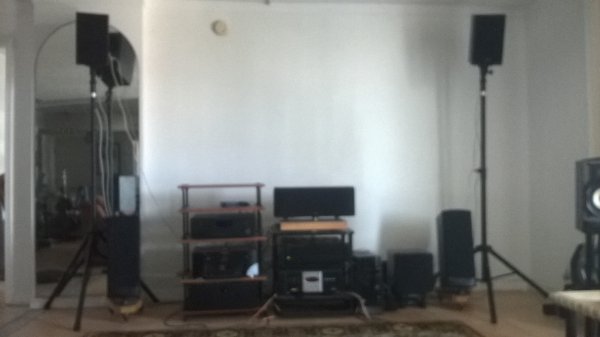
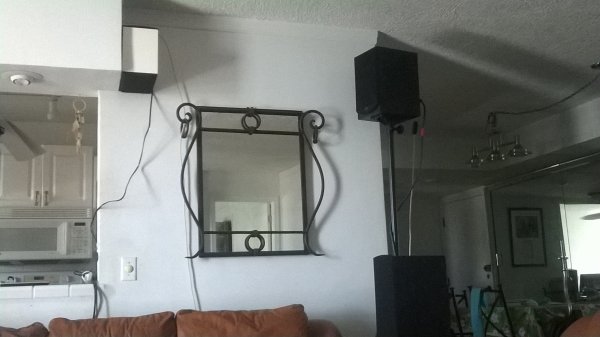
I think I am the only member here with a auro 3d setup so this may be hard to believe but you should really compare in your own room. WP_20160819_001.jpg

WP_20160819_007.jpg
 
i don't care how much you spend on two channel, there is only so much "3"D two speakers can give you.

i respect anyone's passion for multi-channel. i purpose built my room specifically with multi-channel in mind. and i grant that the theoretical potential of multi-channel is considerable.....and I'm cheering multi-channel someday attaining that level.

however; to make a statement like that you need to explain your level of exposure to the highest levels of analog including vinyl and tape.....which can deliver a real world 3D experience when done really right.

and 3D is not the only thing that matters in musical immersion and enjoyment. to me i want degrees of 3D that are musically significant to my experience. beyond that it can become distracting from the 'suspension of disbelief' and not serve the music. of course, that is just my own perspective and YMMV and all that stuff.
 
I've heard a number of different designs do a 3d soundstage. certainly some designs have a certain inherent airiness. but actual 3d imaging is way more than driver technology.

it's mostly geometry, appropriate reflection control, and minimizing distortion. no way to rank those factors as they all matter.

by geometry I mean room shape and surface type, speaker position and precision of orientation, and listening position.

reflection control is about controlling reflective hash that obscures detail and allowing soundstage focus and energy.

minimizing distortion is the whole signal path equation including media choice and mix variables......and even power grid.

so basically everything matters.

Great post, Mike. Though I agree that everything you mention matters, in my experience, it is what I highlighted in BOLD that matters most. My system went from sounding good to sounding convincing by changing nothing except for Jim Smith's efforts with speaker position and orientation, and listening position. Precision in these areas is important.
 
i respect anyone's passion for multi-channel. i purpose built my room specifically with multi-channel in mind. and i grant that the theoretical potential of multi-channel is considerable.....and I'm cheering multi-channel someday attaining that level.

however; to make a statement like that you need to explain your level of exposure to the highest levels of analog including vinyl and tape.....which can deliver a real world 3D experience when done really right.

and 3D is not the only thing that matters in musical immersion and enjoyment. to me i want degrees of 3D that are musically significant to my experience. beyond that it can become distracting from the 'suspension of disbelief' and not serve the music. of course, that is just my own perspective and YMMV and all that stuff.

So let me be specific about auro 3D, I use the upmixer and have yet to experience an auro encoded disc. The thing that just delivered the most shock value was when I was listening to a jazz quartet, I only heard the position of the players left to right and front to back before, but in audo 3d I could hear the position of the bass players fingers moving up and down the frets, it was very disconcerting. You can spot the open end of a clarinet as the player moves it around as he plays. Piano is not only audible from the place in the room but the height of the board where the hammers are hitting the keys. This is primarily experienced with live recordings but some studio recordings too depending on the mix. I find the height channels give you a floor to ceiling sound stage that interlocks with the traditional sound stage we are used to. Until I heard it for the first time I never imagined it was possible.

Prior to that my best 3D experience was in a showroom in NYC (sound by singer?), $20K Eggleston speakers (Stereophile A rated) driven by a Krell amp/preamp combo in a wonderfully treated room. It was mesmerizing, the sound enveloped me like a mist. That was the best experience I had until my current setup.

The Denon 4200 receiver has been knocked down to $700 and the auro plugin is another $200. You would also need to purchase two additional channels of amplification but this would be a nice way to try it with Amazon's 30 day return or crutchfields 60 days.

BTW, the other thing about auro comapred to the other upmixers is that the speakers just disappear, in my room and I can't tell the sound is coming from the speakers in the surround channels unless I put my ear next to them because it seems so natural. I haven't experienced that with any other surround codec from either dolby, dts, or those ones like "cathedral" or "stadium" etc.
 
Last edited:
When the level of 3D depends upon the seating position, and room layout, say, then it probably won't reveal the nuances of recordings to far depths, and when "viewed" outside the general listening area. What I find appealing with getting the quality sufficiently high is that the experience doesn't dramatically vary as one moves around - there is no sweet spot for the 3D presentation. Note, I'm not partial to listening for gimmicky things like the end of a clarinet swirling around, I just want to hear good music happening ;) !

What I like is to have the volume up, and it sounds good, and convincing from the other end of the house. I then walk down the hallway to the room, and the sound just gets more intense, there's more "fat" in the sense of it. I walk to the door of the room, and the intensity goes up quite a few notches; from the door I can "see" the performing space, the players and sounds occupying their correct positions, with the sound appearing to emerge from as far back behind where the speakers happen to be, as was encoded in the recording - this could be hundred of yards, :cool:. If I move into the room and go to a "prime" spot, nothing changes - it's exactly as if I was moving around in relation to real musicians playing in those assigned spots, the experience is the same. So, the "hologram" just "sits" there, and what I do in moving around while listening to it doesn't impact the perception of it significantly.

 
S-Y-M-M-E-T-R-Y

Polar pattern, acoustic and signal symmetry are the foundations of a walk in sound stage. Add to that midbass and deep bass capabilities adequate for pressurizing the volume of the space in question evenly. Without these you can get excellent imaging but only between the speakers. Without proportionate or with strained midbass and only deep bass support you will get a sound foundation but not the wrap around feel. It's more like just creeping sensations about knee height.
 
I know that having 10.1 speakers in the room may sound like a gimmick but being able to hear this as if you are watching the players in your room is what 3D is all about right? Watch how the man moves while he plays and imagine being able to "see" it with your ears:

https://youtu.be/jdqvX-n25gs
 
When the level of 3D depends upon the seating position, and room layout, say, then it probably won't reveal the nuances of recordings to far depths, and when "viewed" outside the general listening area. What I find appealing with getting the quality sufficiently high is that the experience doesn't dramatically vary as one moves around - there is no sweet spot for the 3D presentation. Note, I'm not partial to listening for gimmicky things like the end of a clarinet swirling around, I just want to hear good music happening ;) !

What I like is to have the volume up, and it sounds good, and convincing from the other end of the house. I then walk down the hallway to the room, and the sound just gets more intense, there's more "fat" in the sense of it. I walk to the door of the room, and the intensity goes up quite a few notches; from the door I can "see" the performing space, the players and sounds occupying their correct positions, with the sound appearing to emerge from as far back behind where the speakers happen to be, as was encoded in the recording - this could be hundred of yards, :cool:. If I move into the room and go to a "prime" spot, nothing changes - it's exactly as if I was moving around in relation to real musicians playing in those assigned spots, the experience is the same. So, the "hologram" just "sits" there, and what I do in moving around while listening to it doesn't impact the perception of it significantly.


There is no sweet spot for the 3D presentation or it does not dramatically vary as one moves around? In your experience, does the sound change as it does with seating position in a concert hall, or are you saying that seating position does not matter in the home environment?

I have found that in my room, seating position has a definite effect on bass smoothness and on left/right balance and center image. The sound is still enveloping and there is a sense of presence throughout the room, and images are stable as I walk around, but the quality of the sound does change somewhat. I prefer to sit in one location, but it is still very good elsewhere, even as I approach the plane of the speakers or enter the room.
 
There is no sweet spot for the 3D presentation or it does not dramatically vary as one moves around? In your experience, does the sound change as it does with seating position in a concert hall, or are you saying that seating position does not matter in the home environment?

I have found that in my room, seating position has a definite effect on bass smoothness and on left/right balance and center image. The sound is still enveloping and there is a sense of presence throughout the room, and images are stable as I walk around, but the quality of the sound does change somewhat. I prefer to sit in one location, but it is still very good elsewhere, even as I approach the plane of the speakers or enter the room.
Mainly, it does not dramatically vary as one moves around; the sense of the musical experience remains constant. If I were to focus on some attribute, yes, it would alter in some detectable manner, but there is not a change in the quality sense. Using a true mono recording, as I mentioned some time ago, gives one the sharpest sense of the replay behaviour - the soundstage here is about depth layering, any sense of width is a subjective reaction to the type of sound; the "3D in depth" image always appears directly in front of one, a right angle between you and the plane of the speakers, wherever they are, passes down the centre of the image. And this means that the "hologram" for mono can actually appear outside the area between the speakers; at optimum, you can be, say, as far left of the left speaker as is possible, and the illusion is just as far left as you are - there is no sound coming, subjectively, from between the speakers.
 

About us

  • What’s Best Forum is THE forum for high end audio, product reviews, advice and sharing experiences on the best of everything else. This is THE place where audiophiles and audio companies discuss vintage, contemporary and new audio products, music servers, music streamers, computer audio, digital-to-analog converters, turntables, phono stages, cartridges, reel-to-reel tape machines, speakers, headphones and tube and solid-state amplification. Founded in 2010 What’s Best Forum invites intelligent and courteous people of all interests and backgrounds to describe and discuss the best of everything. From beginners to life-long hobbyists to industry professionals, we enjoy learning about new things and meeting new people, and participating in spirited debates.

Quick Navigation

User Menu

Steve Williams
Site Founder | Site Owner | Administrator
Ron Resnick
Site Owner | Administrator
Julian (The Fixer)
Website Build | Marketing Managersing