

His has been messed with significantly and I suspect something went wrong with the mods…The Audion Dream 845/52b is a tube amplifier that was one of the cleanest and best modern ones. I had the highest-end model Erik Andersson ever made, only a few of them, all silver transformers. It had one drawback: a very sensitive input, and the amplifier favored passive preamps.
The XTA is a sufficient DSP for a home system. I've tested it with Tad, JBL, Yamaha Altec, etc.
The best effect I've heard at home with a DSP is Dolby Lake! It's a wonderful machine, but difficult to set up.
I've used over 10 different crossovers in various systems, from the pricey Westlake with their HR1VF, to a simple Rane with Strathearn studio monitors, 6 ribbons, and 18 bass drivers with 0.5 ohm impedance.
So, it depends on the application, and a simple Rane is enough.









Active Crossovers
- Thread starter Kingrex
- Start date
You are using an out of date browser. It may not display this or other websites correctly.
You should upgrade or use an alternative browser.
You should upgrade or use an alternative browser.
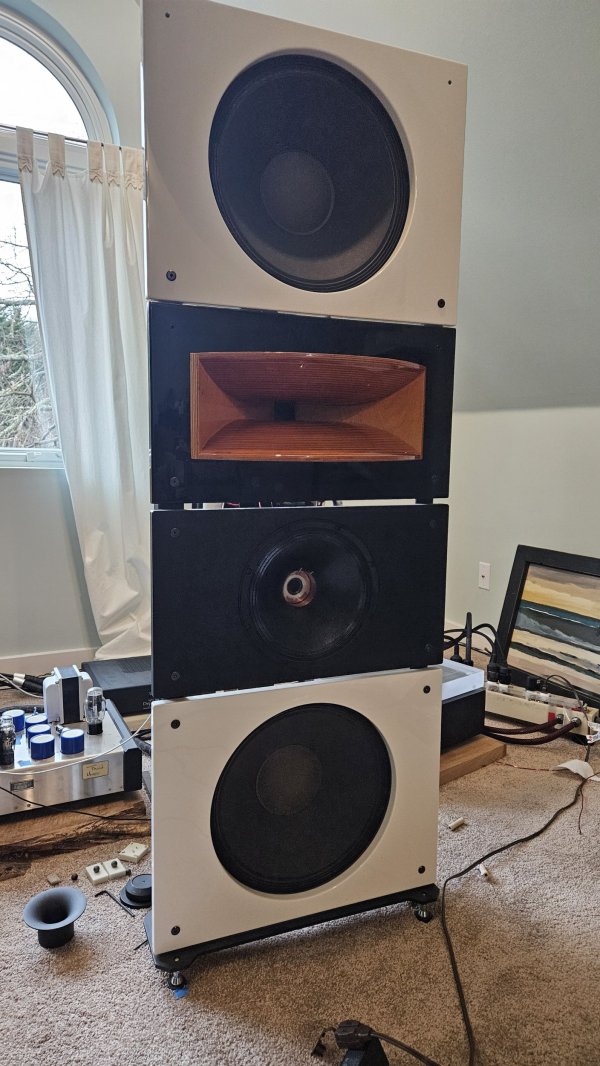
Why isn't this trying to build a partially active system? a tube amp in front of the tweeter horn and 10" Beyma coax driver (please remove the horn funnel). You use the passive crossover 12 dB for horn driver for the 10" Beyma without xover. Then you measure the frequency response of how far the combination plays from the lower limit frequency. then you buy active bass xover then an amp that controls everything 2x 15" + your subwoofer and adapts it to the rest.
I am running such a solution sounds excellent
P.S
Maybe you have to adjust a resistor in front of the horn driver to get flat response
I hold every bet that 10" works down 100-150 hz in your baffle( blue line)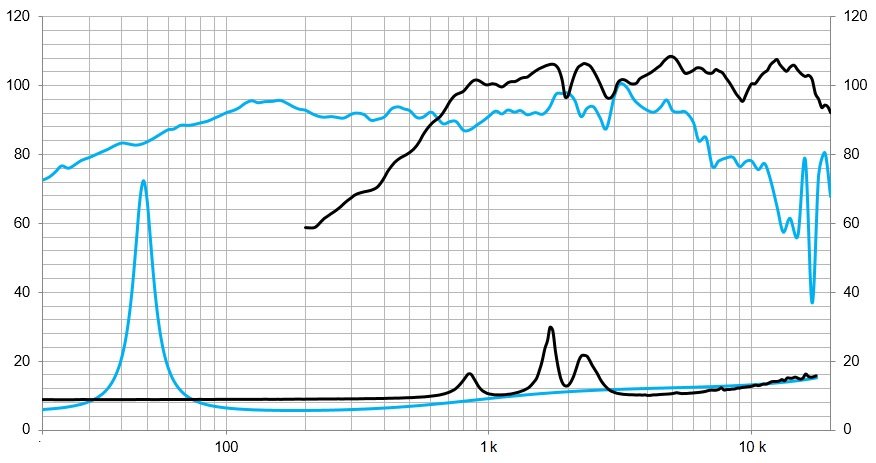
I am running such a solution sounds excellent
P.S
Maybe you have to adjust a resistor in front of the horn driver to get flat response
I hold every bet that 10" works down 100-150 hz in your baffle( blue line)
Last edited:
I think Dayton makes, or used to make, a sub amp with built in low pass xover. Maybe not ideal sonically for the woofers but easy to implement. Another option is the Bryston 10B sub version and only use the low pass section.Why isn't this trying to build a partially active system? a tube amp in front of the tweeter horn and 10" Beyma coax driver (please remove the horn funnel). You use the passive crossover 12 dB for horn driver for the 10" Beyma without xover. Then you measure the frequency response of how far the combination plays from the lower limit frequency. then you buy active bass xover then an amp that controls everything 2x 15" + your subwoofer and adapts it to the rest.
I am running such a solution sounds excellent
P.S
Maybe you have to adjust a resistor in front of the horn driver to get flat response
I hold every bet that 10" works down 100-150 hz in your baffle( blue line)View attachment 163179
Yamaha studio amps have a adjustable too, but a good flexible solution is the spl active xover cost not a legI think Dayton makes, or used to make, a sub amp with built in low pass xover. Maybe not ideal sonically for the woofers but easy to implement. Another option is the Bryston 10B sub version and only use the low pass section.

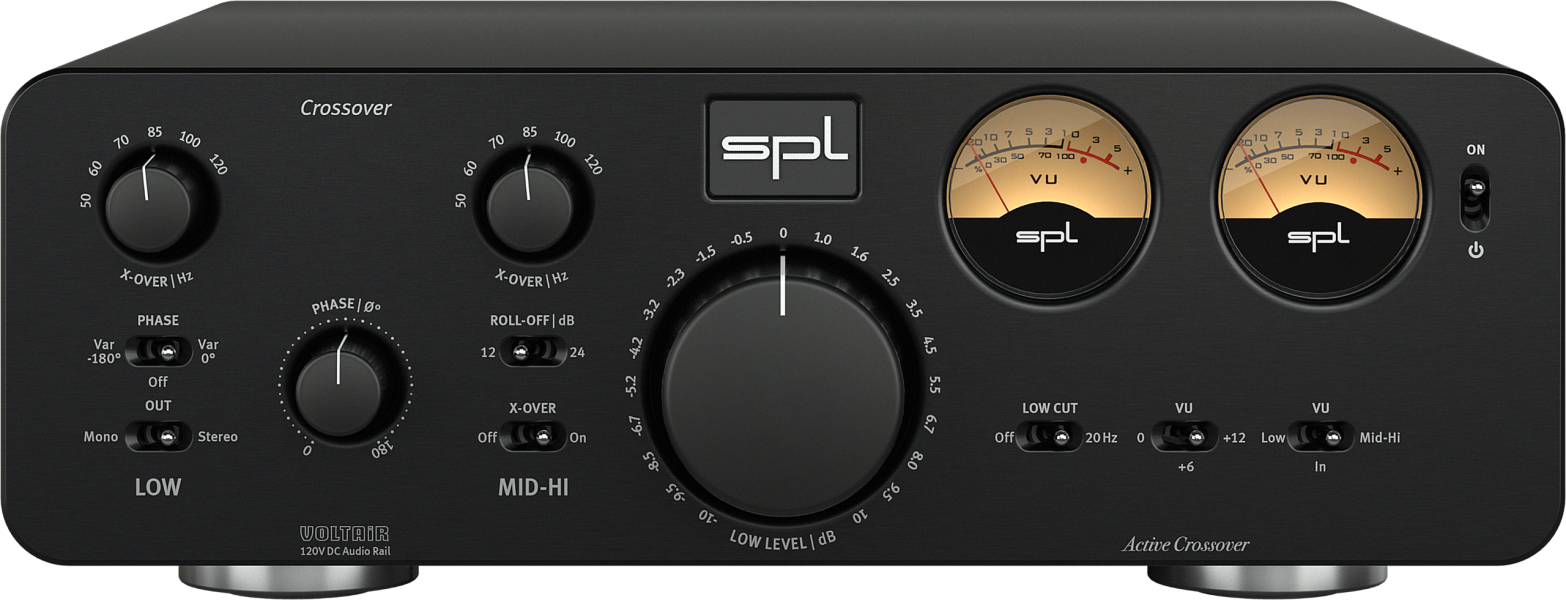
I heard this crossover with the 2nd to top model Live Act Audio speaker...it was not good because it flattened the soundstage and had a quite noticeable transistor character, which wasn't present on a smaller model that didn't use this active xover. I also don't recommend the Bryston for anything other than a subwoofer. When I had the Bryston 10B crossing my Odeon Orfeos to subs it also had a distinct SS character that ruined it for me. The Accuphase is still the best SS crossover I have tried (F25 previously and now an F15L) but still not ideal as they don't have the dynamics of tubes...and sound a bit flat dynamically.Yamaha studio amps have a adjustable too, but a good flexible solution is the spl active xover cost not a leg
Are you saying. Put the horn tweeter though the passive stock crossover. Plug that into the Blade. Take the 10 inch midrange. Wire that direct to the Blade. Both speakers into the blade. The horn and the 10 inch.Why isn't this trying to build a partially active system? a tube amp in front of the tweeter horn and 10" Beyma coax driver (please remove the horn funnel). You use the passive crossover 12 dB for horn driver for the 10" Beyma without xover. Then you measure the frequency response of how far the combination plays from the lower limit frequency. then you buy active bass xover then an amp that controls everything 2x 15" + your subwoofer and adapts it to the rest.
I am running such a solution sounds excellent
P.S
Maybe you have to adjust a resistor in front of the horn driver to get flat response
I hold every bet that 10" works down 100-150 hz in your baffle( blue line)View attachment 163179
Then, take the 15s and plug them into the A3cf and use the Dayton DSP 408 to control the frequency and gain.
FWIW, the horn sub I use is powered by a Dayton subwoofer amp/dsp. 500 watts. I only put it through the DSP 408 to control the impedance my preamp is seeing. And its easier to flip the phase or mute the sub to hear what all is going on.
Also, is there a way to unscrew or remove the tweeter horn that is built into the 10 inch Beyma?
That is what I would have done. The stock speaker has a crossover for doing exactly that and the Blade can drive it since the impedance is easy.Are you saying. Put the horn tweeter though the passive stock crossover. Plug that into the Blade. Take the 10 inch midrange. Wire that direct to the Blade. Both speakers into the blade. The horn and the 10 inch.
But then I'd use the electronic crossover so the subs see less than 80Hz and the mains don't see the bottom 2 octaves or so. That way the Blade will act with more apparent power since it is freed of the need to make energy for those bottom octaves.
Correct...then mesure the frequency responseAre you saying. Put the horn tweeter though the passive stock crossover. Plug that into the Blade. Take the 10 inch midrange. Wire that direct to the Blade. Both speakers into the blade. The horn and the 10 inch.
Yes..I would first do it with the devices you have. before buying something new.Then, take the 15s and plug them into the A3cf and use the Dayton DSP 408 to control the frequency and gain.
I would try it that way, it's a lot of measuring work but it's worth the rocky journeyFWIW, the horn sub I use is powered by a Dayton subwoofer amp/dsp. 500 watts. I only put it through the DSP 408 to control the impedance my preamp is seeing. And its easier to flip the phase or mute the sub to hear what all is going on.
The sub uses a emminence beta 10" a driver you not need so much power
This is very different - some use screws, others use a thread with which the funnel is screwed in. I just hope that they weren't glued additionally, that would be bad. In any case, removing it improves the radiation characteristics of the Beyma.Also, is there a way to unscrew or remove the tweeter horn that is built into the 10 inch Beyma?
I heard this crossover with the 2nd to top model Live Act Audio speaker...it was not good because it flattened the soundstage and had a quite noticeable transistor character, which wasn't present on a smaller model that didn't use this active xover. I also don't recommend the Bryston for anything other than a subwoofer. When I had the Bryston 10B crossing my Odeon Orfeos to subs it also had a distinct SS character that ruined it for me. The Accuphase is still the best SS crossover I have tried (F25 previously and now an F15L) but still not ideal as they don't have the dynamics of tubes...and sound a bit flat dynamically.
Yes, Accuphase is way ahead, modern ones also have measuring systems. Switch on and the speaker is fully configured in your room. Unfortunately it costs so much I classify it as unaffordable. I miss the learning effect and experimenting doesn't make you stupider.
Accuphase DF-65 | Hifi-Wiki
Accuphase DG-58 | Hifi-Wiki
Last edited:
Yes, that is a digital one...they seem very nice but you are basically bound to their DACs I think (maybe they have digital out as well...not sure). I have owned the analog ones, F25 and F15L (current one)...requires more workYes, Accuphase is way ahead, modern ones also have measuring systems. Switch on and the speaker is fully configured in your room. Unfortunately it costs so much I classify it as unaffordable. I miss the learning effect and experimenting doesn't make you stupider.
Accuphase DF-65 | Hifi-Wiki
www.hifi-wiki.de
If I attach the 10 inch direct to the amp, the amp will try and give it power all the way down to as low as it will go. Wouldn't that be a lot of wasted energy. The only limit would be how low it could reach in a baffle. If it were powered as such in a ported box, it might play into the 20s.
50hz in ported box only, in that open baffle higher no energy waste.If I attach the 10 inch direct to the amp, the amp will try and give it power all the way down to as low as it will go. Wouldn't that be a lot of wasted energy. The only limit would be how low it could reach in a baffle. If it were powered as such in a ported box, it might play into the 20s.
The only thing that helps is measuring real conditions, everything else is flying blind
I don't understand???50hz in ported box only, in that open baffle higher no energy waste.
The only thing that helps is measuring real conditions, everything else is flying blind
Isn't there a difference between how low a frequency a driver can reach based upon its size and how its mounted, and the space it in. VS How much energy a amplifier is spending to send power to the driver at all frequency levels.. In other words, even though the driver can not produce sound below 120 hertz in a baffle, the amp might still be giving it as much power as it can to produce a 30 hertz tone. Essentially that ends up being heat and distortion.
That's true but isn't it also true that the place in which the drivers are located is designed for them?I don't understand???
Isn't there a difference between how low a frequency a driver can reach based upon its size and how its mounted, and the space it in. VS How much energy a amplifier is spending to send power to the driver at all frequency levels.. In other words, even though the driver can not produce sound below 120 hertz in a baffle, the amp might still be giving it as much power as it can to produce a 30 hertz tone. Essentially that ends up being heat and distortion.
I have the horn and the 10 inch on the stock crossover. That crossover seems to have a capacitor and resistor to the 10 inch. Isn't that cutting the low frequency off?That's true but isn't it also true that the place in which the drivers are located is designed for them?
Attachments
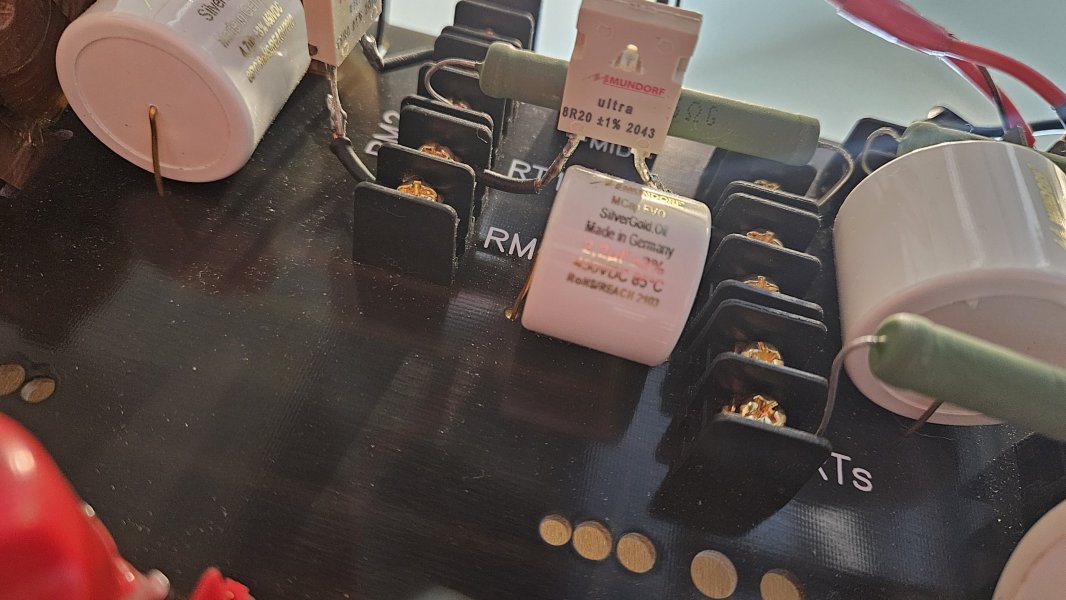
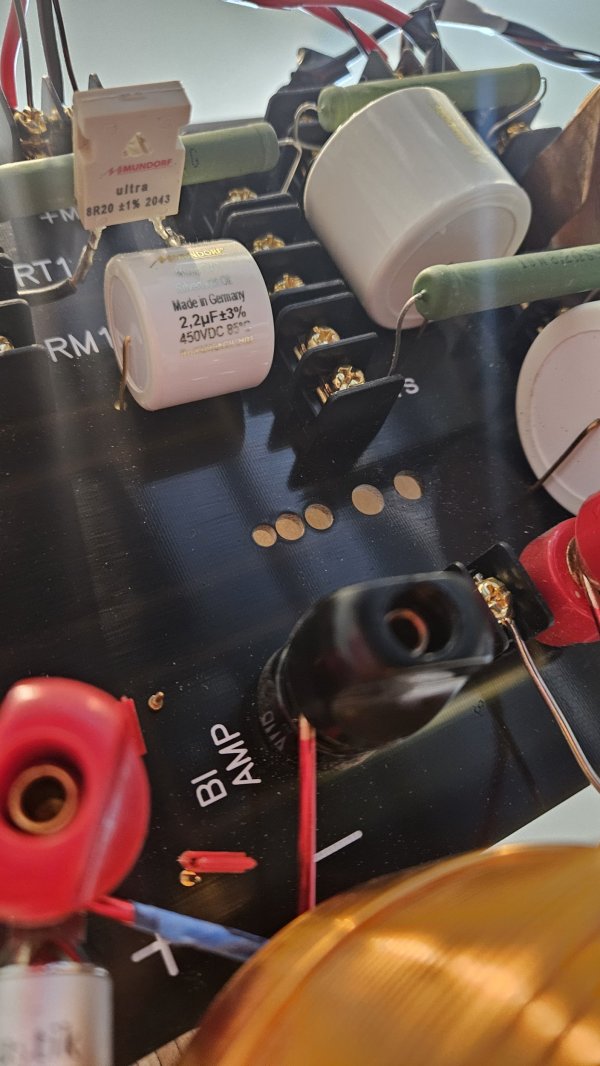
If the cap is in parallel with the woofer, yes. If in series, its keeping bass out.I have the horn and the 10 inch on the stock crossover. That crossover seems to have a capacitor and resistor to the 10 inch. Isn't that cutting the low frequency off?
Any chokes in that crossover? A choke in series with the woofer keeps the highs out of it. In parallel with the midrange or tweeter its shunting lows past the driver.
I have the horn and the 10 inch on the stock crossover. That crossover seems to have a capacitor to the 10 inch. Isn't that cutting the low frequency extension?That's true but isn't it also true that the place in which the drivers are located is designed for them?
Argh!! Sorry, I screwed up and did not read your prior post correctly! Yes, a cap in series with the woofer is cutting off low frequencies.I have the horn and the 10 inch on the stock crossover. That crossover seems to have a capacitor to the 10 inch. Isn't that cutting the low frequency extension?
Similar threads

- Replies
- 24
- Views
- 3K

- Replies
- 1
- Views
- 501
- Replies
- 0
- Views
- 973
 | Steve Williams Site Founder | Site Owner | Administrator |  | Ron Resnick Site Owner | Administrator |  | Julian (The Fixer) Website Build | Marketing Managersing |