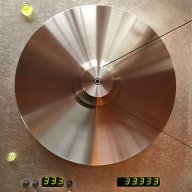
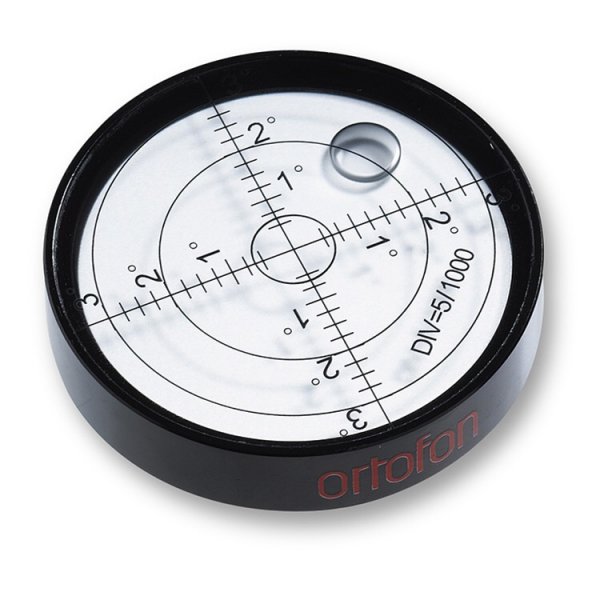
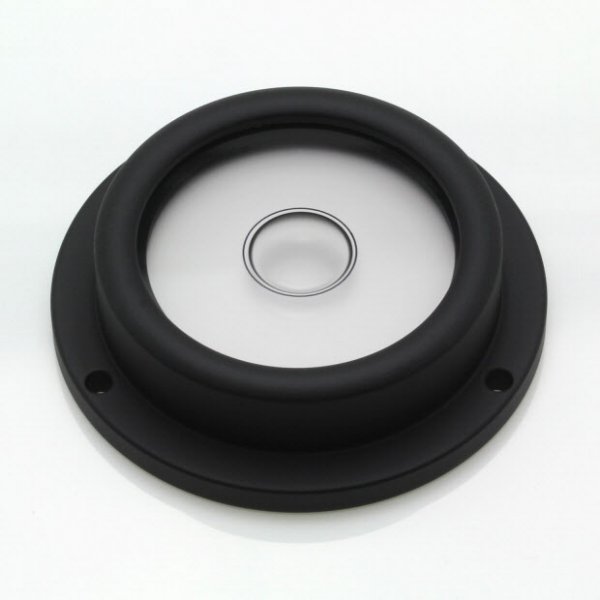
I just use a small 3" bubble level. I sit it on the platter and rotate the platter in a circle very slowly. If the bubble stays in the middle all the way round I am good to go.
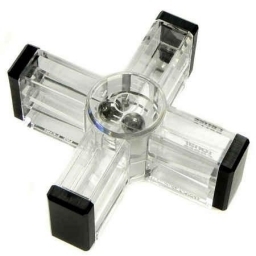
I like the Digi-Pas DWL-80Pro Mini Pocket Size Digital Level Electronic Angle Gauge, on Amazon. It fits into tight spaces better than my ClearAudio bubble level.
I like the Digi-Pas DWL-80Pro Mini Pocket Size Digital Level Electronic Angle Gauge, on Amazon. It fits into tight spaces better than my ClearAudio bubble level.
Best I’ve found is the Mitutoyo 3600. It’s accuracy/repeatability is +/- 0.05 degrees, meaning that repeated measurements at the same spot will be within 0.1 degrees.
Most digital levels are at least 2X worse in accuracy. Don’t judge by the number of decimals on the digital display, that has no relationship to accuracy.
It also means that, with the Mitutoyo, there’s no point in trying to level < 0.1 degrees.
It’s very easy to chase your tail and go crazy trying to get level perfect - you never will - so don’t obsess over it!
I like the Digi-Pas DWL-80Pro Mini Pocket Size Digital Level Electronic Angle Gauge, on Amazon. It fits into tight spaces better than my ClearAudio bubble level.
Accuracy of ± 0.05° at around 0° & 90° ; ± 0.2° at 1°~89°
I would say it‘s going to be within 0.4 degrees, not 0.1. “Around 0” is like 1 degree, where accuracy plummets.
That’s fine, just don’t fret over levels < 0.4 degrees. So if tonearm path, front-back, left-right are all <0.4, that’s as close as you can get with this model.
In my setup I can’t get my head over the platter perfectly, so there’s parallax error if I use a bubble level.
The main thing to keep in mind (with digital levels) is not to try to correct within the margin of error. If the digital gauge is +/-0.1 deg (most are worse), then that means repeated readings will be off by as much as 0.degree, even if it’s perfectly flat.
So don’t worry if your digital gauge is not reading 0.00 when you’re checking the level. And don’t think that because you have two decimals of resolution it means it’s accurate to a hundredth of a degree (it’s not).
What I did was check the level in 3 places:
1) Along the path of the cartridge
2) Front to back (perpendicular to the front of the TT)
3) Left to right (parallel to the front of the TT)
If the difference in angle of (1) vs (2) and (1) vs (3) is within the margin of error of the leveling tool, you can’t get better.
Or you could just look at the angle at (1) and check that it’s within the margin of error of the tool. That assumes the tool was perfectly calibrated on a flat surface - most probably are not. The Mitutoyo has a way to manually calibrate it.