







State-of-the-Art Recordings of Classical Works (SACDs)

1763700541300.png

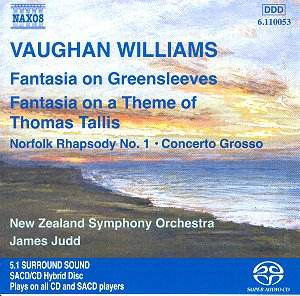
Ralph VAUGHAN WILLIAMS Fantasia on a Theme of Thomas Tallis Norfolk Rhapsody No. 1 In the Fen Country Fantasia on Greensleeves
Concerto Grosso
New Zealand Symphony Orchestra/James Judd (NAXOS 6.110053 SACD) A Relisten

The recordings are lifelike, immediate and detailed. The soundscape is huge, wide and immersive.

Music Web International says: "Although I found the performance of the first work (Fantasia on a Theme of Thomas Tallis) disappointing, the disc as a whole is a good one ... The rest of the disc, however, cannot be criticised, and contains some first-rate performances, including a most atmospheric rendition of the first Norfolk Rhapsody and a very idiomatic and sensitive performance of In The Fen Country, with a beautiful cor anglais [English horn] solo. The other two pieces on the disc are the Fantasia on Greensleeves (a capable performance), and a slightly gruff version of the Concerto Grosso, with rather mechanical playing that reflects the way the piece was constructed (for three sets of players of very different musical ability). The sound is good in all of the works, the Tallis exceptions noted, and is greatly boosted when listened to in surround."
 
1763961564827.png

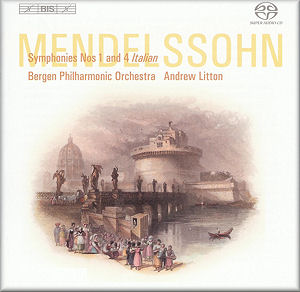
Felix MENDELSSOHN Ruy Blas Overture, Op. 95 Symphony No. 1 in C minor, Op.11 Symphony No. 4 in A, Op. 90 Italian Bergen Philharmonic Orchestra/Andrew Litton (BIS-SACD-1584) A Relisten

Wow, these recordings came alive (via my upgraded DAC) with amazing and realistic timbres, details, bass lines, presence and dynamics! The soundscape is also lifelike, spacious, airy and resonant.

The Gramophone says: "From the hushed polyphony of the slow introduction [of the First] ... to a truly exultant finale, Litton and his spruce Bergen orchestra banish any hint of turgidity. Tempo and character are acutely judged. ... Litton's Scottish likewise combines verve, textual clarity and a vivid sense of atmosphere."
 
1764049713733.png

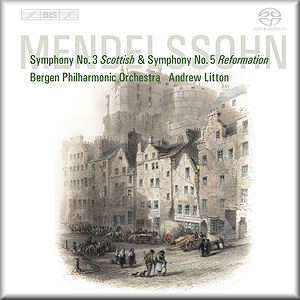
Felix MENDELSSOHN-BARTHOLDY Symphony No.3 in A minor, Op.56 Scottish Symphony No.5 in D minor, Op.107, Reformation Bergen Philharmonic Orchestra/Andrew Litton (BIS-SACD-1604) Play very loud.

This recording of the "Scottish Symphony" may well be the best in my collection - lifelike, exciting, nuanced and very dynamic. The soundscape is totally transparent, huge and three-dimensional..

Music Web International says: "Litton is clarity, dynamism and expressively warm playing personified, but he does tend to enhance the classical origins and early romantic context of these pieces. He draws superb results from the Bergen orchestra and brings out all of the rugged Beethovenian character in the Reformation symphony, but does steer an uncontroversial path which while wonderful for repeated listening and reference, may not have you in palpitations of excitement on first hearing. ... The SACD qualities of the recording are a nice enhancement, as usual opening out the aural picture and giving a real sense of location and involvement."

The Gramophone says: "Litton’s Scottish likewise combines verve, textural clarity and a vivid sense of atmosphere – say, in the whooping Scherzo, with its chuckling, cavorting woodwind and horns, and the haunting lull before the finale’s 6/8 coda (6'22"). The slow movement, again, is sensitively phrased and timed, with no whiff of sentimentality. And throughout – most obviously in the finale’s truculent central fugato – the performance gains from the antiphonal placing of the violins."
 
1764138752806.png

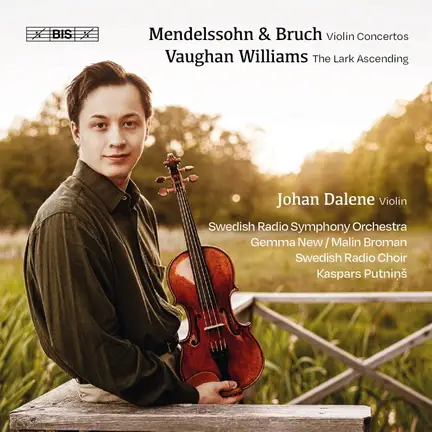
Mendelssohn & Bruch Violin Concertos Vaughan Williams The Lark Ascending Johan Dalene (violin) Swedish Radio Symphony Orchestra/ Swedish Radio Choir/Malin Broman/Gemma New/Kaspars Putniņš (BIS 2610 SACD)

These new recordings are as good as it gets. Dalene's performances here are expressive, heavenly and breathtaking!

The Classic Review says: "In the Mendelssohn, Dalene and the Swedish Radio Symphony Orchestra find a persuasive balance between freedom and form. Nothing feels mannered: phrasing breathes, rubato is discreet, and Dalene’s use of glissandi and portamenti reads as an expressive resource rather than a retro nod. To take one example, hear how elegantly the players slow down to greet the arrival of the second subject in the first movement (track 1, 2’45”). Dalene’s color control is a strong suit; hushed pianissimi retain a central core, and full-throated fortissimi never harden. Technical hurdles are dispatched cleanly. Leading from the concertmaster’s chair, Malin Broman keeps the ensemble tight and textures transparent. The woodwinds dovetail elegantly with the solo line in the finale (track 3, from 0’45”), and the whole performance keeps its buoyancy without tipping into saccharine. ... The Bruch concerto, under conductor Gemma New, shares many of the Mendelssohn’s virtues—clean articulation, handsome tone, and sensible pacing ... Orchestral tuttis are well balanced ... The second movement suits Dalene especially well: the cantabile unfolds naturally, the climactic swell is well shaped without strain (track 5, 6’00”), and the dialogue with the orchestra is sensitively judged. ... The album concludes with Paul Drayton’s 2019 arrangement of Vaughan Williams’s The Lark Ascending, with Kaspars Putniņš conducting the Swedish Radio Choir. This same arrangement was recorded by Jennifer Pike and the Swedish Chamber Choir on Chandos (review), but in different approach; where the Chandos recording favored blend and reserve, this new version is more dramatic, offers a greater dynamic range, and the sopranos sound particularly accomplished. All in all, this is a very enjoyable album."
 
1764221668959.png

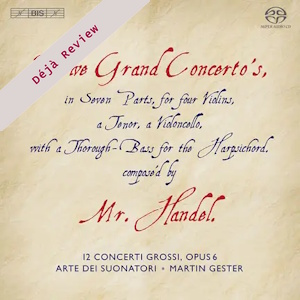
Georg Friedrich Handel Concerti Grossi Op.6 Arte dei Suonatori/Martin Gester (BIS SACD 1705/06) ( 3 SACDs)

These are superb orchestral demo discs with lifelike dynamics, presence and timbres. The soundscape is huge, immersive, resonant and three-dimensional. Details, energy/air/space between instruments/sections are all excellent.

Music Web International says: "Wondering why Martin Gester’s recordings require 3 discs rather than two, it is soon quite clear that all of the timings of every movement are longer in the BIS set. Some of this is due to a more expansive feel for line, a willingness to linger over pauses and allow the gorgeous sonorities of Arte dei Suonatori’s excellent musicians free rein within the pleasantly resonant acoustic in which they find themselves. Indeed, the ‘Radio Hall’ location may not sound very promising, but if anyone were to tell you the setting was some beautiful 18th century church you would believe them immediately. I took one extreme example, the first movement of the Concerto Grossop Op.6 No.8, as this is 6:26 in the BIS recording to 2:32 on Telarc. As you might expect, Pearlman’s tempo is a good deal swifter, and while he observes the first repeat the second is missed out. There are arguments on both sides, and in live performances I’ve often found myself willing the conductor not to turn back a whole wodge of pages so we have to go through many minutes of music for a second time. Here, not only does Martin Gester make the music seem like an entirely different piece, but I would happily sit through any amount of repeats with this kind of playing. There is some variation of course; the theorbo continuo having the chance to extemporise under the strings a little more second time around, though by the time the massed violins get going there precious little else you can hear. There are far more layers going on in the BIS recording however, and more transparent movements like the following Grave have great depth, harpsichord and lute providing a sparkling bed over which the strings can soar and sigh. ... I just have to admit it, this is the best set of Handel’s Concerti Grossi Op.6 I know; Hogwood and Harnoncourt included. With the added benefit of SACD spaciousness it’s what any self-respecting purveyor of classy classics would call ‘a winner’."
 
1764319402424.png

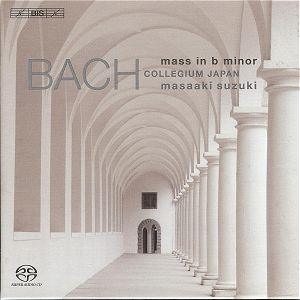
Johann Sebastian Bach Mass in B minor SACD 1 Missa (Kyrie and Gloria) SACD 2 Symbolum Nicenum (Credo), Sanctus, Osanna, Benedictus, Agnus Dei et Dona Nobis Pacem Carolyn Sampson (soprano); Rachel Nicholls (soprano); Robin Blaze (alto); Gerd Türk (tenor); Peter Kooij (bass) Bach Collegium Japan/Masaaki Suzuki (BIS SACD 1701/02)

Here, the complex polyphony is breathtaking. The soundscape is immediate, lifelike, atmospheric and huge.

Music Web International says: "Suzuki and the BIS engineers make the fourteen and twenty instrumentalists involved sound like a grand ensemble – and he gives his forces all the time to draw on the sumptuous qualities of the zenith of the Mass. Van Veldhoven and the audiophile crew of Channel Classics achieve an equivalent impression. He’s given slightly more reverberation; both have ample space around all musicians. Van Veldhoven does it by pushing along at a brisk pace: different means but with the result every bit as exciting. The tenors on either recording are without fault and make for a impressive Benedictus with Gerd Türk (BIS) having a slight edge over Charles Daniels through his effortless but strong clarity."

Classics Today says: "BIS’s engineers wisely put a good bit of space around the players, which allows the big choruses to fill the room while giving just the right prominence to the trumpets and drums. The result, whether in stereo or multichannel formats, gives the music tremendous physicality and impact. Make no mistake, this is one of the great versions of Bach’s masterpiece."
 
1764404647323.png

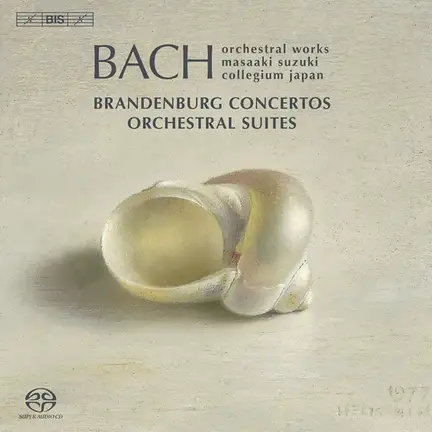
Bach Orchestra Works Brandenburg Concertos Orchestral Suites Masaaki Suzuki (harpsichord and direction) Bach Collegium Japan (BIS -SACD-1721/22)

These orchestra works sounded real and alive and with stunning presence. There are plenty of kinetic energy and space between instruments.

David Hurwitz of Classics Today says: "These performances are magnificent, and offering two SACDs for the price of one makes them a good deal too. There have been many fine recordings of these works, naturally, but few offer this much satisfaction on purely sonic terms–not just the engineering, which is state-of-the-art in both stereo and multi-channel formats, but the actual textures and colors that Masaaki Suzuki coaxes from his ensemble. ... His harpsichord is clear but pleasant-toned and discretely balanced. The strings have sufficient body and richness of tone to compete successfully with the oboes and cushion the trumpets and drums in the two works that require them. Textures are wonderfully transparent, and rhythms are ideally clear. The arrangement of the works, with the two big D major suites framing the other two, and the “flute suite” performed with solo strings, makes excellent sense and offers maximum contrast for continuous listening."
 
1764480012848.png

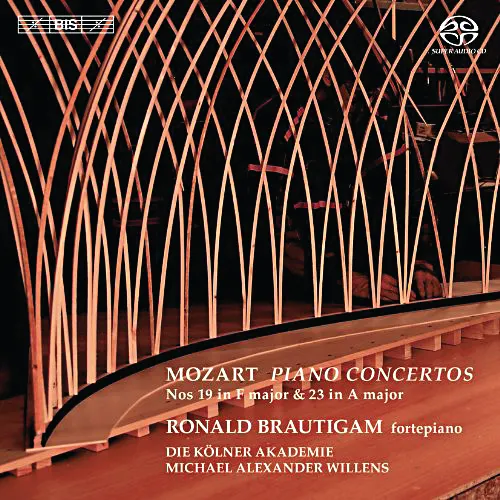
Mozart Piano Concertos Nos. 19 & 23 Ronald Brautigam, (fortepiano); Die Kölner Akademie/Michael Alexander Willens (BIS-SACD 1964) A Relisten

These recordings have tremendous physicality and impact. The fortepiano in particular has that distinct, percussive quality. Ronald Brautigam has "an absolutely instinctive Mozartian … with melodic playing of consummate beauty." (International Record Review)
 
1764568092428.png

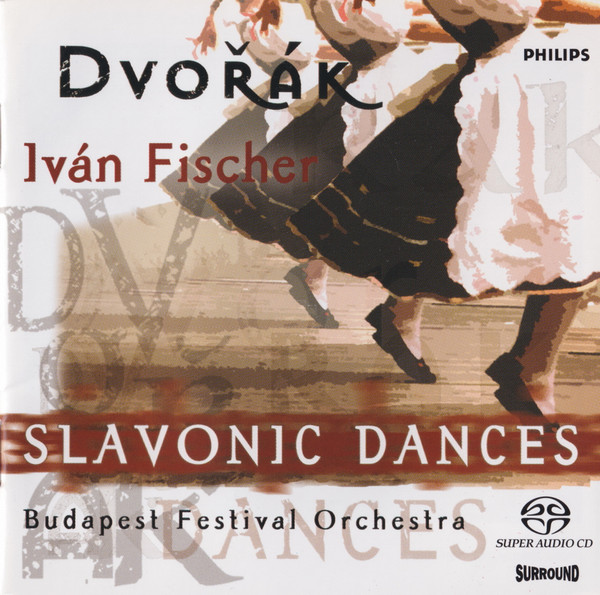
Antonín DVOŘÁK Slavonic Dances, Op. 46 Slavonic Dances, Op. 72 Budapest Festival Orchestra/Iván Fischer (Philip 470 601-2 SACD) A Relisten

Wow, the Budapest Festival Orchestra came alive for the first time via my upgraded DAC! Dynamics, fortissimos and tone color are stunning and lifelike.

Music Web International says: "The opening of Op. 46 makes a thrilling impression - the soundstage is deep, wide and astonishing in its detail - and the BFO play with great verve and accuracy. ... But where Fischer really scores is in the startling range of colour and inner detail he coaxes from his virtuoso band. And there’s no doubting the passion with which the BFO play, the strings full-bodied and unanimous in their attack -pizzicati especially impressive - the woodwind by turns impish and ardent. And then there’s plenty of percussive weight, notably absent in the Szell recording ... As for the kolo-inspired No. 7, it’s seldom sounded so impulsive, the ensemble crisp and focused even under pressure. It’s marvellous musicianship, and the dynamic range and naturalness of this recording will surely make it a demonstration disc, whichever layer you choose."
 
1764657156531.png

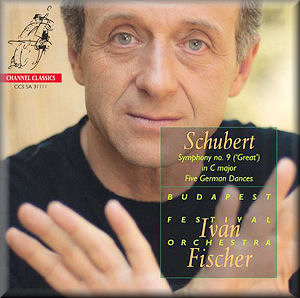
Franz SCHUBERT Symphony No.9 in C Major (Great) D 944 Five German Dances and Seven Trios with Coda D 89 Budapest Festival Orchestra/Iván Fischer (CHANNEL CLASSICS CCS SA 31111 SACD)

These recordings are as good as it gets - very transparent, pure, dynamic and detailed. The soundstage is huge, wide, airy and spacious.

Music Web International says: "This is an excellent recording of the Great C Major, but it takes a bit of getting used to. Iván Fischer's main focus is on the dance origins of the music, and he makes sure that the rhythms of those dances always come through. That makes for some wonderfully characterful playing, the music continually pulled around to give the dances life, while also being grounded by heavily accented downbeats."

Classics Today says: "Every new release by Ivan Fischer and the Budapest Festival Orchestra for Channel Classics is something of an event, and this one is no exception. Unlike the case with so many of today’s globe-trotting conductors, when Fischer makes a recording with his own orchestra the preparation and level of care bespeaks a long and intimate association. The playing here is wonderful; few recordings of this symphony sound less repetitious, and more carefully (and characterfully) thought out. Even tiny details, such as the transition to the first-movement development section, or the strings/woodwind balances in the coda, tell naturally and effectively. The second movement is beautifully shaped, with exquisite work from the solo oboe and clarinet, and it rises to a terrifying (but never crude) climax."
 
1764741599152.png

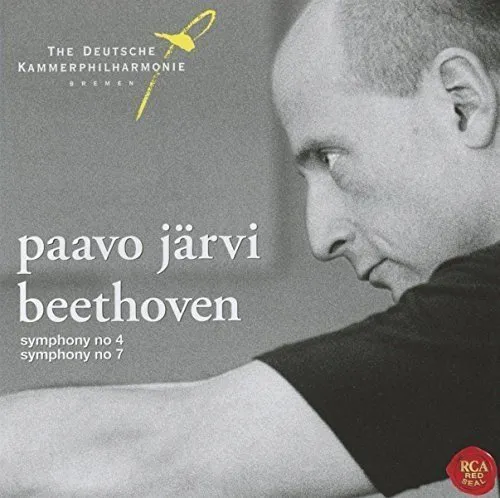
Beethoven Symphony No. 4 Symphony No. 7 The Deutsche Kammerphilharmonie Bremen/Paavo Järvi’ (RCA RED SEAL 88697129332 SACD)

These are truly exciting, relentless and daredevil performances! The recordings are state-of-the-art.

The Gramophone says: "Järvi's performance is very 'high-spec', curvaceous and immaculately finished with mini-crescendi adding colour to the line."

David Hurwitz of Classics Today says: "This second disc from Paavo Järvi’s complete Beethoven cycle is just as fine as the first (containing Symphonies 3 and 8). Once again the playing of the Deutsche Kammerphilharmonie Bremen is phenomenal. Has the Fourth Symphony’s finale ever been more cleanly articulated at such high speeds? I don’t think so. But it’s not just a matter of execution. The virtuosity of the playing sustains brilliantly conceived interpretations of both works, full of idiomatic fire and athletic drive. The outer movements of the Seventh Symphony have an almost elemental force, and while some listeners might prefer a stronger presence from the horns, the prominence of the wind and trumpet parts is very welcome, particularly in the finale’s refreshingly un-opaque main theme. You can really hear the colorful mosaic of timbres that comprises the first subject. ... Try the Fourth Symphony’s introduction for a sound so focused that it adds an entirely new dimension to our experience of the music. And if you aren’t delighted by the rambunctious rhythmic snap of both symphonies’ scherzos, then it’s time to turn in your ears and take up knitting."
 
1764826739150.png

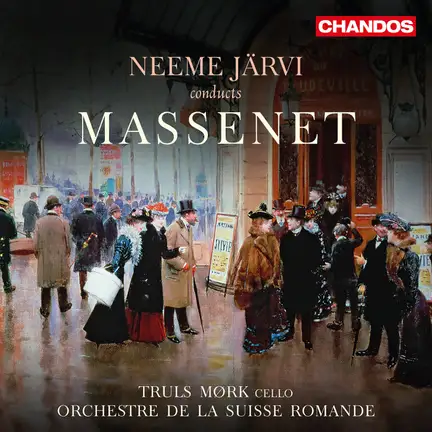
Jules MASSENET Suite de ballet from ‘Le Cid’, Le Dernier Sommeil de la Vierge, Overture to ‘Le Roi de Lahore’, Fantaisie for Cello and Orchestra, Ouverture de ‘Phèdre’, Scène Religieuse from ‘Les Érinnyes’, Entr’acte Sevillana from ‘Don César de Bazan’, Scènes Pittoresques , Méditation from ‘Thaïs’ – Truls Mørk (cello), Orchestre de la Suisse Romande/Neeme Järvi (CHANDOS 5137 SACD)

Wow, the Orchestre de la Suisse Romande came alive in my listening room and sounded almost tangible! Dynamics are explosive and orchestra timbres/tone colors are spot-on. The soundscape is three=dimensional, airy, spacious and resonant. Details are stunning. The woodwinds sounded so enchanting. The percussion has that ''you can touch" quality - so immediate, present and detailed. Play very loud.

Music Web International says: "This repertoire is given its finest-sounding recording to date, with the 24-bit studio master presenting the OSR with remarkable clarity and openness, stunning dynamics, and a soundstage of considerable width and depth."

The Financial Times says:: "True to form, Järvi has uncovered a collection of minor works by a well-known composer and injected enough sparkle into them to make for hugely enjoyable listening. ... Järvi is in his element, and his Geneva orchestra responds with spirit and style."
 
1764924249746.png

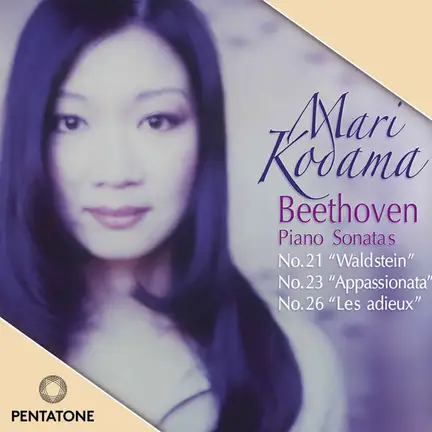
Beethoven Piano Sonatas No. 21; 23; 26 Mari Kodama (piano) (PENTATONE PTC 5186 024 SACD) (AD Converter: Meitner DSD AD Converter)

The Steinway grand piano here sounded lifelike, rich, warm, powerful, resonant, weighty, nuanced and tangible.

Classics Today says: "Fine as this well-recorded Beethoven disc sounds through two stereo speakers, it becomes more vivid and lifelike when experienced in its full SACD multi-channel glory. If only the performances were more interesting. To be sure, Mari Kodama is an extraordinarily accomplished young pianist who does not know the meaning of difficult. She can toss off the Appassionata’s hurling challenges without a hint of struggle, to say nothing of taxing rotary passages in the Waldstein’s Rondo. And the dreaded double notes in Les Adieux’s first movement go “like buttah”, so to speak."
 
1764996606267.png

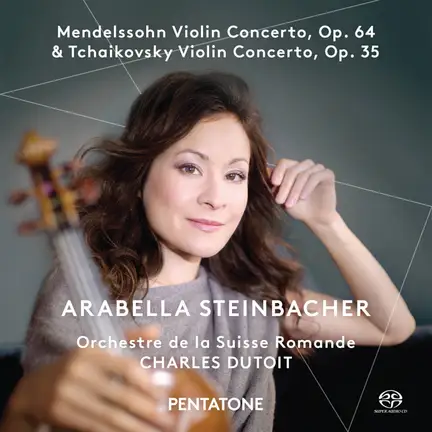
Felix Mendelssohn Violin Concerto in E minor, Op.64 Pyotr Ilyich Tchaikovsky Violin Concerto in D major, Op.35 Arabella Steinbacher (violin)
Orchestre de la Suisse Romande/Charles Dutoit (PENTATONE PTC 5186 504 SACD)

Steinbacher's violin here sounded lifelike, sweet and nuanced. Play very loud.

Music Web International says: "Part of the secret of the new album is the very fine recording quality. Even the mp3 version, played on modest equipment, sounds very good. The 24-bit download, which should be the equivalent of the high-definition stereo layer of the SACD, puts even the best of the older recordings which I have mentioned in the shade, though it benefits from a volume boost."

The Daily Telegraph says: "She delivers interpretations of these two well-known scores that have an innate sensitivity to the individual language of each, carrying the expressive lines with a natural feel for contour, etching in shades of timbre with subtlety and at the same time having a clear idea of the music's dramatic trajectory. No grandstanding, no exaggeration. This is just refined, instinctive playing."
 
Hi @Yuen A. Thanks for all your album recommendations. Great thread. Can I ask why you often say "Play very loud"? I personally like to replicate the volume of a concert hall if at all possible. Sometimes the recording prevents this if a soloist if highlighted. Just curious on your reasoning. I tend to play loud too but often with jazz/pop/electronic music where there is no useful reference.:)
 
1765098826601.png

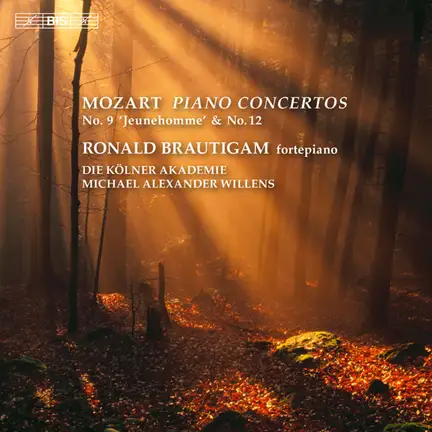
Mozart Piano Concerto No. 9 & No. 12 Ronald Brautigam (fortepiano) Die Kölner Akademie/Michael Alexander Willens (BIS 1794 SACD)

These orchestra recordings are truly excellent (with stunning and lifelike dynamics, details, tone color and presence). The soundstage is deep, airy and spacious.

International Record Review says: "Brautigam's interpretations are individual without being wayward or eccentric, for he ignores the accepted norms of performance and starts from the score itself. ... on the basis of this first installment I would urge anyone to invest in this new cycle. Brautigam is an absolutely instinctive Mozartian, with fleet fingerwork to match any, and with melodic playing of consummate beauty."
 
Hi @Yuen A. Thanks for all your album recommendations. Great thread. Can I ask why you often say "Play very loud"? I personally like to replicate the volume of a concert hall if at all possible. Sometimes the recording prevents this if a soloist if highlighted. Just curious on your reasoning. I tend to play loud too but often with jazz/pop/electronic music where there is no useful reference.:)

Hi, I do that when a particular recording benefits from a volume boost.
 
  • Like
Reactions: Young Skywalker
1765169690010.png

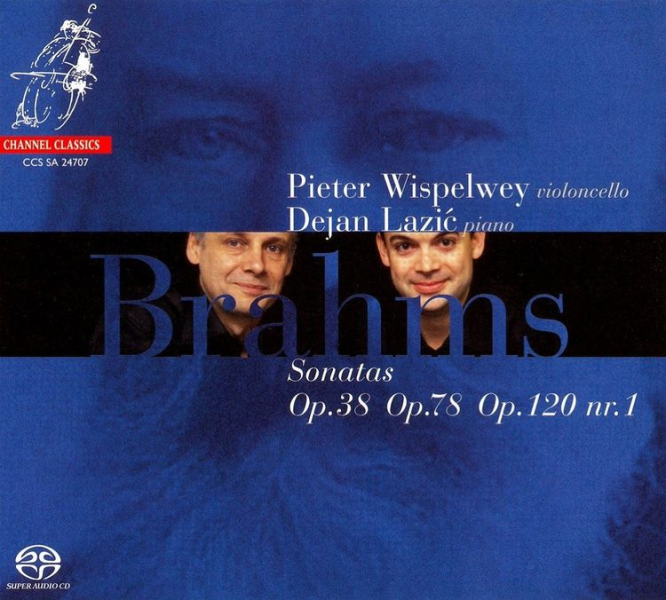
Brahms Sonatas Op.38, Op.78, Op.120 nr.1 Pieter Wispelwey (cello) & Dejan Lazić (piano) (Channel Classics 24707SACD) (Digital Converter: DSD Meitnerdesign AD/DA)

The sonic 'energy' from the cello and piano here is amazing! The cello produces a rich, microtonal, sustained and expressive sound via Wispelwey's bowing. Lazić produces a stunning percussive attack, offering a wide dynamic range and extensive harmonic possibilities. The recordings are as good as it gets.
 
1765257688182.png

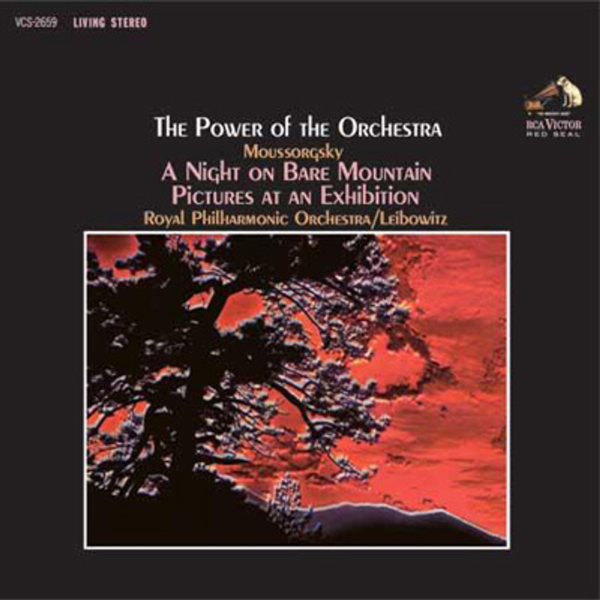
The Power Of The Orchestra Mussorgsky A Night On The Bare Mountain / Pictures At An Exhibition Royal Philharmonic Orchestra/Rene Leibowitz (Analogue Productions/RCA Living Stereo CAPC 2659 SACD) A Relisten

Wow, the RPO came alive to a much greater extent than ever before via my upgraded DAC! Dynamics (transient speed) and micro details here are stunning. However, the orchestra sounded quite lean and lacking deep bass extension.
 
1765345880125.png

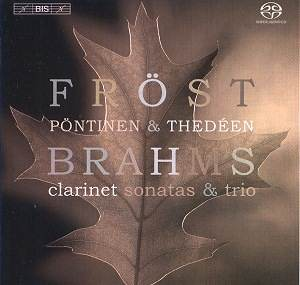
Johannes Brahms Sonata No. 1 in F for clarinet and piano, Op. 120 No. 1 Sonata No. 2 in Eb for clarinet and piano, Op. 120 No. 2 Trio in A for clarinet, piano and cello, Op 114 Martin Fröst (clarinet); Roland Pöntinen (piano); Torlief Thedéen (cello) (BIS SACD 1353)

The clarinet, cello and piano here sounded lifelike, immediate and nuanced.

Music Web International says: "This performance sounds very good until you hear one where the performers have that final bit of breathing-together* intensity of ensemble, that final bit of confidence and gracefulness that only people who play together for decades achieve. Fröst and friends, perhaps encouraged by the power and depth available in SACD sound, go as far as one ought to to try to invoke a symphonic dimension to this work. Soloist Fröst plays loudly throughout often moving into the metallic register of his instrument, as though he were concentrating on filling a large hall with sound. At times they sound not merely dark but heavy, achieving an almost symphonic grandeur consistent with the work’s history."

Classics Today says: "Fröst plays with a warm, liquid tone, and his intonation is dead accurate. Often clarinet and piano don’t sound well together, but it’s no issue here. The sonics in both stereo and multi-channel formats offer simply the last word in realism, with perfect balances and an impressive “you are there” immediacy. Yes, the microphones capture a bit of Fröst’s breathing, but this is never distracting. So if you’re looking for top-quality performances of these lovely works in state-of-the-art sound, this disc is unquestionably the way to go."
 
  • Like
Reactions: SCAudiophile

About us

  • What’s Best Forum is THE forum for high end audio, product reviews, advice and sharing experiences on the best of everything else. This is THE place where audiophiles and audio companies discuss vintage, contemporary and new audio products, music servers, music streamers, computer audio, digital-to-analog converters, turntables, phono stages, cartridges, reel-to-reel tape machines, speakers, headphones and tube and solid-state amplification. Founded in 2010 What’s Best Forum invites intelligent and courteous people of all interests and backgrounds to describe and discuss the best of everything. From beginners to life-long hobbyists to industry professionals, we enjoy learning about new things and meeting new people, and participating in spirited debates.

Quick Navigation

User Menu

Steve Williams
Site Founder | Site Owner | Administrator
Ron Resnick
Site Owner | Administrator
Julian (The Fixer)
Website Build | Marketing Managersing