
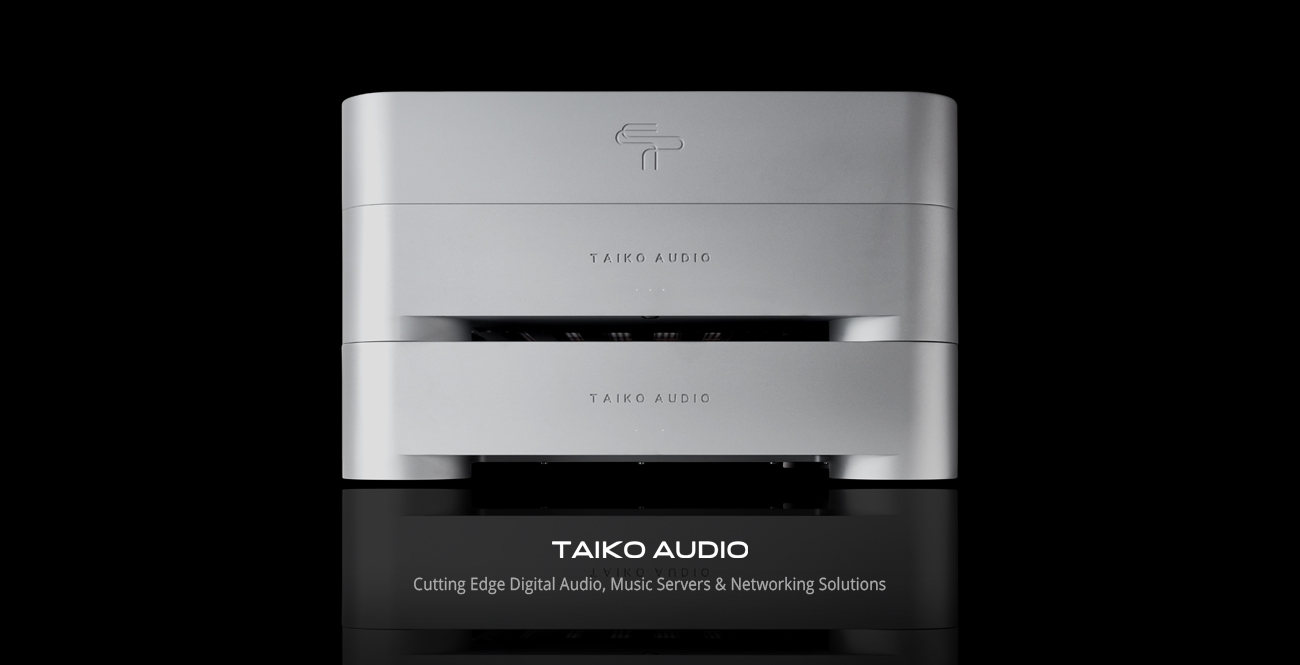
Introducing Olympus & Olympus I/O - A new perspective on modern music playback

My two+ week update on the O-I/O sonics with XDMI-Digital out.

Quick summary (with apologies to "This is Spinal Tap" and "American Bandstand"): I give it a score of 11 out of 10. It's got a good beat and you can dance to it.

Bottom Line:
1. Surpassed the Audiophile Test. Yes on all counts from 3 dimensional soundstage, to visceral bass, to extended highs, to prat, to yada yada yada.

2. Surpassed the "No Artifacts" Test. Artifacts get the attention of your left/analytical brain and defeat the right/emotional side. Once past the initial settling in period, the O-I/O grabbed my right brain and hasn't let go.

3. Surpassed the "Phone" Test. If you attend a musical performance, in a great hall under the direction of a great conductor playing a great piece of music, do you reach for your phone to see the latest feed? I'd be hard pressed to have ever thought about it myself under those circumstances.

Although, I must admit that it was a not irregular event with previous systems in my home. And the thought did cross my mind during the O-I/O break-in period. And I actually did break out the phone on a number of occasions, which caused some worry. But once the break-in period stabilized, the thought has never occurred. All engines straight ahead!

4. Surpassed the "Minds Eye" test. I heard the story of an Asian magnate who sends his trusted aide to scour Europe and the US for high end commodities including stereo equipment. His instructions to his aide is to close his eyes when listening to stereos and see what images/emotions are conjured by the music. And to buy the equipment If the music creates strong vivid images/emotions in his minds eye.

This is my favorite and most important bottom line test. And the O-I/O passed this test beyond all previous system configurations I've ever heard in my room before. And this is before I connect the XDMI-Analog out. And even more importantly, before my intrepid "speaker whisperer" optimizes the system/speaker placement for the O-I/O.

Thank you Taiko Team for a significant step forward in digital reproduction!

Can’t wait for the next steps!
 
Last edited:
To add to what others here have already said. My O&I/O have about 72 hours of continuous play on them now. The sound is incredibly solid and has the dynamics that I normally associate with analog tape or vinyl. One of the most elusive things has been trying to get digital with its superior dynamic range to sound subjectively as dynamic as analog. To me digital playback has always sounded a bit flat in comparison to analog when it comes to dynamics or its ability to make sound jump out of the speaker. That has always been my biggest complaint between the two. The things that good digital does well, low noise, bass extension, low level detail, wide and flat bandwidth etc. never completely made up for its lack of subjective dynamics IMHO. That is until now.

With the O&I/O it seems that we can have the best of both digital and analog with no downsides. All the positives of digital but now with the dynamics or “jump factor” of analog. Which for me leads to a more captivating and emotional listening experience. I haven’t tuned on my TV all week because I haven’t been able to stop listening to music. And this is just with the USB output so far....
More to come.
 
Last edited:
To add to what others here have already said. My O&I/O have about 36 hours of continuous play on them now. The sound is incredibly solid and has the dynamics that I normally associate with analog tape or vinyl. One of the most elusive things has been trying to get digital with its superior dynamic range to sound subjectively as dynamic as analog. To me digital playback has always sounded a bit flat in comparison to analog when it comes to dynamics or its ability to make sound jump out of the speaker. That has always been my biggest complaint between the two. The things that good digital does well, low noise, bass extension, low level detail, wide and flat bandwidth etc. never completely made up for its lack of subjective dynamics IMHO. That is until now.

With the O&I/O it seems that we can have the best of both digital and analog with no downsides. All the positives of digital but now with the dynamics or “jump factor” of analog. Which for me leads to a more captivating and emotional listening experience. I haven’t tuned on my TV all week because I haven’t been able to stop listening to music. And this is just with the USB output so far....
More to come.
Fantastic to hear! What DAC do you use?
 
Hi,

Is taiko working with ch precision for the XDMI connection?
 
No, I don't think so.
Sorry to hear that. I was thinking the new CH c10 or upcoming msb sentinel in the future.
 
Another data point : the Olympus does not gain much by grounding. The Altaira to left binding post induced a major drop in dynamics, and a collapse of depth ( from 7m to 2m, hard to put numbers on those ). The router and switch benefited from grounding, although not the Taiko distributor, nor the power supply that powers the distributor. In short, the Olympus is not taking well any of the power supply in the system being grounded, so there must be something in relation to isolating the grounding plane for the signal chain. I believe Emile had already made this comment in the documentation.
 
Has anyone of the Aries Cerat DAC and Olympus Server owners compared the USB output with the AES/EBU (or with the SPDIF)?
 
Another data point : the Olympus does not gain much by grounding. The Altaira to left binding post induced a major drop in dynamics, and a collapse of depth ( from 7m to 2m, hard to put numbers on those ). The router and switch benefited from grounding, although not the Taiko distributor, nor the power supply that powers the distributor. In short, the Olympus is not taking well any of the power supply in the system being grounded, so there must be something in relation to isolating the grounding plane for the signal chain. I believe Emile had already made this comment in the documentation.
Are you using both the Altaira Signal Grounding hub (for digital) and the Altaira Chassis Grounding hub (for non digital) or just the Chassis hub?
 
Are you using both the Altaira Signal Grounding hub (for digital) and the Altaira Chassis Grounding hub (for non digital) or just the Chassis hub?
It is a dual signal hub, one for digital and one for analog. For reference, it is the first time I observe the Altaira not improving significantly a component by reducing noise.
 
Has anyone of the Aries Cerat DAC and Olympus Server owners compared the USB output with the AES/EBU (or with the SPDIF)?
I haven’t, but it was tried at the last Munich— and the USB was preferred.
 
I haven’t, but it was tried at the last Munich— and the USB was preferred.
Thank you. I have the two units as well and I do have the O plugged in to the signal hub as well as the router and the switch and the DCD. I have not compared with or without the grounding cables connected as I just connected them and it sounds amazing with them being connected, but upon your observation, I will do some testing.
 
Another data point : the Olympus does not gain much by grounding. The Altaira to left binding post induced a major drop in dynamics, and a collapse of depth ( from 7m to 2m, hard to put numbers on those ). The router and switch benefited from grounding, although not the Taiko distributor, nor the power supply that powers the distributor. In short, the Olympus is not taking well any of the power supply in the system being grounded, so there must be something in relation to isolating the grounding plane for the signal chain. I believe Emile had already made this comment in the documentation.

Thank you for trying, I myself have only found negatives, but in a world where no system is identical, nor sounds the same, it’s good to get as much feedback on this as possible. We have deliberately mounted separated power (charger) supply and chassis grounding posts for more freedom in experimenting.
 
Not by me :)
I wasn't planning on trying the XDMI AES out to the Kassandra because USB is sounding so good. Also, I didn't want to flip the I/O upside down in order to replace the analog daughter card and I currently use the AES input on the DAC for the CD transport. But now I'm going to have to give it a try :)
After the positive comments on the sound of native XDMI digital out, I'm really happy to have a DAC that is going to have that option available soon as well.
Right now I'm still mesmerized by the USB output to the Kassandra. It's by far the best I've ever heard.
 

About us

  • What’s Best Forum is THE forum for high end audio, product reviews, advice and sharing experiences on the best of everything else. This is THE place where audiophiles and audio companies discuss vintage, contemporary and new audio products, music servers, music streamers, computer audio, digital-to-analog converters, turntables, phono stages, cartridges, reel-to-reel tape machines, speakers, headphones and tube and solid-state amplification. Founded in 2010 What’s Best Forum invites intelligent and courteous people of all interests and backgrounds to describe and discuss the best of everything. From beginners to life-long hobbyists to industry professionals, we enjoy learning about new things and meeting new people, and participating in spirited debates.

Quick Navigation

User Menu

Steve Williams
Site Founder | Site Owner | Administrator
Ron Resnick
Site Owner | Administrator
Julian (The Fixer)
Website Build | Marketing Managersing