REVIEW: The best yet most affordable network switch (TPLink WR902AC)

Regrettably for all of us with ferrite PTSD from the Chord mScaler days, it does sound better... There is improved SQ to be mined from this hillside, but I think we're a long way from an optimal recipe (all these pieces are improving SQ here, so a very opportunity rich space for optimization still)
 
How do you like the ferrited LAN cable?
When a few friends who are part of Eric‘s group were quite excited with these, I made one myself.
It did sound … really shitty.
 
How do you like the ferrited LAN cable?
When a few friends who are part of Eric‘s group were quite excited with these, I made one myself.
It did sound … really shitty.

:D

After multiple posts on the "throttle cable project" I'm wondering if we should, for this thread, stay on topic for the TPLink rather than all loosely-related DIY projects. Thanks.
 
Interesting @engadin With my pimped up TP Link setup, I could no longer hear any difference between a generic cat6a cable and my favorite Sablon ethernet cables, which was an interesting finding for me. With the ferrited throttle cable, I hear a small but clear improvement here (the typical detail, bass resolution, speed, space improvements I'm hearing with network tweaks)

By no means a game changer, but squeezing out a bit more of the goodness. After not being able to hear anything between ethernet cables before, that was an interesting finding that there is still more uplift to be had.

Curious that it went the other direction for you

EDIT - sorry Keith, will do!
 
Setup Network Share (Home/Media Server) on OpenWrt using Samba & USB Drive | Detailed Tutorial
https://blog.compardre.com/network-share-samba-media-server-openwrt-tutorial/

Quick Start for Adding a USB drive
https://openwrt.org/docs/guide-user/storage/usb-drives-quickstart

Share USB hard-drive with Samba using LuCI
https://openwrt.org/docs/guide-user/services/nas/usb-storage-samba-webinterface

USB audio support
https://openwrt.org/docs/guide-user/hardware/audio/usb.audio
https://grumbeer.dyndns.org/ftp/cdroms/debian/debian-3.1/debian/openwrt/wiki/UsbAudioHowto

[HowTo] Openwrt cheap Digital Stereo WiFi Internet Radio & MP3 Player
https://forum.archive.openwrt.org/viewtopic.php?id=49013

Network Radio on OpenWrt
https://github.com/robbie-cao/kb-openwrt/blob/master/Network-Radio-MPD.md

These packages are available for playing music etc.

libmpdclient-2.22-r1.apk
moc-2.5.2-r4.apk
mpc-0.35-r1.apk
mpd-avahi-service-0.23.16-r1.apk
mpd-full-0.23.16-r1.apk
mpd-mini-0.23.16-r1.apk
squeezelite-dynamic-2.0.0.1518-r1.apk
squeezelite-full-2.0.0.1518-r1.apk
upmpdcli-1.8.11-r1.apk

Music Player Daemon could handle lossless formats as well, while they're providing support for Qobuz / TIDAL etc. via upmpdcli.

About time to get multiple units of TL-WR902AC?
 
Thank you keithc for this review and recommendation! I’ve been using this tplink setup with the anker battery since yesterday and it sounds fantastic. I’ve always felt my current streaming setup was compromised, since I’ve actually been using a router in client mode to my streamer (with multiple switches in between) due to the logistics of my router and wifi. Even with all my QSA cables, multiple audiophile switches, and a small collection of LPSUs, it never sounded as good as being directly wired to the main router.

Since I was already using a router in client mode (powered by farad3), I didn't expect much from this little TP-Link toy. But with the battery and directly connected to my streamer (qsa discovery ethernet only), there’s definitely more detail, space, and realism coming through! I need to experiment with it more.

When I get a chance, I’m going to try connecting power directly to the 3.3V input using an ldovr dc regulator from the Anker battery. Has anyone tried this yet?
 
Thank you keithc for this review and recommendation! I’ve been using this tplink setup with the anker battery since yesterday and it sounds fantastic. I’ve always felt my current streaming setup was compromised, since I’ve actually been using a router in client mode to my streamer (with multiple switches in between) due to the logistics of my router and wifi. Even with all my QSA cables, multiple audiophile switches, and a small collection of LPSUs, it never sounded as good as being directly wired to the main router.

Since I was already using a router in client mode (powered by farad3), I didn't expect much from this little TP-Link toy. But with the battery and directly connected to my streamer (qsa discovery ethernet only), there’s definitely more detail, space, and realism coming through! I need to experiment with it more.

When I get a chance, I’m going to try connecting power directly to the 3.3V input using an ldovr dc regulator from the Anker battery. Has anyone tried this yet?

Congrats. It is definitely eye-opening irregardless of price.
Can you share what your former network chain was w/ the specific components and order?

One thing that might be worth trying is a second TPLink on battery as an access point between your router and the terminal client TPLink.
 
  • Like
Reactions: christoph
Congrats. It is definitely eye-opening irregardless of price.
Can you share what your former network chain was w/ the specific components and order?

One thing that might be worth trying is a second TPLink on battery as an access point between your router and the terminal client TPLink.

TP-link ac1200in client mode powered by farad3-> qsa-l ethernet->etheregen-> clock modified korenix m12 switch (both powered by sean jacobs dc3)-> qsa-l ethernet to fidelizer streamer to Weiss 501 dac.

Already ahead of you and have another set on order to try it as a battery powered access point :)
 
@SolidCore

Hi Stephan!
Would you please describe the sonics of the original and/or modded version versus your LHY switch (with fuse upgrade)?
So readers can get an impression of what to expect.
Thx and cheers,
Ulrich

Hello Ulrich,

The comparison is a bit flawed, as I normally use an LHY FMC on the router, then an optical fibre cable to an LHY-SW6. So there's not much difference in sound quality compared to the TPLink 902. The optical fibre cable adds a touch of stability and more tranquillity.

Best regards,
Stephan
 
  • Like
Reactions: audiobomber
Hello Ulrich,

The comparison is a bit flawed, as I normally use an LHY FMC on the router, then an optical fibre cable to an LHY-SW6. So there's not much difference in sound quality compared to the TPLink 902. The optical fibre cable adds a touch of stability and more tranquillity.

Best regards,
Stephan

Thx for your reply!

So in your setup TPLink 902 is roughly at the same level as a LHY SW6?
902 already modded?
For listening to music you prefer to use the LHY combo.

I think I understand.

Cheers, Ulrich
 
In terms of batteries, there's an audiophile in Japan who experimented with LiFePO4 at the very beginning. Then he moved on to try the latest and greatest afterwards.

HAMAKEN WORKS HW-SSPB100series Semi-Solid State Power Bank
https://hamakenworks.jp/user_data/sspb

Yoshino B330 Solid-State Power Station
https://yoshinopower.com/products/b330-solid-state-portable-power-station

Elecom DE-C55L-9000BK
https://www.elecom.co.jp/products/DE-C55L-9000BK.html

JESIMAIK GK03
https://www.jp.jesimaik.com/products/electric-starting-power-supply

In the SQ department, Elecom and JESIMAIK (sodium-ion for both) came out on top. As always it's unlikely for any online shops to ship them internationally despite the safety.


FYI - here are some alternatives

https://www.biwattpower.com/cn/m2
https://www.eet-china.com/mp/a437391.html
https://www.chu21.com/html/chunengy-6206.shtml
https://www.bluettipower.com/products/sodium-ion-battery-pioneer-na
https://chinese.alibaba.com/product-detail/BLUETTI-Pioneer-Na-Sodium-Ion-Battery-1601602996158.html

Other choices as follows, they're available in quite a few sizes such as 18650 / 32140 / 40160 / 46145 etc.

https://world.taobao.com/item/36360773690.htm
https://world.taobao.com/item/809093616934.htm
https://world.taobao.com/item/810966799323.htm
https://world.taobao.com/item/825952431832.htm
https://world.taobao.com/item/827165170327.htm
https://world.taobao.com/item/835052529627.htm
https://www.aliexpress.com/item/1005006041916183.html
https://www.aliexpress.com/item/1005007510504096.html
https://www.aliexpress.com/item/1005008870899510.html

Here's an example with LT3045 regulators / 5V DC

https://www.aliexpress.com/item/1005004090963642.html


Several audiophiles on this popular French forum shared their findings after trying these capacitor banks from China, I won't embed so many pictures since they're taking up so much space on the entire page

https://forum-hifi.fr/thread-34179-post-822936.html#pid822936
https://zupimages.net/up/24/51/kbr2.jpg

https://forum-hifi.fr/thread-34179-post-823356.html#pid823356
https://zupimages.net/up/24/51/9nvo.jpg

https://forum-hifi.fr/thread-34179-post-823437.html#pid823437
https://zupimages.net/up/24/51/f811.jpg
https://zupimages.net/up/24/51/2yrd.jpg

https://forum-hifi.fr/thread-34179-post-823471.html#pid823471
https://zupimages.net/up/24/51/s0ql.jpg

https://forum-hifi.fr/thread-17737-post-832596.html#pid832596
https://i90.servimg.com/u/f90/13/70/58/13/img_1165.jpg
https://i90.servimg.com/u/f90/13/70/58/13/img_1168.jpg

https://forum-hifi.fr/thread-17737-post-837906.html#pid837906
https://i90.servimg.com/u/f90/13/70/58/13/img_1176.jpg
https://i90.servimg.com/u/f90/13/70/58/13/img_1177.jpg

https://forum-hifi.fr/thread-17737-post-849597.html#pid849597
https://i90.servimg.com/u/f90/13/70/58/13/img_1208.jpg
https://i90.servimg.com/u/f90/13/70/58/13/img_1209.jpg

https://forum-hifi.fr/thread-17737-post-849882.html#pid849882
https://i90.servimg.com/u/f90/13/70/58/13/img_1166.jpg

These guys seemed to be more interesting than the others, you better shop around since there's an incredibly wide range of prices for the same stuff

https://world.taobao.com/item/878878819877.htm
https://www.aliexpress.com/item/1005006703088839.html
https://www.aliexpress.com/item/1005008094560069.html
https://www.aliexpress.com/item/1005008657653182.html
https://www.aliexpress.com/item/1005009274310988.html
https://www.aliexpress.com/item/1005009408769137.html
https://www.aliexpress.com/item/1005009671871140.html
https://www.aliexpress.com/item/1005009739124871.html
https://www.aliexpress.com/item/1005009915356540.html
https://www.aliexpress.com/item/1005009992834793.html
https://www.aliexpress.com/item/1005010305749512.html
This is the 5th clc filter i gave added to the audio system...which should alone be a strong endorsement. I use them on the power supplies for 2 network switches, one lumin streamer, a wifi router and a cable modem. The power supplies i have added these to included ifi elites, a farad 3, a breeze lps and a huge custom built lps. In every instance an improved sound was quite apparent, with a more relaxed sound, reduction of treble glare, tighter bass and improved 3d imaging. I have not found a dc supply that has nit been improved by these inexpensive devices. You can further improve the effect by using an aftermarket dc cable to replace the 30cm one that comes with it..xangsane and ghent are obvious chiices.


Finally here's yet another affordable tweak for DC power, remember it's gotta be passive POE

https://audiophilestyle.com/forums/topic/42959-iso-regen-performance-improvement-cheap/
https://audiophilestyle.com/forums/...ter-audio-streaming/page/665/#comment-1059624
I can say the sound quality improvement is something else -- I don't want to go into hyperbole but it's a big jump with dramatic improvement in everything. That's after a couple days of burn in, so hopefully further improvement.

Total cost for this is roughly $180. Each 8 port injector is $22, each U Green cable is about $5, the 2.1 mm male to male cable is about $8.

We do need 4 boxes + 16 Ethernet cables for each run as shown above

https://www.aliexpress.com/item/32749915401.html
https://www.aliexpress.com/item/1005002599607061.html
 
Hi there keith/raydude, I’ve been following this thread with absolute fascination and already have one with recommended battery supply in my drawer awaiting listening/testing. I have a few technical questions I hope you both will have the patience for : )

I used to have my setup on an ASUS mesh WiFi, then moved to a hardwired connection to hear the difference, and there wasn’t much really - my previous WiFi setup actually sounded a touch cleaner in some ways. In any case, I’ve stuck with this wired connection till now, and your thread got me thinking.

So now, my incoming fibre line goes into my modem, then the ASUs router and then into my taiko router. Both modem and ASUs router are fed by the same plixir statement BDC power supply. I had removed one satellite router, power supply and dc cable from the entire chain in doing so, found that there were still some better things I had with my WiFi setup.

From what I’ve been reading, keith has taken out the taiko switch, connected the main router to the TPlink mobile device by WiFi, then moved the Ethernet cable which used to connect the main router to your switch to its new location between TPlink and server. Is this correct so far?

If so, I see how this setup makes sense, since the switch has been removed, a device which possibly pollutes more than it filters in comparison with the TPlink router. Which is to say, the amount of pollution created by the low noise tplink is far less than the pollution created by the taiko switch. The Ethernet cable which used to connect main router to switch has merely moved to between tplink and server, so that same cable picks up similar, if not, the same noise. Am I correct with my assumptions so far?

Now, in raydude’s set up, his taiko router AND switch have been maintained, to addition of the TPlink mobile router, and the previously hardwired Ethernet cable merely moved to connect the added mobile router and taiko router. In this case, the hardwired Ethernet connection was merely moved downstream, and another device was added to the signal chain. So, the number of Ethernet cables has stayed the same, and the only things which has changed is an added mobile router.

Might there be a technical reason which can be understood as to why the noise reduction within a freshly added device would create a less polluted signal transfer, when it is an entirely new device with its own new pollution anyway?

There are no easy answers in our hobby, and I’m not expecting any, and I’m going to try everything that has been recommended in any case. This query comes more as a check that I have understood everything correctly, and that I am also justifiably mindspun about all these fresh discoveries.

Also, like raydude, I have a taiko router and switch, and would like to keep them in the signal chain so as to be able to access my NAS via the taiko router, even as i stream with the new tplink.

In friendship - kevin
 
Kevin, I have not done extensive A/B with various permutations of the TP-link/Taiko Router/Taiko Switch/Taiko DCD/power supplies to Taiko stack since I added the full TP link set up. Based on my quick smoke listening tests, I felt the Taiko stack was still bringing goodness to my set up, even with the TPlink fully pimped out + the ferrited ethernet cable

I have a lot more experimentation to do here, and hope to get to it over the holiday break. If I learn anything, I will of course share

The technical hypothesis that I've read is that the wifi isolation and power isolation with the battery pack basically significantly reduces common mode noise on the ethernet line (basically, the ethernet source for your audio system is electrically isolated when on the TP link + battery pack)

The Taiko router + switch + DCD are all doing their own magic to clean up the ethernet link (from a SQ perspective). Some of that is certainly different/additive to the TP link, some may be going after common mode noise as well (who knows, I'm not privy to the magic Emile built into his networking components, I'm just delighted with the results).

The interesting thing for me is that the measurements on the TP link do seem convincing that common mode noise on ethernet is something that is clearly audible, and that changes to reduce or filter than noise have a positive SQ impact. Given our collective various experiences with stacked switches, ethernet cables with different shielding, power supply hacks on networking equipment, etc over the years, it is very interesting to have a theory of what we may have been impacting all that time, with an opportunity to do active engineering vs "try and see if it sounds better"

I will say that with the TPLink, I have dismantled my more complex home audio network, replaced it with a plain vanilla Ubiquity router and WiFi mesh network using PoE to the access points, and couldn't hear the difference with the TP link in place. I am focusing my attention on things between the TP link and NIC now, and once I figure out how to squeeze more out of that, I may go back upstream of my WiFi access points to see if there is any juice to be had there.

For most folks though, a less than $100 investment in a TP link and battery pack is a very accessible experiment to see if this sort of set up actually has audible impact in your chain. If it does (and it is appreciable), then there is a lot more to do. If not, you may not have much of a common noise problem on your ethernet that you need to manage.

All the above are my personal experiences in my room, and my working theories. No claims to expertise or innovation or discovery from me, just a person having fun with network hacks to make my music listening more enjoyable. Always happy to share my experiences, but even more happy to hear what others are hearing and learn from their experiences as well

 
  • Like
Reactions: christoph
One thing that might be worth trying is a second TPLink on battery as an access point between your router and the terminal client TPLink.
Thank you so much Keith for the absolutely stunning out-of-the-box thinking idea and your wonderfully written review.

What is the reason behind adding a second TPLink and what would be the (sonic?) benefit?
 
Hello everyone,

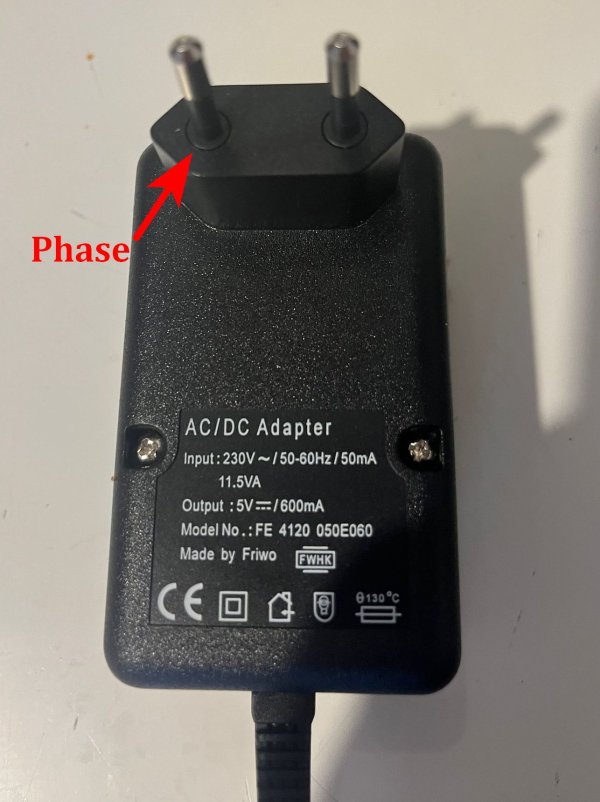
A good power supply unit also makes an immediately audible difference to the TPLink 902. In line with the price, I would recommend a small but linear plug-in power supply unit with a transformer and regulation. For 230V !!! These can often be found on eBay for very little money. It is called:
Friwo FE 4120 050E060 5V 600mA
The only catch is that you have to attach the plug yourself. To do this, simply cut off an old USB cable, connect the red + and black - wires, and insulate them.

This Friwo power supply is 2-pin, so there is less CM interference, and it is a really good upgrade to switching power supplies. It is also suitable for switches or other hi-fi components such as external USB power supplies.

Note: The 902 only needs a maximum of 3W, so Friwo 5V 0.6A is sufficient. It does not get warm.

Note 2: The Friwo would also be suitable for placing a 3.3V linear regulator behind it, directly in the 902, in order to go directly to the board. Sounds even better. Recommended: Dual LT3045, e.g. from ldovr.com, or any good Regulator with High PSRR.

Note 3: A USB battery power bank is also a good idea. They only have one disadvantage. They always have a switching regulator built in, which generates high ripple and noise. Not good for audio and networks. I once measured five different power banks, some of which were terrible. A good one with low noise/ripple would be, for example, a Romoss PEA 40 Pro.

Best regards,
Stephan
 

Attachments

  • Friwo.jpg
    Friwo.jpg
    211.1 KB · Views: 8
Last edited:
  • Like
Reactions: christoph
Hello everyone,

A good power supply unit also makes an immediately audible difference to the TPLink 902. In line with the price, I would recommend a small but linear plug-in power supply unit with a transformer and regulation. For 230V !!! These can often be found on eBay for very little money. It is called:
Friwo FE 4120 050E060 5V 600mA
The only catch is that you have to attach the plug yourself. To do this, simply cut off an old USB cable, connect the red + and black - wires, and insulate them.

This Friwo power supply is 2-pin, so there is less CM interference, and it is a really good upgrade to switching power supplies. It is also suitable for switches or other hi-fi components such as external USB power supplies.

Note: The 902 only needs a maximum of 3W, so Friwo 5V 0.6A is sufficient. It does not get warm.

Note 2: The Friwo would also be suitable for placing a 3.3V linear regulator behind it, directly in the 902, in order to go directly to the board. Sounds even better. Recommended: Dual LT3045, e.g. from ldovr.com, or any good Regulator with High PSRR.

Note 3: A USB battery power bank is also a good idea. They only have one disadvantage. They always have a switching regulator built in, which generates high ripple and noise. Not good for audio and networks. I once measured five different power banks, some of which were terrible. A good one with low noise/ripple would be, for example, a Romoss PEA 40 Pro.

Best regards,
Stephan
Hi Stephan
Thanks for your input regarding power. There seems to be different opinions about what to use. Have you tried the Anker 325 as Keith initially suggested as the best option?
I have ordered the lot with an Anker 337 powerbank ( 325 was more difficult to find)
Will test it and compare with a Teddy pardo miniteddy SE 5v that I already have.
On one hand its good to be off grid with the battery solution but if battery adds noise/ripple . Hm will see how it goes. Would be interesting to hear about SQ from people using a very good LPSU.
 
Hello Magnuska

Unfortunately, I didn't have the Anker power bank, so I can't compare them. However, I did notice that you can still hear the DC cable. That's why I use one made of solid core silver. Tightly twisting it makes it more resistant to interference. If you want a little more body in the sound, simply increase the cross-section of the DC cable. If you want more warmth, use OCC copper solid, 0.8 - 1.3 mm depending on the desired sound body.
For power banks, a small Pi filter consisting of 470uF, 0.5mH, 470uF significantly reduces ripple. But I don't want to get too much into the topic of DIY.

Best regards,
Stephan
 
USB battery power bank is also a good idea. They only have one disadvantage. They always have a switching regulator built in, which generates high ripple and noise. Not good for audio and networks. I once measured five different power banks, some of which were terrible. A good one with low noise/ripple would be, for example, a Romoss PEA 40 Pro.
Thanks for the hint regarding Romoss power bank.

How does it compare to the Anker power bank Keith recommended?

I wasn't able to get the exact model that Keith said and got the Anker PowerCore 26800 instead, which is a little hiher specs.

Do you happen to have measured the Ankers as well?

I could get the Romoss PEA 40 Pro around here as well, for even a little less (not that this would matter with those timy amou ts anyways) than the Anker I got.

I just saw that the Romoss does have a display, isn't that a negative?
I was told the powerbank should be strong but low/no features like a display?
 
Last edited:
  • Like
Reactions: Magnuska
Kevin, I have not done extensive A/B with various permutations of the TP-link/Taiko Router/Taiko Switch/Taiko DCD/power supplies to Taiko stack since I added the full TP link set up. Based on my quick smoke listening tests, I felt the Taiko stack was still bringing goodness to my set up, even with the TPlink fully pimped out + the ferrited ethernet cable

I have a lot more experimentation to do here, and hope to get to it over the holiday break. If I learn anything, I will of course share

The technical hypothesis that I've read is that the wifi isolation and power isolation with the battery pack basically significantly reduces common mode noise on the ethernet line (basically, the ethernet source for your audio system is electrically isolated when on the TP link + battery pack)

The Taiko router + switch + DCD are all doing their own magic to clean up the ethernet link (from a SQ perspective). Some of that is certainly different/additive to the TP link, some may be going after common mode noise as well (who knows, I'm not privy to the magic Emile built into his networking components, I'm just delighted with the results).

The interesting thing for me is that the measurements on the TP link do seem convincing that common mode noise on ethernet is something that is clearly audible, and that changes to reduce or filter than noise have a positive SQ impact. Given our collective various experiences with stacked switches, ethernet cables with different shielding, power supply hacks on networking equipment, etc over the years, it is very interesting to have a theory of what we may have been impacting all that time, with an opportunity to do active engineering vs "try and see if it sounds better"

I will say that with the TPLink, I have dismantled my more complex home audio network, replaced it with a plain vanilla Ubiquity router and WiFi mesh network using PoE to the access points, and couldn't hear the difference with the TP link in place. I am focusing my attention on things between the TP link and NIC now, and once I figure out how to squeeze more out of that, I may go back upstream of my WiFi access points to see if there is any juice to be had there.

For most folks though, a less than $100 investment in a TP link and battery pack is a very accessible experiment to see if this sort of set up actually has audible impact in your chain. If it does (and it is appreciable), then there is a lot more to do. If not, you may not have much of a common noise problem on your ethernet that you need to manage.

All the above are my personal experiences in my room, and my working theories. No claims to expertise or innovation or discovery from me, just a person having fun with network hacks to make my music listening more enjoyable. Always happy to share my experiences, but even more happy to hear what others are hearing and learn from their experiences as well

Thank you so much for your kind, detailed, and reassuring reply, raydude : ) - I’m so looking forward to hearing or not hearing a difference - both outcomes deliver huge positives ; )

In friendship - kevin
 
  • Like
Reactions: ray-dude
In my opinion, one thing is very important in the audio world: isolation. Every component makes noise. How can you ensure that all your audio components don't "see" each other? Don't influence each other? Are not electrically connected if possible? Look, for example, at the construction of the Taiko Olympus. The unit is isolated from the power grid by battery power. Several components in the Olympus have their own battery, which means isolation. If I connect a ground box to my DAC, I get less distortion and a darker background, which means isolation. If I make a VLAN just for audio in my router it sounds better =isolation. Expensive audio rack? It isolates your equipment from external vibrations.

What does the TPLink WR902AC do? It isolates your streamer's network card from all the noisy equipment that normally connects to it to establish an internet connection. The TPLink WR902AC is also "off the grid" thanks to its battery.

Isolation is bliss.
This, I think, is why this TPLink WR902AC works so well.
 

About us

  • What’s Best Forum is THE forum for high end audio, product reviews, advice and sharing experiences on the best of everything else. This is THE place where audiophiles and audio companies discuss vintage, contemporary and new audio products, music servers, music streamers, computer audio, digital-to-analog converters, turntables, phono stages, cartridges, reel-to-reel tape machines, speakers, headphones and tube and solid-state amplification. Founded in 2010 What’s Best Forum invites intelligent and courteous people of all interests and backgrounds to describe and discuss the best of everything. From beginners to life-long hobbyists to industry professionals, we enjoy learning about new things and meeting new people, and participating in spirited debates.

Quick Navigation

User Menu

Steve Williams
Site Founder | Site Owner | Administrator
Ron Resnick
Site Owner | Administrator
Julian (The Fixer)
Website Build | Marketing Managersing