
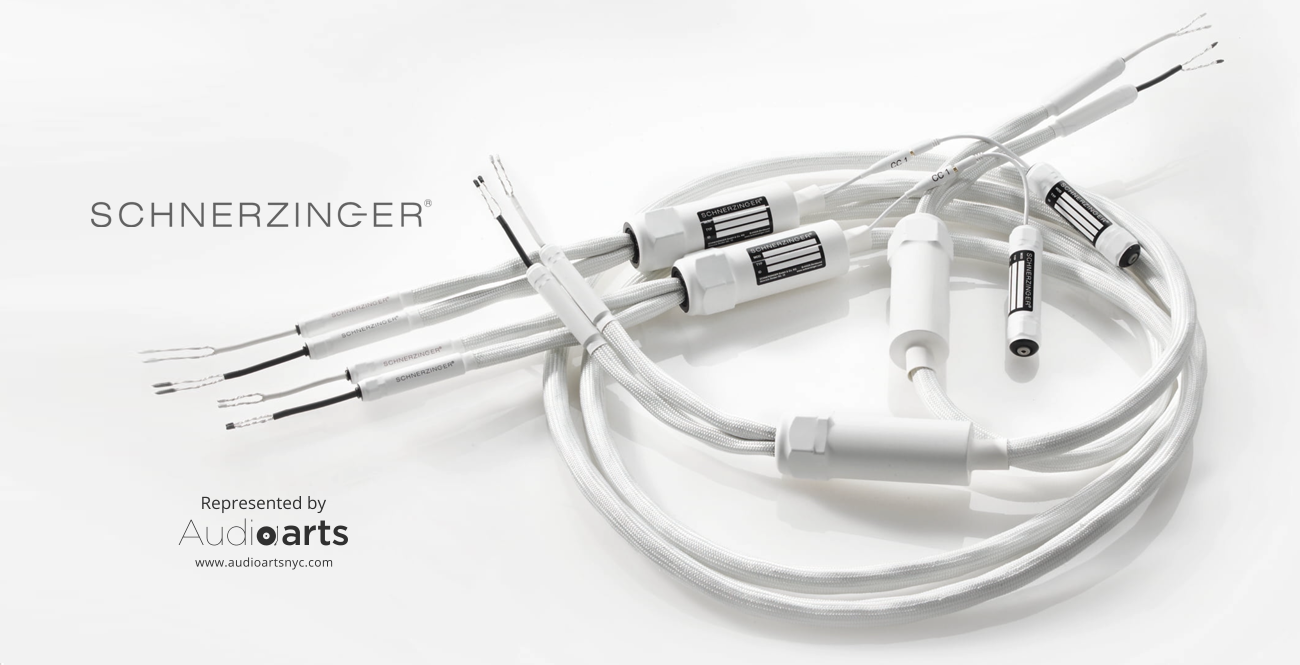
The Grid Protector, the EMI Protector and The Allocator By Schnerzinger-In My System and I’m Blown Away

The GRID has to stand near the wall socket leading to best SQ anyway, so there's no flexibility in placement from this point of view. Otherwise placement is sensible for those devices which affect a larger radius. The GRID and the Allocator more or less just protect themselves with their antennas, so no big influence on the room and no need to think much about placement also from this point of view. If you want to rise it at where its located, you can try if it makes a difference. I personally think, we sometimes overthink ;)
Well the AC cord is long, so there is a radius of a good 5-10’ around which it can be placed if your room allows. What I found with the Reflectors is that positioning can make a BIG difference. The ‘wrong’ positions destroy the soundstage and make the sound a lot less engaging.

What does the antenna of the GRID do? What do you mean by “protect themselves”? It would be useful to know more about how these things actually work, as it will help with placement decisions.

 
  • Like
Reactions: jasond
Well the AC cord is long, so there is a radius of a good 5-10’ around which it can be placed if your room allows.
That’s right.

What I found with the Reflectors is that positioning can make a BIG difference. The ‘wrong’ positions destroy the soundstage and make the sound a lot less engaging.
Yes, but unlike the GRID, they are effective for the whole room.

What does the antenna of the GRID do? What do you mean by “protect themselves”? It would be useful to know more about how these things actually work, as it will help with placement decisions.

I understood, the antennas of all those devices kind of “soak up or dissolve” concentrations of HF noise within different radii and with different intensities and absorb it internally. Not sure if this graphic is still online but Schnerzinger had one, describing within what radius each device works. Devices like the Reflector cover a whole room, EMI covers 3m / 10ft or so, Piccolos maybe 1m / 3,5ft and GRiD and Allocator just „protect themselves“ within maybe a 30cm / 1ft radius. The main effect of the GRID on the grid in my understanding has nothing to do with the antenna, its main effect on the grid is based on internal functions. All of this is why the placement of a GRID has very little effect on the whole room (but alignment towards the listener is still important) and why a Reflector or an EMI has much effect on the whole room and is much more critical in placement.
 
Last edited:
  • Like
Reactions: jasond and Zeotrope
Ok thanks. Will an AC cord next to a Reflector add noise? That’s what I observed. Either that or the movement of the GRID changed the noise floor.
 
  • Like
Reactions: jasond
Ok thanks. Will an AC cord next to a Reflector add noise? That’s what I observed. Either that or the movement of the GRID changed the noise floor.
Don’t know…
Just take care that wherever it’s placed, GRID and antenna is directed towards the listener.
 
Last edited:
  • Like
Reactions: Steve Williams
I have followed Schnerzingers recommendation with 4 in my system. I have 2 in the font corners and 2 in the rear corners with antennas directed to the ipsilateral ear. I haven’t found any negative issues. I must admit I do have my Grid protector elevated and yes I could be over reading my results. If there is a downside it’s all these crazy antennas in my room
 
Though what makes me wonder, when the Grids‘s antenna is just for protecting itself, why is the orientation of the antenna important :cool:
Don’t know…
Just take care that wherever it’s placed, GRID and antenna is directed towards the listener.
 
Though what makes me wonder, when the Grids‘s antenna is just for protecting itself, why is the orientation of the antenna important :cool:
This seems to be always important, no matter what intensity or radius. To simplify, I'd compare it with subwoofers. If one plays out of phase, it harms the whole optimization, even if that one plays at low level.
 
Last edited:
  • Like
Reactions: jasond
Wow! I just learned that the two antennas for the EMI protector serve different frequencies - so not as I thought the large one when the protector is further away and the short for near placement.
 
Wow! I just learned that the two antennas for the EMI protector serve different frequencies - so not as I thought the large one when the protector is further away and the short for near placement.
I may be wrong but I thought the large antenna was for very large rooms
 
At the time I ordered and the EMI Protector I received only included two identical small antennas, although the packaging included space for a much larger antenna. I received mine earlier this year, I think in August. I have since received the Grid Protector, which also only included two small antennas.
 
At the time I ordered and the EMI Protector I received only included two identical small antennas, although the packaging included space for a much larger antenna. I received mine earlier this year, I think in August. I have since received the Grid Protector, which also only included two small antennas.
My EMI had the standard small antenna and a second which was twice the size
 
My EMI had the standard small antenna and a second which was twice the size
Ya right, grid protector only has the small antenna. Whereas EMI has a small one and a large one. Either one focusing on different wave lengths. I wasn’t aware of that and also thought the large one is just for bigger rooms.
 
Wow! I just learned that the two antennas for the EMI protector serve different frequencies - so not as I thought the large one when the protector is further away and the short for near placement.
I was equally dumbfounded! Mine came with 2 different size antennas. I tried both antennas, and tried all the settings and optional DC power as well. Regardless of the antenna sizes I tried, I ended up selling the EMI as I thought it degraded the sound in my room more than it helped anything (whereas the Allocator and Grid Protector were clear keepers with obvious beneficial sonic results).

What concerns me and what I find very disappointing is that there was no clear and concise information from the manufacturer as to what the buyer can assume is "basic information" regarding the purported benefits pertaining to the antenna issue discussed above. Does the larger antenna of the EMI serve different frequencies or just cover more area? Why should this information not be well understand and described their literature? I simply don't understand why some fundamental information about the function and purported benefits of these devices are either secretive or not clearly explained. And don't throw up the word "proprietary" information as an excuse. That's nonsense. Nobody is asking for technical secrets here. Just tell us what the difference the antenna lengths provide. It's not that hard. Is there a secret hand shake required to learn these deep mysteries? Or are we not worth the company's time to have them explained to us in a cogent manner? That not everyone experiences the same purported benefits is one thing. I get that. (In my case, perhaps the EMI protector was not effective because I live fairly remotely and may not have a lot of "electrosmog" in my room.). But not knowing which benefits are expected from two antenna sizes seems frankly, unnecessary and easily avoidable.
 
Last edited:
I agree

I asked AI and got this reply


The large antenna on the Schnerzinger EMI Protector serves to detect and measure high-frequency electromagnetic interference (EMI) fields in the surrounding environment, such as from Wi-Fi, mobile phones, or other electronics, and then actively generate a counter-signal to cancel these disruptive frequencies, protecting the audio system's immediate vicinity (around 3 meters) without slowing down the audio signal.
How it Works:
  1. Detection: The antenna picks up harmful high-frequency noise (like RF interference) from the air and nearby devices.
  2. GIGA Cancelling: The device uses its proprietary "GIGA Cancelling" technology to process these detected frequencies and emit an inverted (counter) signal.
  3. Cancellation: This inverted signal effectively cancels out the unwanted interference, creating a "quiet zone" around your hi-fi system for clearer sound.
Key Points:
  • Near-Field Protection: It focuses on the immediate listening area, ideal for placement between speakers or near components.
  • High-Frequency Focus: Unlike the Grid Protector (which handles the power line), the EMI Protector specifically targets high-frequency interference (Wi-Fi, mobile signals).
  • Active, Not Passive: It actively generates a cancellation signal rather than just filtering or absorbing energy, which avoids negative effects like signal delay.
  • Larger vs. Smaller: A larger antenna generally provides a more powerful effect, but the need for it depends on your environment's noise level.
The large antenna on the
Schnerzinger EMI Protector
serves two primary purposes as part of its proprietary "GIGA Cancelling" technology:
  • Receiving Interference: The antenna acts as a receiving unit, picking up high-frequency electromagnetic interference (EMI) and radio frequency interference (RFI) from the immediate surrounding area.
  • Re-emitting a Counter Signal: A control unit within the device processes the received interference frequencies and then re-emits them through the same (or another part of the) antenna with a precisely defined time delay or offset. This process creates a phase cancellation effect, which minimizes the sound-damaging interfering fields in the listening room without affecting the audio signal itself.
The antenna's position and height can be adjusted to optimize the cancellation effect within the listening environment.
 
Unless I was short changed when I received my EMI protector a few months ago, Gideon indicated the large antenna is no longer shipping with the EMI Protector. I only have the EMI and Grid protector, both with shorty antennas and one extra shorty for each.

Of the two, the EMI protector, first of the two installed, had the greatest impact, though I live in a neighborhood full of WiFi and cell signal pollution. With six dedicated power lines, four 10 gauge and two 8 gauge, off a dedicated sub panel (designed by KingRex), Furutech duplex outlets, Shunyata Everest 8000 conditioner for anologue components, Puritan Audio 156 for digital components, a mix of AQ Dragon, Stealth Audio Cables, and Snake River Audio cables, maybe the addressable opportunity for the Grid Protector was not quite as necessary in my environment as EMI Protector.

Next up on the tweek geek wish list will be the reflectors then maybe the allocator.
 
Unless I was short changed when I received my EMI protector a few months ago, Gideon indicated the large antenna is no longer shipping with the EMI Protector. I only have the EMI and Grid protector, both with shorty antennas and one extra shorty for each.

Of the two, the EMI protector, first of the two installed, had the greatest impact, though I live in a neighborhood full of WiFi and cell signal pollution. With six dedicated power lines, four 10 gauge and two 8 gauge, off a dedicated sub panel (designed by KingRex), Furutech duplex outlets, Shunyata Everest 8000 conditioner for anologue components, Puritan Audio 156 for digital components, a mix of AQ Dragon, Stealth Audio Cables, and Snake River Audio cables, maybe the addressable opportunity for the Grid Protector was not quite as necessary in my environment as EMI Protector.

Next up on the tweek geek wish list will be the reflectors then maybe the allocator.
It has to be all system and environment dependent. The grid protector was the first in my system and it clearly made an improvement however once the EMI was installed it made a much more significant impact in my system. The biggest however was the set of 4 Reflectors
 
  • Like
Reactions: Arewethereyet

About us

  • What’s Best Forum is THE forum for high end audio, product reviews, advice and sharing experiences on the best of everything else. This is THE place where audiophiles and audio companies discuss vintage, contemporary and new audio products, music servers, music streamers, computer audio, digital-to-analog converters, turntables, phono stages, cartridges, reel-to-reel tape machines, speakers, headphones and tube and solid-state amplification. Founded in 2010 What’s Best Forum invites intelligent and courteous people of all interests and backgrounds to describe and discuss the best of everything. From beginners to life-long hobbyists to industry professionals, we enjoy learning about new things and meeting new people, and participating in spirited debates.

Quick Navigation

User Menu

Steve Williams
Site Founder | Site Owner | Administrator
Ron Resnick
Site Owner | Administrator
Julian (The Fixer)
Website Build | Marketing Managersing