







State-of-the-Art Recordings of Classical Works (SACDs)

I do not post much however, this is recently released and worthy of note.

Some things are worth waiting 40+ years for...

1974 original analog master tapes

"The" lineup for this opera with a young Pavarotti plus Freni, Ludwig and Kerns, and Vienna + von Karajan at the top of their game.

First time ever on SACD, meticulous remaster from an amazing AAA recording.

I grew up with this recording as a reference, it's stunning to hear it revitalized.

This is right up there with Esoteric's remastering of the Solti Wagner Ring Cycle in terms of a landmark remastering (IMHO).
 

Attachments

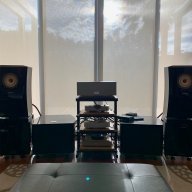
  • 20251206_160806.jpg
    20251206_160806.jpg
    775.2 KB · Views: 5
  • 20251206_160917.jpg
    20251206_160917.jpg
    2.1 MB · Views: 4
  • 20251206_161136.jpg
    20251206_161136.jpg
    1.1 MB · Views: 5
  • 20251206_161329.jpg
    20251206_161329.jpg
    626.2 KB · Views: 5
Also available on LP...
 
  • Like
Reactions: Young Skywalker
1765427323064.png

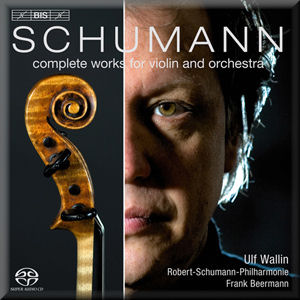
Robert Schumann Concerto in A minor for Violin and Orchestra (version by the composer of the Cello Concerto Op.129) Fantasy in C major Op.131 Concerto in D minor for Violin and Orchestra WoO.1 Ulf Wallin (violin) Robert-Schumann-Philharmonie/Frank Beerman (BIS-SACD-1775)

The performances here are passionate, emotive and virtuosic. The violin especially sounded realistic, nuanced and present. There's air and space around it. Bass lines are awesome too. These recordings benefit from a volume boost.

Music Web International says: "Ulf Wallin is an expressive soloist, but a disciplined one too. His vibrato is infinitely variable, but also tastefully restrained. Neither he nor Beerman take many liberties with the tempos, and when the music builds up to a climax, or one of those many localised fortes at the top of a phrase that you find in Schumann, there is often a very slight accelerando accompanied by an evenly graded crescendo in the strings. And when the music requires, Beerman has no qualms about overpowering the soloist for one of these brief climaxes, all the better to highlight the violin's return to dominance in the following phrase."

Classic fM says "Wallin captures a freshness and energy in his performance. Brushing aside those associations of madness that have coloured Schumann's music, Wallin and his equally dedicated orchestra and conductor have achieved new levels of understanding - listen to the captivating second movement of the Concerto in D minor to appreciate his poetic interpretation."
 
1765520775218.png

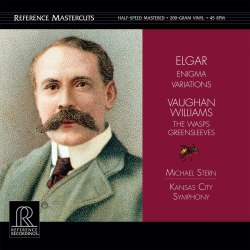
Ralph VAUGHAN WILLIAMS The Wasps: Aristophanic Suite Fantasia on Greensleeves Sir Edward ELGAR Variations on an Original Theme Enigma Kansas City Symphony/Michael Stern (REFERENCE RECORDINGS RR-129 SACD) A Relisten

Wow, these recordings have never sounded so incredibly lifelike until now (many thanks to my upgraded DAC)! In other words, I was transported to the recording venue. Fortissimos and bass lines are awesome. The soundscape is huge, wide, deep, resonant and immersive. (The recordings benefit from a volume boost)

Music Web International says: "The value of this issue really lies in the recording. I doubt if the pieces have ever been so spaciously captured in all the years since their first performances. Keith O. Johnson has another spectacular winner in the SACD surround recording. It’s detailed as well as capturing the huge acoustic of this massive auditorium. It reminded me of being mid stalls at a real concert, and there is no higher praise to come from this quarter. I would expect the company to be well pleased with their efforts. The vinyl version is somewhat less detailed and direct comparisons show that inner orchestral lines - in the 'Dorabella' variation for example - emerge much better from the SACD 5.0 track than the LP stereo, though the latter does capture the space almost equally well. Before any audiophile responds I will admit that this might vary with playback systems. What however disturbed me was the fact that the second disc, sides 3 and 4, of the vinyl set had a cyclic bump and that all four sides were slightly off-centre and thus the pitch varied. This often afflicts vinyl but at 45 rpm the frequency of the variation rises and is more disturbing to my ears. The pressings are very quiet and beautifully packaged, but for me the SACD, being just one disc, even quieter, free of pitch changes, and multi-channel, has to be the winner."

Classic fM says: "Fans of these two key players in the British music sphere will not be disappointed. Every nuance of Elgar's very particular dynamic markings is captured in this recording from the Kansas City Symphony, conducted by Michael Stern. The strings' shimmering vibrato, too, brings Vaughan Williams' Fantasia on 'Greensleeves' to life, with an orchestral sound so crisp that it's easy to be mentally transported directly to the concert hall."
 
  • Like
Reactions: SCAudiophile
1765602747326.png

XAVER SCHARWENKA Piano Concerto No. 1 in B flat minor; ANTON RUBINSTEIN Piano Concerto No. 4 in D minor – Marc-André Hamelin (piano) BBC Scottish Symphony Orchestra/Michael Stern (Hyperion SACDA67508)

The performances here are scorching and explosive and are excellently recorded. The overall presence on these recordings is attention-getting.

Classics Today says: "For speed, accuracy, and sheer poise, Marc-André Hamelin’s staggering piano mastery transcends all studio-recorded competition in these works. Granted, Hamelin won’t shock you out of your seat in the Rubinstein with explosive accents and fanciful filigree à la Josef Hofmann’s live 1937 version, nor titillate you with Shura Cherkassky’s liquid inner voices. But if there were ever a pianist who could storm Rubinstein’s difficult cadenzas or toss off Scharwenka’s demanding figurations with that rare combination of power and equanimity, it’s Hamelin. Although these are concertos that you listen to for the piano playing rather than the conducting, Michael Stern must receive credit for providing a bracing, sonorous, and rhythmically alive orchestral framework that supports and prods his soloist at every juncture. This splendidly engineered disc is a crown jewel both in Hyperion’s Romantic Piano Concerto series and in Hamelin’s standard-setting discography. Bravo! "

Classic fM Magazine says: Hamelin's legendary technique thrills at every turn, and in the Rubinstein his scorching virtuosity and emotional intensity mesmerises from beginning to end. Anyone who loves Tchaikovsky or Rachmaninov should investigate this stunning disc without delay!"’
 
Last edited:
1765780728715.png

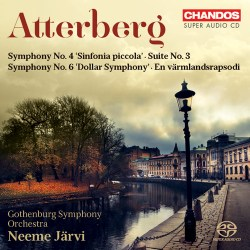
Kurt ATTERBERG Symphony No.6, Op. 31, Dollar Symphony En värmlandsrapsodi, Op. 36 Suite No. 3, Op. 19 No. 1 Symphony No. 4, Op. 14, Sinfonia piccola Suite soloists: Sara Trobäck Hesselink (violin); Per Högberg (viola) Gothenburg Symphony Orchestra/Neeme Järvi
(CHANDOS CHSA 5116 SACD)

These recordings are lifelike, very dynamic and detailed. The soundscape is huge, deep, wide, spacious, atmospheric and three-dimensional.

The Gramophone says: "Järvi's is the truest and most opulent [Sixth Symphony] ...The couplings are equally beguiling"

Classics Today says: "Toscanini played it too, but in modern times we have superb readings on BIS, as well as Ari Rasilainen on CPO as part of the label’s complete symphony edition. This performance is as good as the best of them: spontaneous, impulsive, and exciting, and terrifically recorded in SACD multi-channel sound. ... En värmlandsrapsodi is one of those luscious bits of nature painting that Atterberg could crank out at the drop of a hat. Not that there’s anything casual about it: the piece is extremely beautiful and well-crafted. All of these remaining performances are excellent; it’s great to report that Neeme Järvi seems to be back on top form again."
 
View attachment 163099

Kurt ATTERBERG Symphony No.6, Op. 31, Dollar Symphony En värmlandsrapsodi, Op. 36 Suite No. 3, Op. 19 No. 1 Symphony No. 4, Op. 14, Sinfonia piccola Suite soloists: Sara Trobäck Hesselink (violin); Per Högberg (viola) Gothenburg Symphony Orchestra/Neeme Järvi
(CHANDOS CHSA 5116 SACD)

These recordings are lifelike, very dynamic and detailed. The soundscape is huge, deep, wide, spacious, atmospheric and three-dimensional.

The Gramophone says: "Järvi's is the truest and most opulent [Sixth Symphony] ...The couplings are equally beguiling"

Classics Today says: "Toscanini played it too, but in modern times we have superb readings on BIS, as well as Ari Rasilainen on CPO as part of the label’s complete symphony edition. This performance is as good as the best of them: spontaneous, impulsive, and exciting, and terrifically recorded in SACD multi-channel sound. ... En värmlandsrapsodi is one of those luscious bits of nature painting that Atterberg could crank out at the drop of a hat. Not that there’s anything casual about it: the piece is extremely beautiful and well-crafted. All of these remaining performances are excellent; it’s great to report that Neeme Järvi seems to be back on top form again."
Never heard of this composer before but a great recommendation. The sound quality of this recording is fabulous!
 
  • Like
Reactions: Yuen A.
1765862333060.png

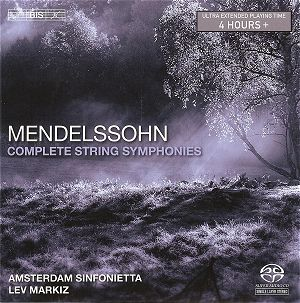
Felix MENDELSSOHN-BARTHOLDY The Complete String Symphonies (1821–1823): No. 1 in C major [11:24]; No. 2 in D major [10:55]; No. 3 in E minor [8:38]; No. 4 in C minor [8:57]; No. 5 in B flat major [11:20]; No. 6 in E flat major [12:26]; No. 7 in D minor [23:58]; No. 8 in D major (version for strings) [30:29]; No. 9 in C major [29:04]; No. 10 in B minor [10:04]; No. 11 in F major [38:12]; No. 12 in G minor [21:28]; No. 13 in C minor [7:22]; No. 8 in D major (version with winds) [29:28] Amsterdam Sinfonietta/Lev Markiz (BIS-SACD-1738)

The sound is lush, immediate, detailed and lifelike. The soundscape is wide, deep, spacious, airy and resonant.

Music Web International says: "The performances of the virtuoso Amsterdam Sinfonietta are both vital and sensitive and the sound is up to BIS’s normal high standards: well defined, well integrated, believable acoustics and the dynamics well caught. My only comparisons are the last four symphonies that constitute volume 3 of the Naxos set, recorded about the same time as the BIS set. Nicholas Ward and the Northern Chamber Orchestra play very well indeed, tempos and some other details may differ but those are also highly attractive readings. For sheer virtuosity and homogeneity of the playing I would place the Amsterdam Sinfonietta a notch above."

Classics Today says: "BIS offers arguably the finest available performances of Mendelssohn’s complete string symphonies (including the full orchestra version of No. 8) on a single SACD lasting more than four hours. This means that the disc is only playable on an SACD player, but if you own one and want this music, you can’t possibly do better. The Amsterdam Sinfonietta plays magnificently throughout, while Lev Markiz is particularly adept at maintaining rhythmic and textural interest in the first half-dozen symphonies, the most derivative and least characteristic music. But really, all the performances are superb, and they are extremely well recorded too."
 
1765950404425.png

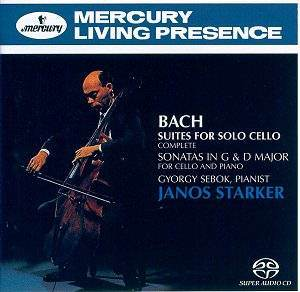
Johann Sebastian Bach Suite No. 1 in G major BWV1007 Suite No. 2 in D minor BWV1008 Suite No. 3 in C major BWV1009 Suite No. 4 in E Flat major BWV1010 Suite No. 5 in C minor BWV1011 Suite No. 6 in D major BWV1012 Sonata in G major BWV1027 Sonata in D major BWV1028 Janos Starker (cello) and Gyorgy Sebok (Piano – BWV 1027 & 1028) (MERCURY LIVING PRESENCE 470 644-2 SACD)

The cello's sound is present, warm, rich, deep, woody, buzzy, resonant and nuanced.

Music Web International says: "All six suites are very distinguished performances with Starker’s seriousness in this music showing through. The fast dances are played with a repressed humour, not at all like the overt virtuosity of an artist such as Piatigorsky, for example. The first movements of the Suites (No. 6 in particular) have a wonderful warmth of feeling about them which makes for a very satisfying listening experience. ... Starker’s virtuosity is never in doubt and it is all brought to the aid of the music, whilst the Mercury recording captures every nuance of the soloist’s playing."
 
View attachment 162699

Brahms Sonatas Op.38, Op.78, Op.120 nr.1 Pieter Wispelwey (cello) & Dejan Lazić (piano) (Channel Classics 24707SACD) (Digital Converter: DSD Meitnerdesign AD/DA)

The sonic 'energy' from the cello and piano here is amazing! The cello produces a rich, microtonal, sustained and expressive sound via Wispelwey's bowing. Lazić produces a stunning percussive attack, offering a wide dynamic range and extensive harmonic possibilities. The recordings are as good as it gets.
This is one of my favorites; I LOVE the music, and the performances AND recordings are EXCELLENT.
 
Last edited:
1766033101570.png

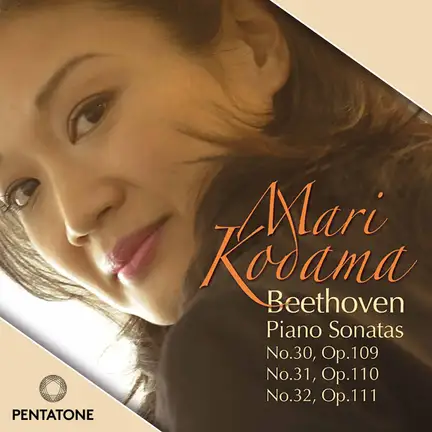
Beethoven Piano Sonata No. 30 In E, Op. 109, Piano Sonata No. 31 in A Flat, Op. 110, Piano Sonata No. 32 in C Minor, Op. 111 Mari Kodama (piano) (PentaTone PTC 5186 389 SACD)

The Steinway Model D Grand here sounded exactly like the real thing - tangible, powerful and rich, with deep bass, crystalline highs, vast dynamic range, long sustain and excellent projection. Kodama's phrasing, voicing and accents here are beyond criticism.

Classics Today says: "By playing Op. 109’s first movement in a more literal, less rhapsodic fashion than usual, Kodama brings out the music’s harmonic logic and underlying classicism. She also clarifies the second movement’s frequently glossed-over differences between detached and sustained articulation, although her slightly square and prettified pianism hardly reveals the inner urgency implied by the composer’s Prestissimo marking. And while deeper, darker, more lovingly inflected third movements abound in the catalog, Kodama must be credited for her clean and pointed finger work throughout.

Because Kodama plays down the pronounced dynamic contrasts and lyrical intensity in Op. 110’s first two movements, her controlled note-to-note tension as the Adagio and the Fugue unfold comes as a welcome surprise, especially in how she weighs the dissonant clashes between the slowly repeating left-hand chords and sustained right-hand melody.

Op. 111’s first-movement introduction features superbly judged dynamics and dramatic pauses that unfortunately lead into a small-scaled, held-back Allegro con brio. However, the Arietta’s subtle linear interplay and tight tempo relationships compensate for Kodama’s relative detachment in the long chains of trills and in the final pages when compared alongside the lyrical breadth and heartfelt nuance we hear from pianists as diverse as Arrau, Kempff, Badura-Skoda, Novaes, and Ciccolini."
 
1766212478173.png

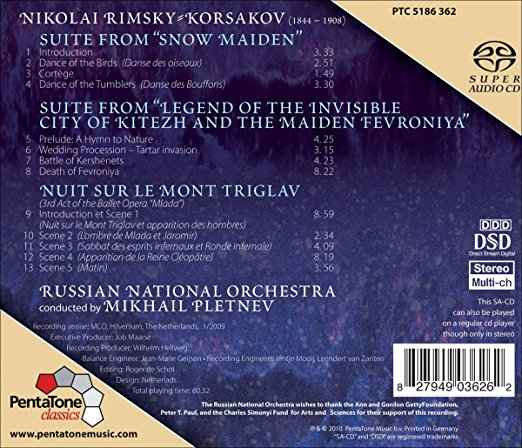
Rimsky-Korsakov Orchestral Suites Russian National Orchestra/Mikhail Pletnev (PentaTone PTC 5186 362 SACD)

Wow, the RNO came alive in my listening room via my upgraded DAC! Orchestra timbres are spot-on. The soundscape is huge, atmospheric and wide (wall to wall) and completely transparent. Fortissimos, percussion and bass lines are awesome and lifelike. The strings are lush, the woodwinds - enchanting and the brass blasting away. The RNO is in top-form. A truly demonstration quality disc.

Classics Today says "What’s not to like? The music is gorgeously tuneful and atmospheric, the orchestration amazing, the playing excellent, the sonics vibrant. Pletnev’s crisp briskness works quite well in music that thrives on rhythmic precision, elegance, and immaculate phrasing. His Dance of the Tumblers has just the right combination of energy and accuracy. The Tartar Invasion and Battle of Kershenets in the Kitezh Suite certainly don’t sound inhibited, and its concluding, bell-laden apotheosis is resplendent. It’s also great to have a new recording of the Night on Mount Triglav, which is basically the third act of Mlada without the vocal parts."

The Gramophone says: "Pletnev and his virtuoso orchestra make a charming sound picture of the Dance of the Birds, woodwind all a twitter, and leap with plenty of vigour into the single most popular item, the Dance of the Clowns, or Skomorokhi. ... and finally the death and transfiguration of the Princess Fevroniya. This is evocatively played and given a suitably spacious recording."
 

About us

  • What’s Best Forum is THE forum for high end audio, product reviews, advice and sharing experiences on the best of everything else. This is THE place where audiophiles and audio companies discuss vintage, contemporary and new audio products, music servers, music streamers, computer audio, digital-to-analog converters, turntables, phono stages, cartridges, reel-to-reel tape machines, speakers, headphones and tube and solid-state amplification. Founded in 2010 What’s Best Forum invites intelligent and courteous people of all interests and backgrounds to describe and discuss the best of everything. From beginners to life-long hobbyists to industry professionals, we enjoy learning about new things and meeting new people, and participating in spirited debates.

Quick Navigation

User Menu

Steve Williams
Site Founder | Site Owner | Administrator
Ron Resnick
Site Owner | Administrator
Julian (The Fixer)
Website Build | Marketing Managersing