





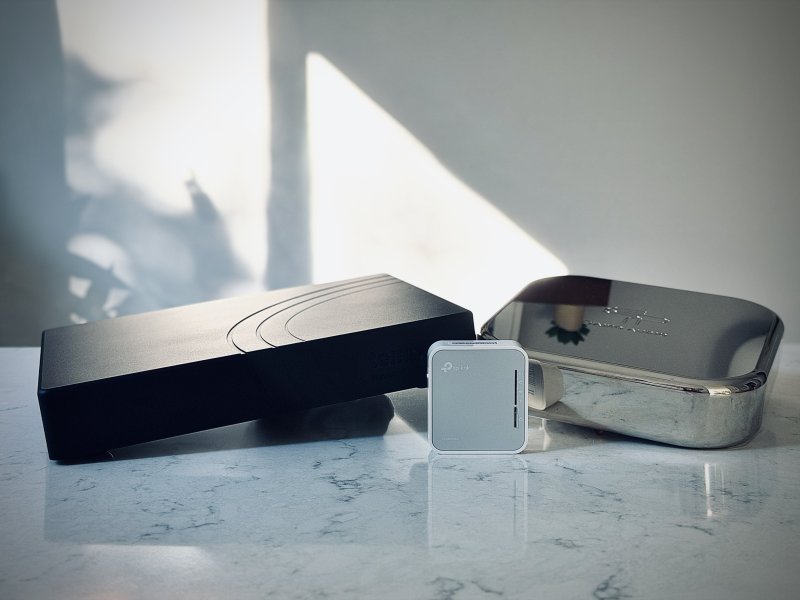
REVIEW: The best yet most affordable network switch (TPLink WR902AC)

keithc

Well-Known Member
Dec 31, 2022
307
670
163
USA
IMG_0216 2.jpg


I recently stumbled upon the parenting milestone of dealing with Gen Alpha slang. My son, when asked to put down his iPad, used language which left me perplexed and uneasy. What is this idiocy and which damn kid did he learn that from? Why can't they just talk in a respectful way and use normal English especially in front of their dad? Later that night, after I calmed down and had 2 glasses of wine, I started researching how to deal with kids and their distorted lingo and learned, much to the realization of my ignorance, that slang can be appropriate and useful among the younger generation in how they communicate.

Which brings me to this review. Just like language I take for granted everyday, for almost three decades I have increasingly gone deeper down the audiophile rabbit hole and religiously believed that "everything matters" -- components must be shielded and grounded from environmental noise, isolated from mechanical vibrations, supplied with the cleaning possible power via cables that minimize interactions with anything else around it. In our collective pursuit of uber excellence in the era of digital streaming, this means dedicated audiophile-grade network cables, routers, switches, servers and streamers floating on isolation platforms and driven by exotic power supplies augmented by equally-exotic power conditioners, fuses and power cords, all sorts of signal isolation, clocks and conversions to make sure those little 1s and 0s are interpreted as perfectly as possible. I drank the Kool-Aid and even contributed towards this effort with my review of the Network Acoustics tempus, and have owned 3 different switches (Innuos, Network Acoustics, and Taiko) and several power supplies in this never-ending pursuit. I would put my listening room in a Faraday cage if it was possible.

What if something came along and just makes you question if all that we have accepted in high-end audio is.... well, maybe not-so-absolute?

Courtesy warning: The rest of this post will be heresy to some audiophiles. It is so against the grain that perhaps I will be dismissed and shunned, and therefore to protect the credibility of other WBF members involved I will defer to their willingness to post on their own. Oh well -- here it is...

First, I cannot claim credit for any of this discovery. A saavy audiophile has a German website with electrical measurements of various switches and found that common mode noise is inherent in physically-connected switches, and that while Wifi can theoretically eliminate this interference, the key is in the implementation: using a low-energy minimalist wireless router in client mode under pure battery power. This was introduced to me by a WBF member and over the past two months an increasing number of us have been trialing this Wifi network setup in our various systems and have found results that I felt necessary to share in the spirit of the audio community.

For background, the incoming Comcast cable goes to my living room where the Motorola modem directly connects to an Orbi Mesh router. This then connects via a switch and in-wall cabling to my listening room where there is another switch -- at this point a QSA-Lanedri ethernet cable goes to my Taiko Audio Extreme Switch or Network Acoustic Tempus switch and a Network Acoustics Muon Pro filter and then my streamer which relies on Roon / Qobuz and sends music to my Lampizator Horizon. This has sounded so enjoyable that I have preferred streaming over locally-stored playback for the past year. While my peers have additional upstream audiophile routers, switches and optical moats, I am absolutely satisfied with this setup and felt I was done. Until this past month.

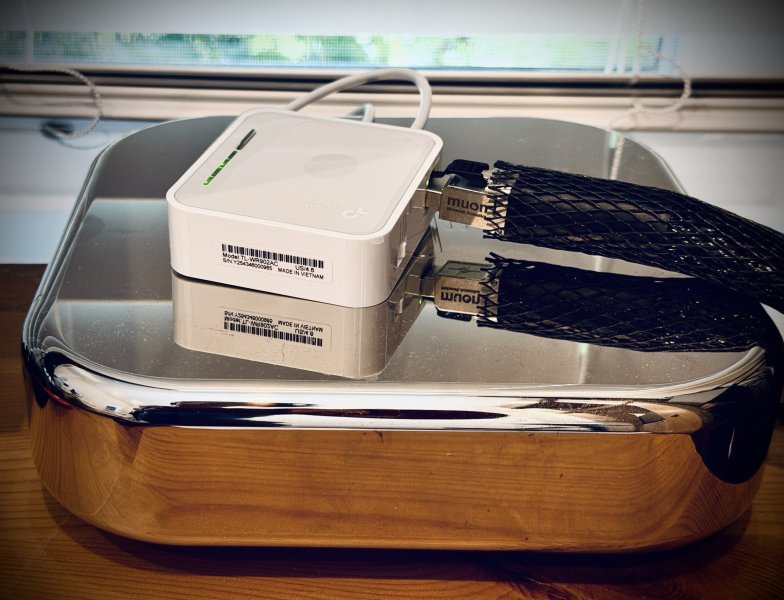
Instead of all the above, I am now using a $30 TPLink WR902AC wireless router powered by a $50 Anker battery pack to supply streaming data to my server. You read that correctly. This is the kind of device that people use at a coffee shop when working on their laptop... except with some easy software options used to tune it for optimal audio streaming use.*
 
  • Love
Reactions: Blake and Golum
(part 2)

IMG_0178 2.jpg


The WR902AC sound was pretty shocking from the very first song. Compared to my reference audiophile switches, there was an immediate level up in openness and ambiance of each song. Voices gained body and pharyngeal texture, instruments rang and resonated further into the venue in a way that sound extremely realistic, with a clarity that I can only describe as natural. Most instruments, especially piano, gained additional harmonics and reverberations that just sounded right. The air around Mary Chapin Carpenter's voice in "Grow Old With Me" (Qobuz) was abundant and, in contrast, made my reference setup sound like a close mic recording. The background guitar strums at 1:44 gained a more steely shimmer as I have never heard before. The conga and harp were readily identified in Hans Zimmer's "Honor Him" on the Gladiator Soundtrack giving me a new level of goosebumps. Another example is Dave Brubeck's "Blue Rondo a la Turk" and "Take Five" (Qobuz) where the percussion is just phenomenal and brought out with this switch; you can just about see the sticks flying between each cymbal hit.

The WR902AC setup EASILY takes the throne in the microdetails department. In the opening minute for Diana Krall's Live in Paris "A Case Of You" (Qobuz) it was as a microphone is now picking up every pedal rub, creak of her seat, cough from the audience many rows away, and the nuances in her exhalations behind decaying notes. I never knew there was a subtle knocking during the opening of "The Look Of Love" (from Diana's hand or foot tapping?). Background lyrics of songs that I have heard hundreds of times became clearer and formed words not realized previously. The soundstage significantly widened with greater separation of instruments and voices. All these additional details result in a significantly more intimate presentation and confidence that the last decile of recorded material is being extracted.

All of these gains occurred without any compromise on the cohesive musicality of each song. I tried hard to peer deep into the music for this review and repeatedly lost myself to the head bobbing and singing along. I sat up late into the night enthralled by the new perspective of my familiar music.

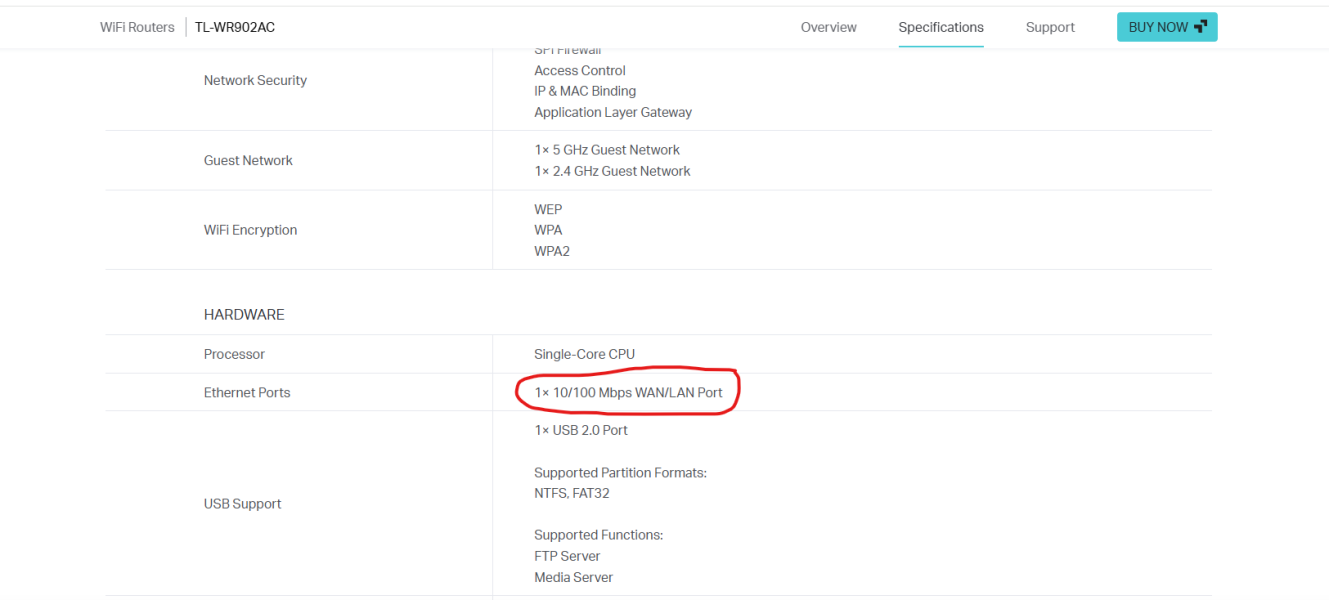
Usually I am sensitive to a sense of fatigue and headache with long sessions of suboptimal digital playback. This did not happen with the TPLink WR902AC despite my bias that this blinking plastic Wi-Fi box is now in my audio castle. Are there any downsides? Sure. You need to charge the battery bank to make sure it lasts through your music session, which in my case with the Anker means unplugging the TPLink every 2 days (there are ways to implement uninterrupted battery or capacitor power sources). The WR902A only does 100 mbps, so it could not be used directly with my Extreme Switch, and streaming higher bitrate can lead to occasional signal drops. However, despite not having the strongest Wi-Fi signal in my listening room, I found Roon to be responsive and a seamless user experience.

For the first several days I was in absolute disbelief. How can this silly little plastic thing which looks and feels like a cheap McD's Happy Meal toy outperform my beloved setup 35 lbs tank-like Taiko Extreme switch w/ SFP isolation, dedicated PSU with Synergistic Research Pink fuse and Snake River Audio Takshaka power cord and QSA-Lanedri ethernet cord? At 1/100th of the cost??? This thing has no right to sound this good for this price, not even if it costs 50x more. I made playlists after playlists to A/B test this Wi-Fi dongle against my reference, hoping to find music to trip it up and show its downfall, but with the exception of needing to recharge the battery pack, it was the consistent winner. Sharing notes with other WBF members they found the WR902AC also had superior results regardless of our different systems, home routers and servers.

A reflection from this experience was recognizing my "audio ego", an apropo comment from WBF friend Mike -- he found it comical how difficult it was for me to admit my costly, big-brand products were trounced by the WR902AC. He challenged me with "why not just let your ears decide?"

Just to make sure I was not insane, I contacted a local WBF member who was in the market for a new switch and told him I have a surprise mystery product. After we listened to his system, we put in my Tempus switch and we agreed it was a sonic step up. Then I brought out, hidden in a Birkenstock shoebox, the TPLink WR902AC, asked for his Wifi password, and hooked this up to his streamer.... then "What was that??!" The holy-shit look of complete shock on his face was priceless. He confirmed the immediate amount of new details, purity of voices, and cohesiveness in the songs we repeated. He agreed it was clearly better than the Tempus, and when asked what he felt this mystery switch was worth, he said it was thousands more than the Tempus.

I asked him to open the shoebox and look inside... it was the audio "what the fuck!" moment of the century. I guess "TPLink" is not a brand we self-respecting audiophiles would normally associate with. He ordered several from Amazon right away.

Since then, I have sold my Network Acoustics Tempus, the Taiko Extreme Switch, and my QSA-Lanedri cables. My audio ego was changed by the sessions of repeat aural confirmation. I would challenge you to allow yourself to have a listen. If you have spent years refining your network to reduce noise, once you hear the WR902AC you might, like me, realize how much all this noise has been contaminating your streaming music. Worst case you return it to Amazon. I have also introduced it to several more WBF members since, and they too have voiced similar findings in their home systems:
"Everything is a little tighter and cleaner... easier to follow and ambient cues like background noises and applause or coughing or whispers are more prominent..."
"Wow, I'm hearing more top end resolution immediate.... cymbals are crazy..."

One even used it behind the scenes at a recent large audio show :p

And as expected, I have also had some audio friends tell me I'm an idiot and that they don't want to hear more... their loss.

So here it is. #FlameSuitOn, but I felt compelled to share with the audiophile community.

Just like my kids' slang, I'm sure this post is big yikes. So I'll end with, This TPLink is siiiick, bruh! That's the tea. Give it a try, don't be so Ohio, cringe!


*The unit is easy to set up. PM me and I can send you step-by-step instructions including the software tuning options; the way to do this is critical in ensuring it doesn't just sound like some POS wifi dongle...
 
Last edited:
IMG_0733sm.jpg

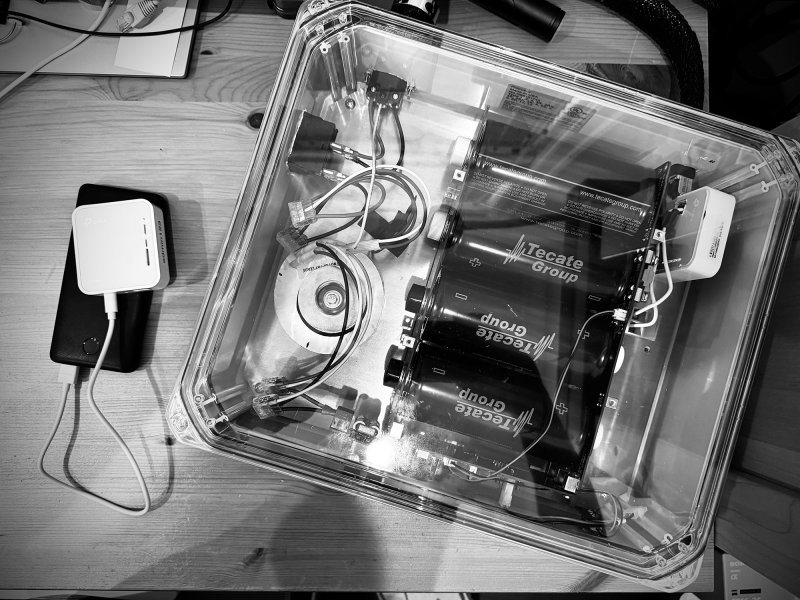
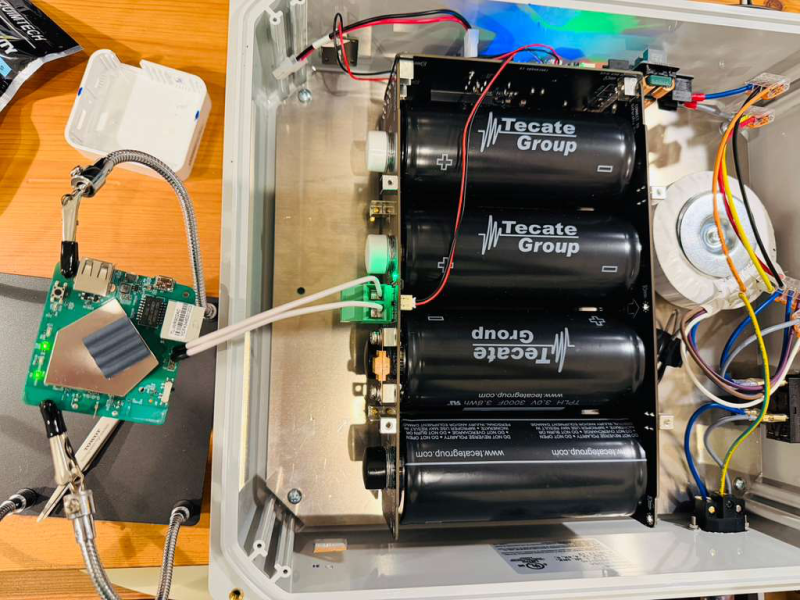
As an additional step -- this group in Europe has found that the WR902AC's micro-USB power inlet 5V down-regulation can be bypassed to further improve the sound. Some of the WBF members have followed in their footsteps and pursued isolated 3.3V battery/ultracapacitor solutions that are directly wired to the TPLink's motherboard (example above of my build next to the original WR902AC on the left). Some have found additional improvements in bass definition and overall details plus the benefit of no longer needing to habitually charge a battery pack. One US audio manufacturer may also be annoucning a complete solution incorporating this TPLink device...

Stay tuned...
 
Last edited:
  • Like
Reactions: Republicoftexas69
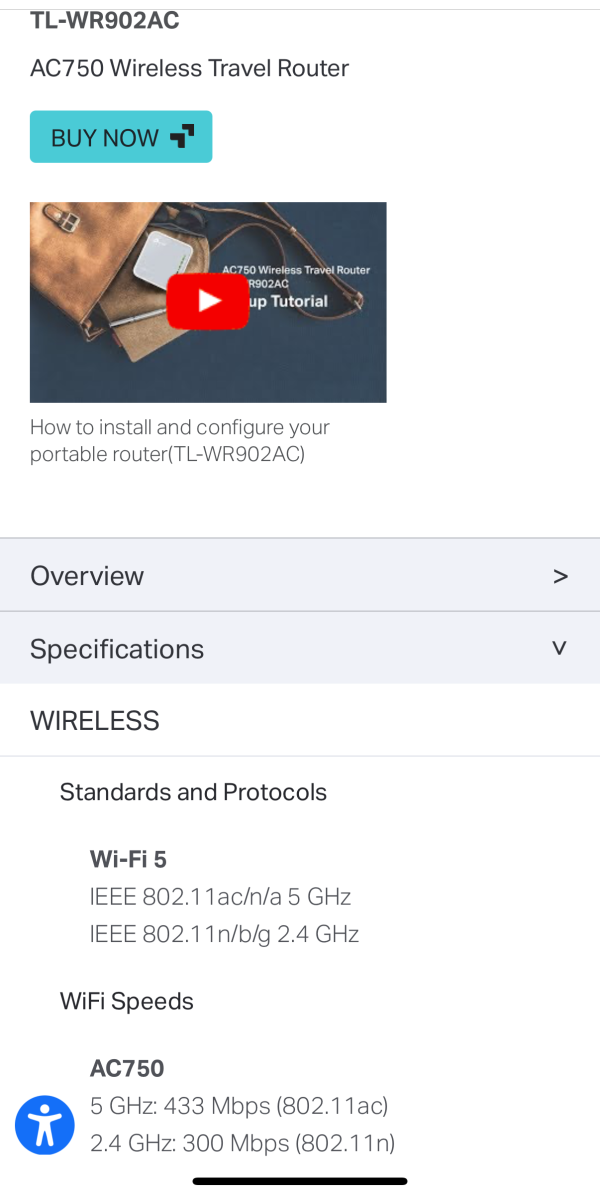
I’m looking at this right off the TP-Link website

1765378445751.png
 
Last edited:
I stand corrected. I was too focused on the wireless transmission rates.
 
Not that I mind, and I've been using TP-LINK for years for so much in the way of home networking, but I have to wonder just how much of this thread is tongue-in-cheek? The idea of foregoing all other audiophile (sic) network switches in favour of a travel-router ™ is enough to. make blind people shiver. What's next, Monoprice ™ ethernet and USB cables? If you're not careful, this could start a trend. This entire forum just might go DIY yet, and then I can start an entirely new thread on the AudioLinux Diretta Project: -> https://github.com/dsnyder0pc/rpi-for-roon/blob/main/Diretta.md

Now, wouldn't that be fun?

For those unaccustomed, or on the spectrum like myself, the better part of the above was/is sarcasm. h/t Chandler Bing "Could I Be Any More Obvious?"
 
  • Like
Reactions: LeBlanc
Hello everyone,
Sorry for my poor English, I'm from Germany. I can only confirm this post. The TPLink 902 is great for the low price. I also posted my results in the German forum under the same name, SolidCore. If you want really good streaming, I recommend, just like keithc, either battery operation via a USB power bank and/or 3.3V operation by removing the only built-in switching regulator in the device. Then it ‘sounds’ even more stable and cleaner. However, if anyone wants to connect via LAN, I also recommend the Mikrotik Hap Lite Switch. For the same £25, it performs very well and remarkably, and you also have the option of optimising the single switching regulator in the device via 3.3V. Both suggestions are remarkably good!

Regards,
Stephan
 
I stand corrected. I was too focused on the wireless transmission rates.

Several factors along your original question:

- The 100mbs limit was an initial concern to some folks. One of my friends was mostly listening to DSD and the bandwidth prohibits that; he actually said now he prefers lower bitrate and does not miss his higher res files,
- I recommend most people actually turn off the 5Ghz radio. It is noisier and the 2.4Ghz allows a longer battery life which is key, plus accounts better for transmission signal strength in many homes,
- I do 96/24 without any issues. At 192 and higher it starts having intermittent drop outs.
 
Several factors along your original question:

- The 100mbs limit was an initial concern to some folks. One of my friends was mostly listening to DSD and the bandwidth prohibits that; he actually said now he prefers lower bitrate and does not miss his higher res files,
- I recommend most people actually turn off the 5Ghz radio. It is noisier and the 2.4Ghz allows a longer battery life which is key, plus accounts better for transmission signal strength in many homes,
- I do 96/24 without any issues. At 192 and higher it starts having intermittent drop outs.
Do you have a link to a site or thread that explains how to get past the switching regulator?
 
Hello everyone,
Sorry for my poor English, I'm from Germany. I can only confirm this post. The TPLink 902 is great for the low price. I also posted my results in the German forum under the same name, SolidCore. If you want really good streaming, I recommend, just like keithc, either battery operation via a USB power bank and/or 3.3V operation by removing the only built-in switching regulator in the device. Then it ‘sounds’ even more stable and cleaner. However, if anyone wants to connect via LAN, I also recommend the Mikrotik Hap Lite Switch. For the same £25, it performs very well and remarkably, and you also have the option of optimising the single switching regulator in the device via 3.3V. Both suggestions are remarkably good!

Regards,
Stephan

Thank you Stephan :)
I did not link the original German website as the author told one of my friends that he did not want the negative responses that he has received from other audiophiles.

Another worthwhile side project is some folks are using a second battery-powered TPLink device as an access point to bridge to the "primary" TPLink in client mode at the terminus of the chain. They claim an additional improvement in isolation.
 
Do you have a link to a site or thread that explains how to get past the switching regulator?

1765381476701.png

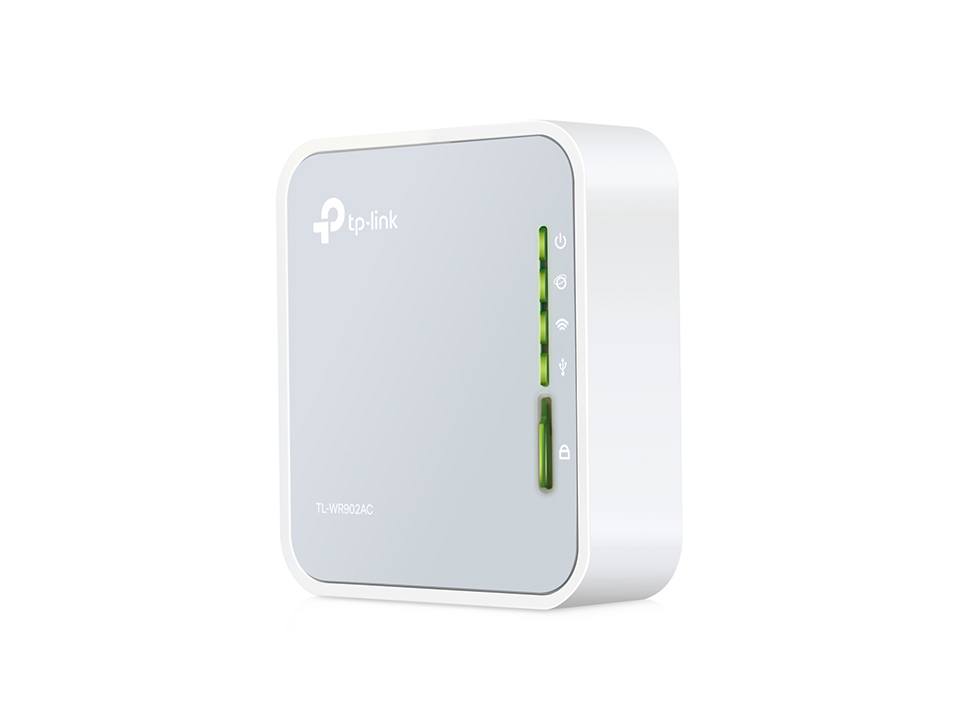
Here is a picture from my build. Adjacent to the TPLink's LAN port there are 4 holes on the motherboard; the closest one to the LAN is 3.3V and the next one is the negative terminal. This bypasses the downregulation from the micro USB's 5V input. The surface mounting/soldering has been a bit of a pain; I'm actually waiting for more Mundorf Angelique wire to come in and try this again.

Personally I would just stick w/ the Anker battery pack at this time. It's so good that all this additional effort is only incremental. I hope my other partners in crime here would chime in w/ their results and can provide additional input :)
 
  • Like
Reactions: adamaley and tony22
Good lord. You guys are serious with this? Must be a terribly slow news day.
I would have thought WBF to be an aspirational, not a DIY site.
Can it be both? How would that work?
 
Last edited:
Not that I mind, and I've been using TP-LINK for years for so much in the way of home networking, but I have to wonder just how much of this thread is tongue-in-cheek? The idea of foregoing all other audiophile (sic) network switches in favour of a travel-router ™ is enough to. make blind people shiver. What's next, Monoprice ™ ethernet and USB cables? If you're not careful, this could start a trend. This entire forum just might go DIY yet, and then I can start an entirely new thread on the AudioLinux Diretta Project: -> https://github.com/dsnyder0pc/rpi-for-roon/blob/main/Diretta.md

Now, wouldn't that be fun?

For those unaccustomed, or on the spectrum like myself, the better part of the above was/is sarcasm. h/t Chandler Bing "Could I Be Any More Obvious?"
Move along then. Most are interested and did not find one iota of sarcasm in the original post.
 
Good lord. You guys are serious with this? Must be a terribly slow news day.
I would have thought WBF to be an aspirational, not a DIY site.
Can it be both? How would that work?

We are not a site that thumbs our noses at DIY, lower cost gear or anything else between that and Uber high end. Everyone here is on their own audio journey, and we have folks from all over the world that are on different paths to achieve audio nirvana. Some folks may be on a budget, others may have what seems like an endless wallet.

We will not shame anyone, no matter where they are at along their audio journey.

Tom
 
Hello everyone,

Tom, very wisely said. It should be about ‘the best sound’, not about golden casings and god names, which may not sound better, but are very expensive. We also use routers in plastic casings at low prices for streaming. So why not good-sounding, affordable switches or repeaters?
Just my opinion.

Regards,
Stephan
 

About us

  • What’s Best Forum is THE forum for high end audio, product reviews, advice and sharing experiences on the best of everything else. This is THE place where audiophiles and audio companies discuss vintage, contemporary and new audio products, music servers, music streamers, computer audio, digital-to-analog converters, turntables, phono stages, cartridges, reel-to-reel tape machines, speakers, headphones and tube and solid-state amplification. Founded in 2010 What’s Best Forum invites intelligent and courteous people of all interests and backgrounds to describe and discuss the best of everything. From beginners to life-long hobbyists to industry professionals, we enjoy learning about new things and meeting new people, and participating in spirited debates.

Quick Navigation

User Menu

Steve Williams
Site Founder | Site Owner | Administrator
Ron Resnick
Site Owner | Administrator
Julian (The Fixer)
Website Build | Marketing Managersing