

AC Link
- Thread starter StasA
- Start date
You are using an out of date browser. It may not display this or other websites correctly.
You should upgrade or use an alternative browser.
You should upgrade or use an alternative browser.

I can’t remember specifically what improved but it sounded much better when I implemented AC- link - suggest you try it but make sure you take care and speak with your dealer first as there is a strict process that must be followed for safety
HiAs I was told with AC link you are only able to have one source plugged in to your AC pre, is that correct?
No,,inputs are irrelevant to the AC link, you need to only solely connect the AC link to the output of pre, and only that(in case your pre has dual outputs). It is forbidden to use other amps in parallel to the amp which is fed by AC link(ex. headphone amps etc).
Along some other points of caution.

Thanks Stavros, understood!Hi
No,,inputs are irrelevant to the AC link, you need to only solely connect the AC link to the output of pre, and only that(in case your pre has dual outputs). It is forbidden to use other amps in parallel to the amp which is fed by AC link(ex. headphone amps etc).
Along some other points of caution.
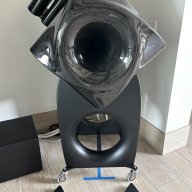
I still do not understand what exactly the AC link does for a system. I have an Essentia and Ageto. What cable did you use?

I am with you, we need to know. Where do you get those cables and what do they do? Are they to power it on and off or....?I still do not understand what exactly the AC link does for a system. I have an Essentia and Ageto. What cable did you use?
I know that AC has a cable and Inakustic too. Maybe Stavros can chime in and explain. My guess is it is a power enhancer to the amp, but I may be dead wrong. Even if it is, I still would like to know the benefits and the expected improvement from adding that cable. Is it 1-5-10%? More detail etc? That is why I am asking because I believe it is an expensive cable.
Hello to all
To clear things up for AC link , it has nothing to do with powering up etc.
Some words.
Our proprietry AC link method of component and inter-stage coupling is a different and IMHO superior way of signal interconnection/transmission, and different than the usual signal transmission methods used in audio.
Any single ended or balanced audio connection, consists of the signal line( or two of opposite phase signal lines, for balanced) ,accompanied with a ground connection.
In contrary, the AC link does not carry a common ground, and the signal is not referenced to ground. The system is comprised by a floating secondary winding(output section of the source stage, ex our AC link ready preamplifiers), connected through a two wire interface connection, directly connected to special biasing circuits of the following stage(in our case the amplifier) directly modulating the biasing circuits.No common ground is present, and the signal is not referenced to any of the two device’s grounds.
This method of signal transmission, when combined with our tube stage’s biasing circuits, present a much more robust way of tube drive.Signal bandwidth is superior(when all aspects are kept the same) transient response is cleaner but especially overload recovery behavior is much faster and artifact free.
The AC link signal transmission, comes with a very nice “side effect” as a bonus:
As mentioned before, any single ended or balanced audio connection, consists of the signal line( or two of opposite phase signal lines, for balanced) ,accompanied with a ground connection.This ground line connects and ties the two signal-level-reference ground via a specific finite impedance.
This is usually a source of many problems. Noise present at the ground rails of both devices is transmitted (noise from rectification, regulation, as well as inductively sourced noises).
In addition, the ground loop created via the fact that the two devices have two separate ground connections, one through their power cables and mains ground circuits, and one through the signal cables, is a source for trouble. The audio market is flooded in devices and accessories trying to solve this exact grounf problem .
The AC link is not a solution of this usual ground problem found in many systems, per se. The common ground/ground loop problem is not present when the AC link is used. So we eliminate the problem at the source, than trying to counter the effects of the problem.
The AC link does not include a ground connection between the two components, thus solving the common ground issue, responsible for many noise generation/transmission found in audio.
However, solving the ground loop issue is not the reason that the AC link was conceived, but rather a great “side effect” of the connection, solving a long standing problem at it’s source, the AC link at it's core is a more efficient and transparent way of signal transmission between stages of AC equipment.
The AC link is only compatible with our preamps and amplifiers , and only by using cable sourced from AC directly.
We do not support use of 3rd part cables as there is a risk of damage to the equipment .
Cheers
S
To clear things up for AC link , it has nothing to do with powering up etc.
Some words.
Our proprietry AC link method of component and inter-stage coupling is a different and IMHO superior way of signal interconnection/transmission, and different than the usual signal transmission methods used in audio.
Any single ended or balanced audio connection, consists of the signal line( or two of opposite phase signal lines, for balanced) ,accompanied with a ground connection.
In contrary, the AC link does not carry a common ground, and the signal is not referenced to ground. The system is comprised by a floating secondary winding(output section of the source stage, ex our AC link ready preamplifiers), connected through a two wire interface connection, directly connected to special biasing circuits of the following stage(in our case the amplifier) directly modulating the biasing circuits.No common ground is present, and the signal is not referenced to any of the two device’s grounds.
This method of signal transmission, when combined with our tube stage’s biasing circuits, present a much more robust way of tube drive.Signal bandwidth is superior(when all aspects are kept the same) transient response is cleaner but especially overload recovery behavior is much faster and artifact free.
The AC link signal transmission, comes with a very nice “side effect” as a bonus:
As mentioned before, any single ended or balanced audio connection, consists of the signal line( or two of opposite phase signal lines, for balanced) ,accompanied with a ground connection.This ground line connects and ties the two signal-level-reference ground via a specific finite impedance.
This is usually a source of many problems. Noise present at the ground rails of both devices is transmitted (noise from rectification, regulation, as well as inductively sourced noises).
In addition, the ground loop created via the fact that the two devices have two separate ground connections, one through their power cables and mains ground circuits, and one through the signal cables, is a source for trouble. The audio market is flooded in devices and accessories trying to solve this exact grounf problem .
The AC link is not a solution of this usual ground problem found in many systems, per se. The common ground/ground loop problem is not present when the AC link is used. So we eliminate the problem at the source, than trying to counter the effects of the problem.
The AC link does not include a ground connection between the two components, thus solving the common ground issue, responsible for many noise generation/transmission found in audio.
However, solving the ground loop issue is not the reason that the AC link was conceived, but rather a great “side effect” of the connection, solving a long standing problem at it’s source, the AC link at it's core is a more efficient and transparent way of signal transmission between stages of AC equipment.
The AC link is only compatible with our preamps and amplifiers , and only by using cable sourced from AC directly.
We do not support use of 3rd part cables as there is a risk of damage to the equipment .
Cheers
S
To tie this with your earlier comment, you can't use the AC link if your preamplifier is also connected to a non-AC amplifier through the 2nd set of preamp outs such as a subwoofer, active speakers connection or in my case a headphone amplifier?Hello to all
To clear things up for AC link , it has nothing to do with powering up etc.
Some words.
Our proprietry AC link method of component and inter-stage coupling is a different and IMHO superior way of signal interconnection/transmission, and different than the usual signal transmission methods used in audio.
Any single ended or balanced audio connection, consists of the signal line( or two of opposite phase signal lines, for balanced) ,accompanied with a ground connection.
In contrary, the AC link does not carry a common ground, and the signal is not referenced to ground. The system is comprised by a floating secondary winding(output section of the source stage, ex our AC link ready preamplifiers), connected through a two wire interface connection, directly connected to special biasing circuits of the following stage(in our case the amplifier) directly modulating the biasing circuits.No common ground is present, and the signal is not referenced to any of the two device’s grounds.
This method of signal transmission, when combined with our tube stage’s biasing circuits, present a much more robust way of tube drive.Signal bandwidth is superior(when all aspects are kept the same) transient response is cleaner but especially overload recovery behavior is much faster and artifact free.
The AC link signal transmission, comes with a very nice “side effect” as a bonus:
As mentioned before, any single ended or balanced audio connection, consists of the signal line( or two of opposite phase signal lines, for balanced) ,accompanied with a ground connection.This ground line connects and ties the two signal-level-reference ground via a specific finite impedance.
This is usually a source of many problems. Noise present at the ground rails of both devices is transmitted (noise from rectification, regulation, as well as inductively sourced noises).
In addition, the ground loop created via the fact that the two devices have two separate ground connections, one through their power cables and mains ground circuits, and one through the signal cables, is a source for trouble. The audio market is flooded in devices and accessories trying to solve this exact grounf problem .
The AC link is not a solution of this usual ground problem found in many systems, per se. The common ground/ground loop problem is not present when the AC link is used. So we eliminate the problem at the source, than trying to counter the effects of the problem.
The AC link does not include a ground connection between the two components, thus solving the common ground issue, responsible for many noise generation/transmission found in audio.
However, solving the ground loop issue is not the reason that the AC link was conceived, but rather a great “side effect” of the connection, solving a long standing problem at it’s source, the AC link at it's core is a more efficient and transparent way of signal transmission between stages of AC equipment.
The AC link is only compatible with our preamps and amplifiers , and only by using cable sourced from AC directly.
We do not support use of 3rd part cables as there is a risk of damage to the equipment .
Cheers
S
Exactly, this is a big NO NO as you risk damaging both AC and Non AC ampsTo tie this with your earlier comment, you can't use the AC link if your preamplifier is also connected to a non-AC amplifier through the 2nd set of preamp outs such as a subwoofer, active speakers connection or in my case a headphone amplifier?
Best
Stavros
I need to remove my headphone amplifier and order 2 sets of AC links from you for the Kassandra to Impera and from the Impera to the Concero 25s?Exactly, this is a big NO NO as you risk damaging both AC and Non AC amps
Best
Stavros
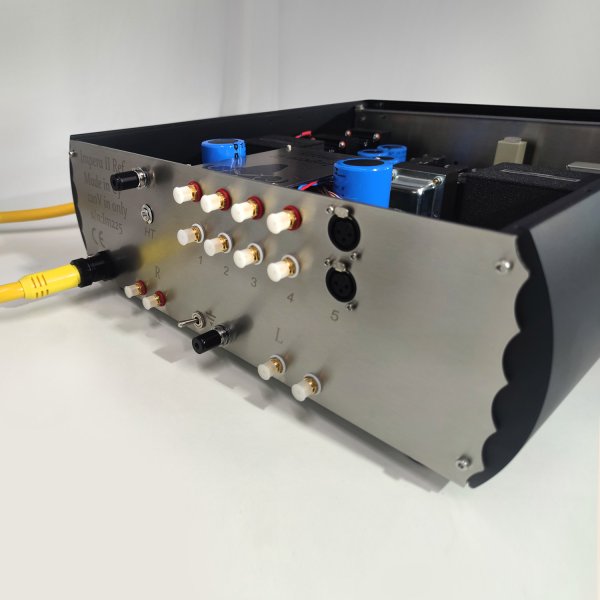
There is no AC link in the Impera II Reference but my Kassandra II Reference and Concero 25s both have it. Why none on the Impera?
Ac link is only between pre and amps,not dac and pre. The AC cable uses the the rca post of the pre for the pre side
Thank you. Can we order it direct from you?Ac link is only between pre and amps,not dac and pre. The AC cable uses the the rca post of the pre for the pre side
Thx, Stavros... It may be over my head, technically, but super informative. It sounds like it might have added benefits for my system.Hello to all
To clear things up for AC link , it has nothing to do with powering up etc.
Some words.
Our proprietry AC link method of component and inter-stage coupling is a different and IMHO superior way of signal interconnection/transmission, and different than the usual signal transmission methods used in audio.
Any single ended or balanced audio connection, consists of the signal line( or two of opposite phase signal lines, for balanced) ,accompanied with a ground connection.
In contrary, the AC link does not carry a common ground, and the signal is not referenced to ground. The system is comprised by a floating secondary winding(output section of the source stage, ex our AC link ready preamplifiers), connected through a two wire interface connection, directly connected to special biasing circuits of the following stage(in our case the amplifier) directly modulating the biasing circuits.No common ground is present, and the signal is not referenced to any of the two device’s grounds.
This method of signal transmission, when combined with our tube stage’s biasing circuits, present a much more robust way of tube drive.Signal bandwidth is superior(when all aspects are kept the same) transient response is cleaner but especially overload recovery behavior is much faster and artifact free.
The AC link signal transmission, comes with a very nice “side effect” as a bonus:
As mentioned before, any single ended or balanced audio connection, consists of the signal line( or two of opposite phase signal lines, for balanced) ,accompanied with a ground connection.This ground line connects and ties the two signal-level-reference ground via a specific finite impedance.
This is usually a source of many problems. Noise present at the ground rails of both devices is transmitted (noise from rectification, regulation, as well as inductively sourced noises).
In addition, the ground loop created via the fact that the two devices have two separate ground connections, one through their power cables and mains ground circuits, and one through the signal cables, is a source for trouble. The audio market is flooded in devices and accessories trying to solve this exact grounf problem .
The AC link is not a solution of this usual ground problem found in many systems, per se. The common ground/ground loop problem is not present when the AC link is used. So we eliminate the problem at the source, than trying to counter the effects of the problem.
The AC link does not include a ground connection between the two components, thus solving the common ground issue, responsible for many noise generation/transmission found in audio.
However, solving the ground loop issue is not the reason that the AC link was conceived, but rather a great “side effect” of the connection, solving a long standing problem at it’s source, the AC link at it's core is a more efficient and transparent way of signal transmission between stages of AC equipment.
The AC link is only compatible with our preamps and amplifiers , and only by using cable sourced from AC directly.
We do not support use of 3rd part cables as there is a risk of damage to the equipment .
Cheers
S
Can you elaborate on your impressions, please?I can confirm it had added benefits to my system when using AC-link
Similar threads
- Replies
- 17
- Views
- 3K
- Replies
- 18
- Views
- 2K


- Replies
- 16
- Views
- 2K

- Replies
- 75
- Views
- 7K

 | Steve Williams Site Founder | Site Owner | Administrator |  | Ron Resnick Site Owner | Administrator |  | Julian (The Fixer) Website Build | Marketing Managersing |