REVIEW: The best yet most affordable network switch (TPLink WR902AC)

Hello everyone,

I've been using the TP-Link for over two years to isolate my music LAN from the main home network.

Regarding the battery, I recommend the LHY Batt V 1.2 with 5 volts:


I connected it to the TP-Link via USB-C using the following silver cable:


Best regards,

Frank
I have looked at that psu as well. Is this fully automated? Turn of charging or do I need to toggle the switch on the front?
Regards Magnus
 
I got my TP-Link AC750 / TL-WR902AC yesterday and set it up following @keithc's excellent instructions. I left it hooked up to the Grimm MU2 overnight streaming files from my NAS for the next 20 hours and then listened to it tonight hooked up to a cheap off brand battery pack I had lying around for a few years. I compared back and forth with my Ediscreation Network Silent Switch SS1 SS Extreme. The cheap TP-Link noticeably outperformed the Ediscreation. The difference was similar to the improvement you hear listening to a fully warmed up system in the late evening vs how the exact same system sounds warmish in the afternoon or early evening. It is a remarkable improvement from a $40 piece of gear with a cheap battery pack. I ordered a long micro-USB cord so I can also try it with my Jackery Explorer Power Station. And even though I should probably have simply ordered the Anker Keith recommended I decided to take advantage of some special pricing on Aliexpress and buy the LHY battery @Beltane_sun mentioned. https://www.aliexpress.us/item/3256808584979089.html

I am happy enough with the TP-Link that I have ordered one to use with my second system replacing the EtherRegen I use there.

@keithc thanks so much for starting this thread and bringing such a great and affordable upgrade to our attention.
 
I decided to take advantage of some special pricing on Aliexpress and buy the LHY battery
Does anyone know how long this battery supply might power the TP-Link, and if the battery is replaceable (once it fails)?
 
I should also note that in previous high density battery power experiments, there was a HUGE impact in SQ based on output impedance of the batteries (basically how much instantaneous current they could deliver) and the nature of the battery management system. I got best (almost otherworldly) SQ from special hand selected batteries in massive parallel arrays and huge copper cross bars and no BMS.

DO NOT TRY THIS AT HOME

That is basically lightning in a battery pack with no protection (literally an electrical bomb). The was the free solo version of mountain climbing to see what is possible, but extremely dangerous. What was possible was awe inspiring, but WAY too dangerous to have around the house or work with. It did reveal that the quality of battery and BMS in the battery pack will have a profound impact on the nature of the power being delivered.

Rules of thumb for batteries - more instantaneous current delivery == better (output impedance). Less regulation/switching of voltage by a BMS the better (creates noise through the DC regulation). Battery chemistry is very audible (different battery chemistries seem to have a different noise profile, presumably at a chemical conversion level...I had a preference for LiFEPO4 batteries but there was a surprising difference with other battery types)

TL;DR - expect huge variability in power quality from different battery packs ;)
Is this application direct DC to …. ?No inverter to AC?

I am using a large LiFEPO with Exeltech inverter to power everything in the audio system , including router/switch.
 
I had come across Eric’s German forum a while ago, and built some of the projects described there including the TP-Link WR902 and ferrite choke cables. Thinking they made only a modest improvement in my system at the time, I installed them for a friend who is dependent on Wi-Fi to reach his Volumio endpoint.

When discussion here brought this up again, I set up a new unit -powered this time by my wife’s spare 16750mAh 3A Anker power bank instead of an iFi 5v iPower- to find that it makes a substantial, positive difference. -But not comparable to David Snyder’s 3-Tier Diretta/Raspberry Pi project which gives me a bigger, more well-defined 3D soundstage against an empty blackground.

So I’ve got the TP-Link (and an extra choke cable instead of the Shunyata Venom that I use between RPi’s) feeding a WiiM Pro for a secondary system. YMMV
 
  • Like
Reactions: Magnuska
Hello everyone,

the LHY battery has overcharge protection. However, the charging process must still be controlled via the switch.

The TP-LINK can operate for more than 8 hours with a fully charged LHY battery.

Best regards,

Frank
 
  • Like
Reactions: alwayslearning
Is this application direct DC to …. ?No inverter to AC?

I am using a large LiFEPO with Exeltech inverter to power everything in the audio system , including router/switch.
Direct DC for me (I do not have any AC generation in my system, not something I’ve played with)
 
  • Like
Reactions: NaimYourTubes
@raydude - I’m thinking the question here now is whether the LPS feeding the dcd which feeds the taiko router and switch introduces too much noise of its own which hampers the gain established by getting the signal chain off any hardwired connection. Meaning, feeding the TPlink directly to the server. It would mean no access to any attached NaS, of course, which would be a one up for server based storage. I do realise you’ve already said there is an uplift to SQ even with the taiko router and switch still in place as compared to a direct feed, but you also added it was early days and you hadn’t done in depth listening. Phew, lots to consider when I do my own listening.

In friendship - kevin
Having experienced the profound impact of the battery system in the Olympus, my current nirvana would be a Taiko BPS powered Taiko network stack. I have yet to experience a SQ ceiling when improving power to the Taiko network stack, even with TP link in the chain.
 
  • Like
Reactions: MarkusBarkus
Thank you to all the varying ideas of different options and implementations to power the WR902AC. When trying to figure out what's the best way to approach this (and how to make it better than my prior Extreme/Tempus setup), my goals in a power supply were:

1) Maximal sound quality (this is top priority),
2) Maximize duration of this maximal sound quality (I do not want interrupted sound quality as my listening sessions can vary from 2 to 18 hours... the holy grail is an always-on non-compromised solution if one exists),
3) If there is a charge cycle is necessary, minimize its duration or allow this to occur during non-listening hours, OR have a charge cycle that sounds ideally as good as the non-charging cycle,
4) Convenience of charging (as minimal effort as possible).

The 20000mAh Anker 325 (PowerCore 20K) mentioned in the original post has been reliably powering my WR902AC for 26-36+ hours non-stop; I really appreciate this as I can forget to charge it and know that I still have complete isolation (not attached to the wall) the next day; I never have its charging cable attached when I'm listening. The downside is that it charges slow and needs many hours/overnight. However, for those with Amazon, to me it's a $50 no-brainer that you can return if you don't like it. If there is a higher capacity battery that provides equal or better sound that would be very attractive.

So while intrigued by the LHY, seeing its battery lasts 8 hours seems like a substantial compromise compared to the Anker. I would also want a system that in non-charging mode can run physically detached from the wall as I suspect some noise could still leak through, but would love to hear a comparison for those who have it as to how the sound quality compares during battery mode vs charging mode. Also looking forward to more comparative posts among different PSUs, battery vs PSU, etc.

Yesterday I rebuilt my UCPurePro 3000F setup and it's been burning in. Initial impressions is that it might be the permanent solution I have been looking for.... will share more once it has enough time to A/B against the Anker.

Keith
 
Last edited:
I got my TP-Link AC750 / TL-WR902AC yesterday and set it up following @keithc's excellent instructions. I left it hooked up to the Grimm MU2 overnight streaming files from my NAS for the next 20 hours and then listened to it tonight hooked up to a cheap off brand battery pack I had lying around for a few years. I compared back and forth with my Ediscreation Network Silent Switch SS1 SS Extreme. The cheap TP-Link noticeably outperformed the Ediscreation. The difference was similar to the improvement you hear listening to a fully warmed up system in the late evening vs how the exact same system sounds warmish in the afternoon or early evening. It is a remarkable improvement from a $40 piece of gear with a cheap battery pack. I ordered a long micro-USB cord so I can also try it with my Jackery Explorer Power Station. And even though I should probably have simply ordered the Anker Keith recommended I decided to take advantage of some special pricing on Aliexpress and buy the LHY battery @Beltane_sun mentioned. https://www.aliexpress.us/item/3256808584979089.html

I am happy enough with the TP-Link that I have ordered one to use with my second system replacing the EtherRegen I use there.

@keithc thanks so much for starting this thread and bringing such a great and affordable upgrade to our attention.

I used a Bluetti AC200P to power mine via DC for a while and the power bank sounds significantly better. Just cave in and try it and you'll be rewarded even more.
 
  • Like
Reactions: keithc
When discussion here brought this up again, I set up a new unit -powered this time by my wife’s spare 16750mAh 3A Anker power bank instead of an iFi 5v iPower- to find that it makes a substantial, positive difference. -But not comparable to David Snyder’s 3-Tier Diretta/Raspberry Pi project which gives me a bigger, more well-defined 3D soundstage against an empty blackground.

Now that's quite interesting, what would be considered the best place (or even places?) to insert TL-WR902AC?

Router ➡️ Tier #1 ➡️ Tier #2 ➡️ Tier #3

While I'm aware of the fact that link between Tier #2 and Tier #3 (i.e. Host and Target) should be connected with an Ethernet cable directly, could adding an extra layer of isolation via TL-WR902AC actually help or hinder this particular design?

More importantly, would stacking multiple units of TL-WR902AC do more harm than good or the other way around?
 
I used a Bluetti AC200P to power mine via DC for a while and the power bank sounds significantly better. Just cave in and try it and you'll be rewarded even more.
Just to be clear you are talking about this power bank being better? https://www.amazon.com/dp/B0D5CQ9CHQ

One of the reasons I ordered the LHY is because I assumed it would last longer but if it is only 8 hours that @Beltane_sun said that would be disappointing.
 
For what it's worth...

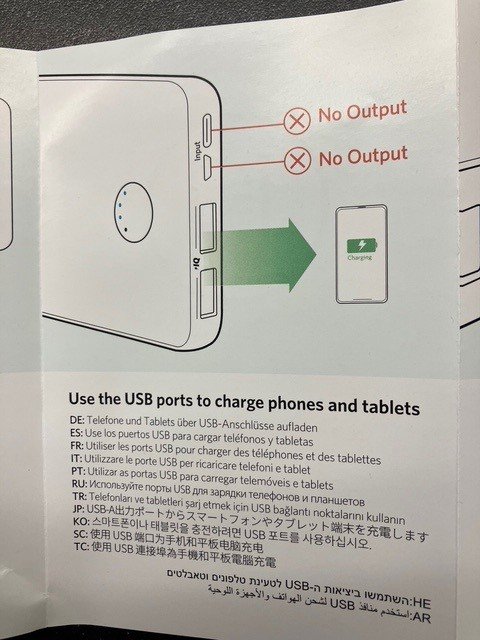
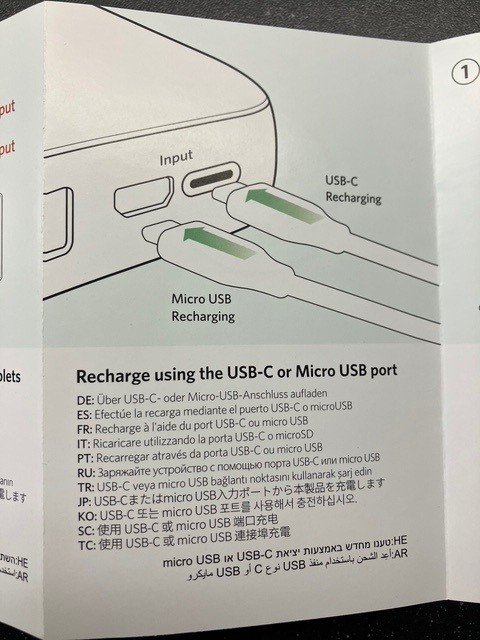
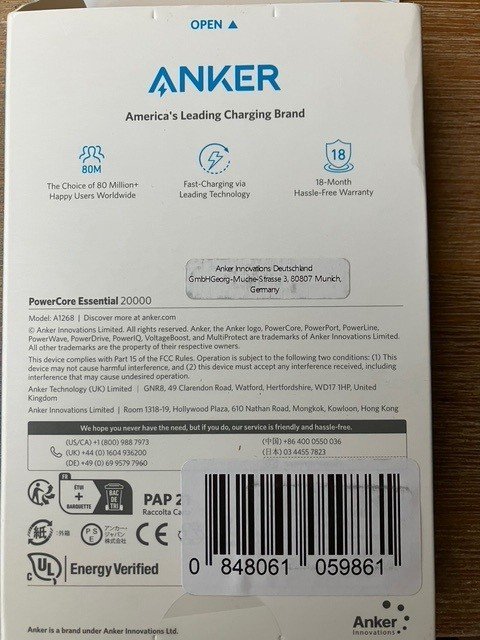
I haven't researched it, but there might be multiple versions of the Anker PowerCore Essential 20000 in use. I bought mine here in the Netherlands. The user manual states that the mini-USB and USB-C are only used to charge the power bank, not as an output to power the TPLink WR902AC.

2.jpg1.jpg3.jpg4.jpg
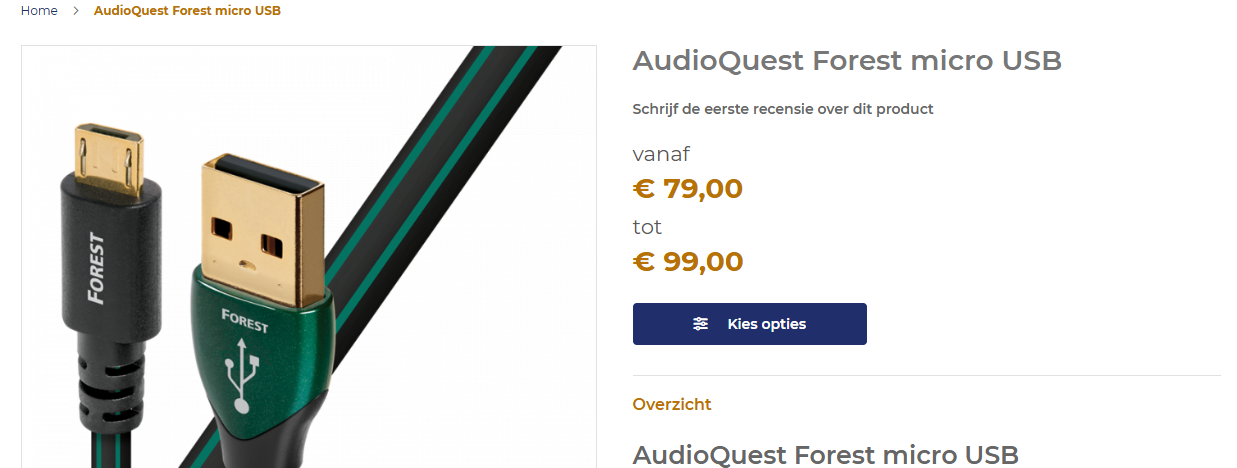
So keep this in mind when purchasing your cable if you plan to buy one separately. I bought this one myself: https://artsexcellence.com/audioquest-forest-micro-usb.html.
2.png
I'll probably receive it tomorrow and report back later to see if it offers any improvement over the thin cable that comes with it.
 
  • Like
  • Love
Reactions: keithc and Magnuska
I used a Bluetti AC200P to power mine via DC for a while and the power bank sounds significantly better. Just cave in and try it and you'll be rewarded even more.
The long Mini-USB cable I needed to use my Jackery Explorer 1000 v2 Power Station with the TP-Link came today and I gave it a try tonight. It was a fairly marked improvement over the no-name battery pack that I tried yesterday. I have no idea how it compares to the Bluetti or the Anker but with the Jackery the TP-Link took another step up on performance. The TP-Link may be the best, cheapest upgrade ever. Thanks again to @keithc.
 
  • Like
Reactions: ticktock and keithc
I used a Bluetti AC200P to power mine via DC for a while and the power bank sounds significantly better. Just cave in and try it and you'll be rewarded even more.
The Anker power supply sounds better than direct dc from your battery supply? Any theory why?
 
The Anker power supply sounds better than direct dc from your battery supply? Any theory why?

Guessing it's all a matter of how stable that 5V output is both microscopically w tiny voltage fluctuations, noise and TPLink draw as well as macroscopically during the battery run time and voltage drift.

But that's all measurements and theory. As long as your ears like it that's what matters, no?

FWIW, one of my friends said his TPLink was no different from his Uptone JS-2 vs the Anker battery pack. He uses it upstream of his Taiko Router -> Olympus.
 
Last edited:
Is it presumed that the TP link makes everything before the link inconsequential to sound quality?

(Such a power supply to Modem, Ethernet cable used and it’s length).

I guessing the “everything matters“ redo might still hold true?
 
The Anker power supply sounds better than direct dc from your battery supply? Any theory why?
It simply didn't sound as good. DC regulation from battery introduces its own noise - the likes of Vinnie Rossi, ASR, and Taiko (Olympus BPS) go to great lengths to ensure their battery supplies are as noiseless as possible - not the case with these consumer grade solar batteries.

Folks should join and read Erik's forum here where the genesis of using the TPlink started - there are numerous repeated questions/efforts here that have a consensus there already:

 
Hello
(part 2)

View attachment 162831


The WR902AC sound was pretty shocking from the very first song. Compared to my reference audiophile switches, there was an immediate level up in openness and ambiance of each song. Voices gained body and pharyngeal texture, instruments rang and resonated further into the venue in a way that sound extremely realistic, with a clarity that I can only describe as natural. Most instruments, especially piano, gained additional harmonics and reverberations that just sounded right. The air around Mary Chapin Carpenter's voice in "Grow Old With Me" (Qobuz) was abundant and, in contrast, made my reference setup sound like a close mic recording. The background guitar strums at 1:44 gained a more steely shimmer as I have never heard before. The conga and harp were readily identified in Hans Zimmer's "Honor Him" on the Gladiator Soundtrack giving me a new level of goosebumps. Another example is Dave Brubeck's "Blue Rondo a la Turk" and "Take Five" (Qobuz) where the percussion is just phenomenal and brought out with this switch; you can just about see the sticks flying between each cymbal hit.

The WR902AC setup EASILY takes the throne in the microdetails department. In the opening minute for Diana Krall's Live in Paris "A Case Of You" (Qobuz) it was as a microphone is now picking up every pedal rub, creak of her seat, cough from the audience many rows away, and the nuances in her exhalations behind decaying notes. I never knew there was a subtle knocking during the opening of "The Look Of Love" (from Diana's hand or foot tapping?). Background lyrics of songs that I have heard hundreds of times became clearer and formed words not realized previously. The soundstage significantly widened with greater separation of instruments and voices. All these additional details result in a significantly more intimate presentation and confidence that the last decile of recorded material is being extracted.

All of these gains occurred without any compromise on the cohesive musicality of each song. I tried hard to peer deep into the music for this review and repeatedly lost myself to the head bobbing and singing along. I sat up late into the night enthralled by the new perspective of my familiar music.

Usually I am sensitive to a sense of fatigue and headache with long sessions of suboptimal digital playback. This did not happen with the TPLink WR902AC despite my bias that this blinking plastic Wi-Fi box is now in my audio castle. Are there any downsides? Sure. You need to charge the battery bank to make sure it lasts through your music session, which in my case with the Anker means unplugging the TPLink every 2 days (there are ways to implement uninterrupted battery or capacitor power sources). The WR902A only does 100 mbps, so it could not be used directly with my Extreme Switch, and streaming higher bitrate can lead to occasional signal drops. However, despite not having the strongest Wi-Fi signal in my listening room, I found Roon to be responsive and a seamless user experience.

For the first several days I was in absolute disbelief. How can this silly little plastic thing which looks and feels like a cheap McD's Happy Meal toy outperform my beloved setup 35 lbs tank-like Taiko Extreme switch w/ SFP isolation, dedicated PSU with Synergistic Research Pink fuse and Snake River Audio Takshaka power cord and QSA-Lanedri ethernet cord? At 1/100th of the cost??? This thing has no right to sound this good for this price, not even if it costs 50x more. I made playlists after playlists to A/B test this Wi-Fi dongle against my reference, hoping to find music to trip it up and show its downfall, but with the exception of needing to recharge the battery pack, it was the consistent winner. Sharing notes with other WBF members they found the WR902AC also had superior results regardless of our different systems, home routers and servers.

A reflection from this experience was recognizing my "audio ego", an apropo comment from WBF friend Mike -- he found it comical how difficult it was for me to admit my costly, big-brand products were trounced by the WR902AC. He challenged me with "why not just let your ears decide?"

Just to make sure I was not insane, I contacted a local WBF member who was in the market for a new switch and told him I have a surprise mystery product. After we listened to his system, we put in my Tempus switch and we agreed it was a sonic step up. Then I brought out, hidden in a Birkenstock shoebox, the TPLink WR902AC, asked for his Wifi password, and hooked this up to his streamer.... then "What was that??!" The holy-shit look of complete shock on his face was priceless. He confirmed the immediate amount of new details, purity of voices, and cohesiveness in the songs we repeated. He agreed it was clearly better than the Tempus, and when asked what he felt this mystery switch was worth, he said it was thousands more than the Tempus.

I asked him to open the shoebox and look inside... it was the audio "what the fuck!" moment of the century. I guess "TPLink" is not a brand we self-respecting audiophiles would normally associate with. He ordered several from Amazon right away.

Since then, I have sold my Network Acoustics Tempus, the Taiko Extreme Switch, and my QSA-Lanedri cables. My audio ego was changed by the sessions of repeat aural confirmation. I would challenge you to allow yourself to have a listen. If you have spent years refining your network to reduce noise, once you hear the WR902AC you might, like me, realize how much all this noise has been contaminating your streaming music. Worst case you return it to Amazon. I have also introduced it to several more WBF members since, and they too have voiced similar findings in their home systems:
"Everything is a little tighter and cleaner... easier to follow and ambient cues like background noises and applause or coughing or whispers are more prominent..."
"Wow, I'm hearing more top end resolution immediate.... cymbals are crazy..."

One even used it behind the scenes at a recent large audio show :p

And as expected, I have also had some audio friends tell me I'm an idiot and that they don't want to hear more... their loss.

So here it is. #FlameSuitOn, but I felt compelled to share with the audiophile community.

Just like my kids' slang, I'm sure this post is big yikes. So I'll end with, This TPLink is siiiick, bruh! That's the tea. Give it a try, don't be so Ohio, cringe!


*The unit is easy to set up. PM me and I can send you step-by-step instructions including the software tuning options; the way to do this is critical in ensuring it doesn't just sound like some POS wifi dongle...
I Hello,
I'm a new member and I have a new Gustard R30. I have a situation that makes it difficult to hardwire via ethernet, so I have been using wireless to my streamer. Could you please share the directions with me for step by step set instructions including the software tuning options for the TPLink WR902AC?
Thanks,
Ted R
Fort Wayne, IN
 
Last edited:

About us

  • What’s Best Forum is THE forum for high end audio, product reviews, advice and sharing experiences on the best of everything else. This is THE place where audiophiles and audio companies discuss vintage, contemporary and new audio products, music servers, music streamers, computer audio, digital-to-analog converters, turntables, phono stages, cartridges, reel-to-reel tape machines, speakers, headphones and tube and solid-state amplification. Founded in 2010 What’s Best Forum invites intelligent and courteous people of all interests and backgrounds to describe and discuss the best of everything. From beginners to life-long hobbyists to industry professionals, we enjoy learning about new things and meeting new people, and participating in spirited debates.

Quick Navigation

User Menu

Steve Williams
Site Founder | Site Owner | Administrator
Ron Resnick
Site Owner | Administrator
Julian (The Fixer)
Website Build | Marketing Managersing