

Denon AVP-A1HDCI (A)
- Thread starter rsbeck
- Start date
You are using an out of date browser. It may not display this or other websites correctly.
You should upgrade or use an alternative browser.
You should upgrade or use an alternative browser.
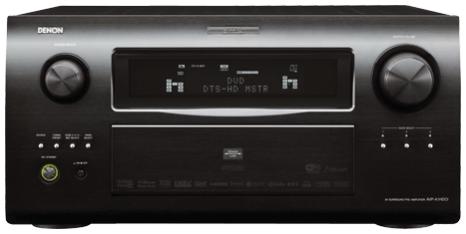
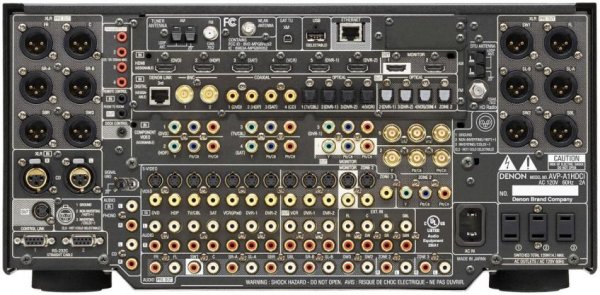
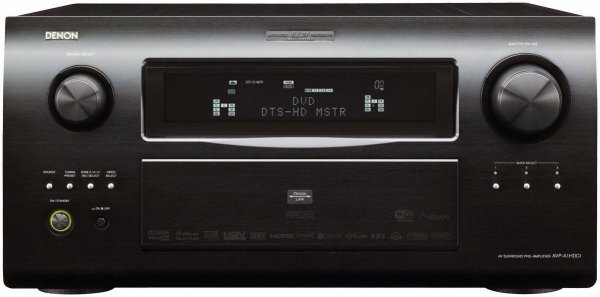
From Onkyo's Site ---
AVP-A1HDCI(A)
$7,500.00
For the ultimate home theater experience, Denon presents the ultimate A/V surround sound and video processor – the AVP-A1HDCI(A).
With built-in Ethernet and Wi-Fi (802.11b/g) that lets you access music and photo files as well as Internet radio stations. An optional adapter lets you stream your favorite songs and videos from your iPod. Built with uncompromising attention to detail, the AVP-A1HDCI(A) is equipped with an astonishing six individual power transformers to ensure the ultimate audio and video fidelity, eliminating interference between the various audio and video processing sections. Featuring unparalleled audio connectivity, the AVP-A1HDCI(A) is equipped with 12 high definition video inputs (6 HDMI v1.3a/6 component) and an additional 16 standard definition inputs, with deinterlacing, upscaling and conversion to HDMI outputs via the Silicon Optix HQV Realta reference video processor. This latest "A" version now includes Audyssey Dynamic Volume, and is also Sirius Radio Ready.
For Detailed Specs...
http://www.usa.denon.com/ProductDetails/3922.asp#
AVP-A1HDCI(A)
$7,500.00
For the ultimate home theater experience, Denon presents the ultimate A/V surround sound and video processor – the AVP-A1HDCI(A).
With built-in Ethernet and Wi-Fi (802.11b/g) that lets you access music and photo files as well as Internet radio stations. An optional adapter lets you stream your favorite songs and videos from your iPod. Built with uncompromising attention to detail, the AVP-A1HDCI(A) is equipped with an astonishing six individual power transformers to ensure the ultimate audio and video fidelity, eliminating interference between the various audio and video processing sections. Featuring unparalleled audio connectivity, the AVP-A1HDCI(A) is equipped with 12 high definition video inputs (6 HDMI v1.3a/6 component) and an additional 16 standard definition inputs, with deinterlacing, upscaling and conversion to HDMI outputs via the Silicon Optix HQV Realta reference video processor. This latest "A" version now includes Audyssey Dynamic Volume, and is also Sirius Radio Ready.
For Detailed Specs...
http://www.usa.denon.com/ProductDetails/3922.asp#
From The Review by Secrets of Home THeater and Hifi
Conclusions
The Denon AVP-A1HDCI SSP represents the next level in surround sound flexibility. The SSP will decode anything, including SACD and the new high def movie soundtracks. It sets up easily, in spite of a very complex, powerful set of menu options, and with its on-line firmware update capability, will refuse to be out of date with improvements and other features that emerge. It is designed specifically as a digital processor. If you are still using the two-channel analog outputs on your CD player, you might consider some other processor, but for those of you with a rack full of HDMI sources, this setup will give you great satisfaction.
To read the complete review...
http://www.hometheaterhifi.com/surr...und-processor-and-power-amplifier-review.html
Conclusions
The Denon AVP-A1HDCI SSP represents the next level in surround sound flexibility. The SSP will decode anything, including SACD and the new high def movie soundtracks. It sets up easily, in spite of a very complex, powerful set of menu options, and with its on-line firmware update capability, will refuse to be out of date with improvements and other features that emerge. It is designed specifically as a digital processor. If you are still using the two-channel analog outputs on your CD player, you might consider some other processor, but for those of you with a rack full of HDMI sources, this setup will give you great satisfaction.
To read the complete review...
http://www.hometheaterhifi.com/surr...und-processor-and-power-amplifier-review.html

Steve Williams
Site Founder, Site Co-Owner, Administrator
looks like a great piece of equipment for the price
I am curious that if this has no amplifier and is $2K more than Denon AVR-5308CI (A), my question Rob is how do the processors on both units compare. Are they the same or different. I would like to understand why it is $2K more and has no amplifier
I am curious that if this has no amplifier and is $2K more than Denon AVR-5308CI (A), my question Rob is how do the processors on both units compare. Are they the same or different. I would like to understand why it is $2K more and has no amplifier
This is a highly regarded piece of gear and at $7,500 is very competitive with the also excellent Anthem D2 which, I believe, is going through a revision at this time. In my opinion, the Anthem D2 and Denon AVP-A1HDCI(A) are the next market segment up from the Integra 80.1, which MSRP's at $2,300 and like you say, to throw another whammy in there -- it is a step up in price from the Denon 5308 CI, which is a receiver that seems to share a lot of the same features, but is priced at $5,500 and includes an internal ten channel amplifier.
Here's another thing -- as you probably already know, you don't have to use the internal amplifiers in the Denon receiver. You can bypass them and use the 5308 CI receiver as a surround processor and enjoy all of its features in that capacity.
So, why forgo the 10 channel amplifier section, pay $2,000+ more and get the Denon AVP-A1HDCI (A) surround processor, which requires you to supply your own amplification?
This will depend on whether you already have your own amplification, which you do. And on whether you feel like selling your amps, simplifying things and diverting the proceeds towards your new receiver. Somehow, I can't see you doing this, but who knows -- it's actually not a bad strategy, especially since two channel music listening is really your emphasis.
So, what do you get for the extra money it costs to buy the Denon AVP-A1HDCI (A) surround processor?
It looks to me like you get even more fabulous overkill drool worthy engineering. Here's an excerpt from the Audioholics review...
Weighing in at nearly 60lbs, the AVP-A1HDCI is more massive than most flagship receivers, including their very own AVR-5308CI. Typically when I pop the cover off a so called “high end” processor, I see a lot of empty space. This is not the case with the AVP-A1HDCI.
This baby is packed full of components and its packed in there so snuggly, that I’d venture to say Denon could have gone with a larger chassis to give it an even more “audiophile” appeal to it. The AVP-A1HDCI actually uses the same casing from the venerable AVR-5803 receiver but sports all new electronics including two large shielded torroid transformers.
The AVP-A1HDCI utilizes a traditional linear power supply and there are tons of high quality power supply capacitors stacked to the sides of the chassis to ensure clean stable power is never an issue. The finned heatsink near the top of the chassis and below the WiFi card is utilized for the Realta / HQV processor
Denon boasts the AVP-A1HDCI is the world’s ONLY fully balanced processor from input to output (see left pic above). This can be seen by the large array of balanced outputs (9 for the mains and center/surrounds, and 3 for independent subwoofer outputs).
You can configure for two different pairs of surround speakers for optimized positioning for music vs movies or run two pairs of side or back channels for larger theater installs to increase coverage. Denon doesn’t just stop with balanced outputs, they also sport two balanced inputs via the CD input and follow the balanced topology from input to output of the entire product.
The advantages of fully balanced circuit designs include significant reduction in distortion and noise / RFI/EMI pickup. The only disadvantage is cost and complexity in circuit design as you need double the components and occupy more internal real estate.
Denon utilizes a direct mechanical grounding scheme with independent transformers and power supplies for each block as can be seen in the above right pic. The preamp drivers are all high current pure class A for the best fidelity and signal drive possible.
Like with past flagship Denon products such as the AVR-5805CI, the AVP-A1HDCI uses the very best Burr Brown PCM-1796 dual differential DAC’s (four per channel), coupled with Denon’s own proprietary DDSC-HD digital audio technology and Advanced AL24 processing for the highest linearity and lowest noise floor possible.
For More....
http://webcache.googleusercontent.c...on+A1HDCI+and+5308ci&cd=8&hl=en&ct=clnk&gl=us
Here's another thing -- as you probably already know, you don't have to use the internal amplifiers in the Denon receiver. You can bypass them and use the 5308 CI receiver as a surround processor and enjoy all of its features in that capacity.
So, why forgo the 10 channel amplifier section, pay $2,000+ more and get the Denon AVP-A1HDCI (A) surround processor, which requires you to supply your own amplification?
This will depend on whether you already have your own amplification, which you do. And on whether you feel like selling your amps, simplifying things and diverting the proceeds towards your new receiver. Somehow, I can't see you doing this, but who knows -- it's actually not a bad strategy, especially since two channel music listening is really your emphasis.
So, what do you get for the extra money it costs to buy the Denon AVP-A1HDCI (A) surround processor?
It looks to me like you get even more fabulous overkill drool worthy engineering. Here's an excerpt from the Audioholics review...
Weighing in at nearly 60lbs, the AVP-A1HDCI is more massive than most flagship receivers, including their very own AVR-5308CI. Typically when I pop the cover off a so called “high end” processor, I see a lot of empty space. This is not the case with the AVP-A1HDCI.
This baby is packed full of components and its packed in there so snuggly, that I’d venture to say Denon could have gone with a larger chassis to give it an even more “audiophile” appeal to it. The AVP-A1HDCI actually uses the same casing from the venerable AVR-5803 receiver but sports all new electronics including two large shielded torroid transformers.
The AVP-A1HDCI utilizes a traditional linear power supply and there are tons of high quality power supply capacitors stacked to the sides of the chassis to ensure clean stable power is never an issue. The finned heatsink near the top of the chassis and below the WiFi card is utilized for the Realta / HQV processor
Denon boasts the AVP-A1HDCI is the world’s ONLY fully balanced processor from input to output (see left pic above). This can be seen by the large array of balanced outputs (9 for the mains and center/surrounds, and 3 for independent subwoofer outputs).
You can configure for two different pairs of surround speakers for optimized positioning for music vs movies or run two pairs of side or back channels for larger theater installs to increase coverage. Denon doesn’t just stop with balanced outputs, they also sport two balanced inputs via the CD input and follow the balanced topology from input to output of the entire product.
The advantages of fully balanced circuit designs include significant reduction in distortion and noise / RFI/EMI pickup. The only disadvantage is cost and complexity in circuit design as you need double the components and occupy more internal real estate.
Denon utilizes a direct mechanical grounding scheme with independent transformers and power supplies for each block as can be seen in the above right pic. The preamp drivers are all high current pure class A for the best fidelity and signal drive possible.
Like with past flagship Denon products such as the AVR-5805CI, the AVP-A1HDCI uses the very best Burr Brown PCM-1796 dual differential DAC’s (four per channel), coupled with Denon’s own proprietary DDSC-HD digital audio technology and Advanced AL24 processing for the highest linearity and lowest noise floor possible.
For More....
http://webcache.googleusercontent.c...on+A1HDCI+and+5308ci&cd=8&hl=en&ct=clnk&gl=us
There are multiple factors in play:Another question is -- how are Denon and Anthem able to pack this type of quality engineering in a unit that costs around $7,000 when just a few years ago, other brands at the leading edge were charging two, three, and even five times that much?
1. Digital components continue to drop in price all the time.
2. Price is not always relative to cost. Higher-end equipment is often priced to what market will accept.
3. High-end equipment requires a lot of (dealer) hand-holding. As such, those dealers tend to ask for high margins to carry such gear. For this reason, you usually don't see much between $7K and $15K. Equipment either costs $7K or less or above $7K.
4. Higher-end gear can have hand-tuned components which are expensive to produce as far as labor. My Mark Levinson DAC for example, is the tuned version of No 360 and cost an extra 50% from what I recall. In exchange, it is able to get lower distortion.
As I post the other day, the performance of high-end DACs is a step above such gear.
As I post the other day, the performance of high-end DACs is a step above such gear.
If you're referring to the graphs posted, I've seen no evidence that such differences are audible during playback of mixed tones.
So, what we know is that sometimes, but not always, a piece of gear at a higher price can be shown in graphs derived from instruments more sensitive than the human ear to offer superior performance in one aspect or another.
WRT THD, I believe the levels at which THD can be heard and how much produces a JND (Just Noticeable difference) has been studied and quantified.
I'd be surprised if anyone could prove that the differences posted in the graphs to which you refer are actually audible.
Here's something I found....(posted for discussion)
To try to find out what we can and can't hear, David Clark of DLC Designs in Michigan conducted a series of listening tests some years ago. As listening subjects, Clark called on members of the Southwest Michigan Woofer and Tweeter Marching Society -- one of the United States' most active and enthusiastic audio clubs. I participated as an observer.
A test signal was used, both because it would be easier to detect unmasked distortion, and because it would educate the listeners as to what they should be listening for.
In the case of harmonic distortion, a 220Hz sine wave was chosen.
Similarly, an "optimal" short piece of music was selected that had proved itself to be revealing of the particular problem.
The first test was for harmonic distortion, or "grunge." Four levels of THD were used, beginning with 8%, then 4%, 2%, and 1%. Using the natural music, virtually all listeners could hear 8%, but at 1%, the scores were very close to pure chance, suggesting that this is the minimum distortion level audible with this musical selection. Repeating the test with the optimal music showed that the grunge was much easier to hear, at least at the higher levels, the subjects showing virtual certainty down to 2%. But the 1% results, while slightly higher than with the natural music, still do not indicate that this level was audible.
http://www.mastersonaudio.com/features/20040401.htm
With regard to DAC's, if two pieces of gear use different DAC's (not always the case), one may be superior to another, but if so, it is probably not due to the audibility of the evidence shown in the THD graphs mentioned.
In other words, I think we're dealing in the realm of unsupported opinion.
Not that there is anything wrong with that.
I used the word "performance." I didn't say anything about audibility. The graph I presented is quantitative and absolute proof that there is a performance difference -- audible or not.If you're referring to the graphs posted, I've seen no evidence that such differences are audible during playback of mixed tones.
Right. So we better understand what the graphs say and don't say and hence my earlier question about how many bits of CD audio we should be able to resolve in our equipmentSo, what we know is that sometimes, but not always, a piece of gear at a higher price can be shown in graphs derived from instruments more sensitive than the human ear to offer superior performance in one aspect or another.
 .
.No one has even scratched the surface there let alone arriving at that level of conclusion. I will create a thread on THD later but for now, THD is a measure of harmonic distortion. We put out a single tone, and then measure the sum total of everything other than that one tone. A harmonic is a multiple of the original frequency. With this knowledge, now let's look at two examples of identical amounts of THD measured in two different gear:WRT THD, I believe the levels at which THD can be heard and how much produces a JND (Just Noticeable difference) has been studied and quantified.
Original signal: 4Khz, harmonics: 8KHz at 4%, 12 Khz 1% --> THD = 5%
Original signal: 1 Khz, harmonics: at 3Khz at 2%, 5Khz, at 1.5%, 7Khz at 1%, 9Khz at .5% --> THD =5%
Would you say both of these systems sound the same? If so, that would be completely wrong. As is evidenced, THD is a sum. It does not tell you the components that make up that number. The first system above has pretty high distortion at its first harmonic, 8 Khz, whereas the second system has less distortion at its first harmonic (3Khz). So one might conclude that the first system has more audible distortion but that would ignore the fact that the ear is more sensitive at 3Khz than it is at 8Khz. We know this from the Seminole research into our hearing system by Bell Labs researchers Fletcher and Munson:

As you see, the ear is most sensitive to 2 to 3Khz. Naturally so because we want to hear other humans and their vocal frequency is around the same range. And this range also represents the sound of danger (other animals trying to ear the early man
).So as you see, a single number like THD while worthwhile to look at, is not instructive by itself. It represents infinite possibilities.
As someone who has performed double-blind tests of high-end DACs like my Mark Levinson and that of built-in DACs in consumer gear such as Denon, I can tell you that there most definitely is audible differences to my ears. However, I can't tell you that they are audible to you or anyone else in this forum. That is a subjective debate that cannot be proven.I'd be surprised if anyone could prove that the differences posted in the graphs to which you refer are actually audible.
That would be a pretty odd choice given the above curve. Harmonic distortion of 220Hz would be pretty low by the time it gets to the 10th order (2.2Khz) where it would be most audible. So I am not sure that kind of testing represents what we know of human hearing system.In the case of harmonic distortion, a 220Hz sine wave was chosen.
In general, it is very easy to come up with tests that are not revealing of certain data. Unfortunately as hard as it is, we need the opposite. I can show you thousands of audio tracks which would show DACs sound the same. I can also show you hundreds of tracks that are revealing of differences. If one doesn't know what to look for and picks random tracks of music, the job becomes a lot harder.
The job of a DAC is to reproduce the value that is sent to it. If I send it 65355 and 65354, I expect to see an output difference that I can measure. If the DAC is not able to do that, then it is not performing to spec. BTW, I didn't pick these numbers at random. CD audio has 16 bits. It means that it can represent 2^16 different values. The lowest number would be 0 and the highest 65355.With regard to DAC's, if two pieces of gear use different DAC's (not always the case), one may be superior to another, but if so, it is probably not due to the audibility of the evidence shown in the THD graphs mentioned.
Now, if the last digit is not accurate, we have 1/65355 level of distortion. That turns out to be 0.0015% of distortion. Now, let's look at the comparison of Mark Levinson to Denon

As we see, the Denon distortion is well above 0.001%. So it cannot resolve the full resolution of a 16-bit source (let alone so called "24-bits" advertised). I am too lazy to do the math but guestimating, the Denon loses linearity at around 13 bits.
I hope present company is excludedIn other words, I think we're dealing in the realm of unsupported opinion.
. As I have said, I have tested differences of the levels we are talking about with pretty rigorous testing standards and I find that it is indeed audible to me. Whether it is audible to others is hard to say. In general, most people are unable to hear digital artifacts because it is so foreign to them. They don't know what to listen for, what material to use that is revealing, and how to rule out other differences. But people can be trained to hear them (as I have been) and once there, it is hard to accept that the improvement is not audible.As I have noted though, for general viewing of movies and such, these products are excellent. For critical listening, stepping up a level of two might make sense if budget allows.
Lastly, let me thank you for posting the articles and questioning the data. Both are good things to do
. With the former something people should do more of....As someone who has performed double-blind tests of high-end DACs like my Mark Levinson and that of built-in DACs in consumer gear such as Denon, I can tell you that there most definitely is audible differences to my ears.
Unfortunately, your claim of proper DBT cannot be verified, but I can accept that, in your opinion, the Levinson standalone DAC sounds better to you than the sound you assume to be due to the DAC in a piece of Denon gear, such as a surround processor or a receiver -- but even if I were to accept your claim of succeeding at a DBT between these two pieces of gear, this still wouldn't prove that it is due to the audibility of the differences in the numbers on those graphs.
However, I can't tell you that they are audible to you or anyone else in this forum. That is a subjective debate that cannot be proven.
Well, it would be more convincing if you could verify that with proper protocol a number of subjects could reliably hear the difference in distortion represented by the two graphs.
Without some verification, I will still say I doubt anyone could hear the difference as represented by the two graphs.
Until I see some verification, I'll stand by that.
As you say, proof is usually elusive.
Nothing wrong with simply having an opinion.
Last edited:

How about listing a few CDs that contain tracks that you feel demonstrate the non-linearities you mention? List the track and the "effect" that illustrates the distortion so that we could have a common reference.
Lee
Lee
Yup. Likewise your claim that no one can hear the difference either can't be verified since you can't point to any test of the two pieces of the equipment. So there, we are evenUnfortunately, your claim of proper DBT cannot be verified
.Yes, it wouldn't "prove" anything. We can't prove one brand of speaker is better than another either. Yet we discuss what we know about them here and let the other party decide if that data lends itself to more conviction to go with some new piece of gear.but even if I were to accept your claim of succeeding at a DBT between these two pieces of gear, this still wouldn't prove that it is due to the audibility of the differences in the numbers on those graphs.
If I were you I wouldn't believe that eitherWell, it would be more convincing if you could verify that with proper protocol a number of subjects could reliably hear the difference in distortion represented by the two graphs.
. As I showed you, all tests are imperfect. So applicability of a double-blind test to the situation at hand is just as dubious as the graph I posted. This is indeed the main fallacy for people advocating such tests. That they are quick to believe the validity of a subjective double-blind test but very cagey about believing any objective measurement like I posted. Both should be subject of strong scrutiny especially given the subjectivity of the double-blind tests. For example, you could have come back at me with a simple argument that my testing did not involve these two exact same pieces of gear and therefore my double-blind testing does not have any bearing on the equipment at hand sounding different! Or, you could have asked me exactly how I did the test and poke holes in it.
Well, as I like to say, there is no easy path to audio salvationWithout some verification, I will still say I doubt anyone could hear the difference as represented by the two graphs.
Until I see some verification, I'll stand by that.
. You will be waiting forever for someone to prove such things to you. I used to have the exact same opinion as you. What got me to think different was my own critical testing. I can convince myself of something far better than someone else can convince me . So take the time to do some testing if you can. Indeed, the Internet forums are full of them. Therefore, the way to have a useful discussion is to bring more data to the table than saying "I think this is black rather than white." A decade of doing subjective and objective testing tells me that these things are not that easy to understand or the whole world would buy one brand or even kind of speaker, amp, etc. But they are not....Nothing wrong with simply having an opinion.
Running to the airport but will post an answer when I get a chance....How about listing a few CDs that contain tracks that you feel demonstrate the non-linearities you mention? List the track and the "effect" that illustrates the distortion so that we could have a common reference.
Lee
Speakers sounding different has little to do with audibility of the differences represented by those two charts.
Discussions of DBT usually derail any discussion and I would not spend any time waiting for such proof.
I don't know anybody who does proper DBT between any two pieces of gear before buying.
First, because doing such tests properly is incredibly difficult and second because in just about every case, it just isn't possible.
So, the vast majority of the time, we all buy gear based on auditions and we have to do our best to discern differences.
Sometimes it is very easy like with speakers, sometimes differences are incredibly subtle.
If anybody has spent any time A/B'ing these two particular pieces of gear and has an opinion, IMO that's all that's needed for discussion.
Issues like the audibility of THD at those levels seems like a tangent and might be best handled in a separate thread where more people can weigh in.
Discussions of DBT usually derail any discussion and I would not spend any time waiting for such proof.
I don't know anybody who does proper DBT between any two pieces of gear before buying.
First, because doing such tests properly is incredibly difficult and second because in just about every case, it just isn't possible.
So, the vast majority of the time, we all buy gear based on auditions and we have to do our best to discern differences.
Sometimes it is very easy like with speakers, sometimes differences are incredibly subtle.
If anybody has spent any time A/B'ing these two particular pieces of gear and has an opinion, IMO that's all that's needed for discussion.
Issues like the audibility of THD at those levels seems like a tangent and might be best handled in a separate thread where more people can weigh in.
Last edited:
RS,
Have you had any issues with inability to reach high output volumes as described in this review:
http://www.audioholics.com/reviews/processors/denon-avp-a1hdci
I'm interested in the Denon, as a new processor is high up on my list of "next upgrade". Significantly less expensive than the Krell S1200, it may be a good alternative.
Lee
Have you had any issues with inability to reach high output volumes as described in this review:
http://www.audioholics.com/reviews/processors/denon-avp-a1hdci
I'm interested in the Denon, as a new processor is high up on my list of "next upgrade". Significantly less expensive than the Krell S1200, it may be a good alternative.
Lee
Hi Lee,
I don't own this unit, I have an Integra 9.8 + Dolby Lake tuned by Keith Yates. However, I went to a site with an extensive user thread 16,000+ posts and did a search on this topic. These are what I found...
"One thing I noticed though is that unlike the Audioholics review, where Gene couldn't get the AVP to put out enough volume for his tastes because of Audyssey with PLIIx and had to adjust the trims to get more headroom, I found no such issue, this thing drove my system to really loud levels with tons of volume left."
"When I was using Audyssey I never had any problems with volume limiting. Whether is was watching a movie with DD, DTS, Lossless audio, or PLIIx, all played plenty loud with room to spare."
"I haven't had any vol limiting issues and couldnt be happier with the positive influence of audyssey."
"Extensive listening with PLIIx with Audyssey engaged. Overall volume is more than adequate."
Could not find any poster with a problem in this area.
I don't own this unit, I have an Integra 9.8 + Dolby Lake tuned by Keith Yates. However, I went to a site with an extensive user thread 16,000+ posts and did a search on this topic. These are what I found...
"One thing I noticed though is that unlike the Audioholics review, where Gene couldn't get the AVP to put out enough volume for his tastes because of Audyssey with PLIIx and had to adjust the trims to get more headroom, I found no such issue, this thing drove my system to really loud levels with tons of volume left."
"When I was using Audyssey I never had any problems with volume limiting. Whether is was watching a movie with DD, DTS, Lossless audio, or PLIIx, all played plenty loud with room to spare."
"I haven't had any vol limiting issues and couldnt be happier with the positive influence of audyssey."
"Extensive listening with PLIIx with Audyssey engaged. Overall volume is more than adequate."
Could not find any poster with a problem in this area.
apanton1952
New Member
Out of curiosity I bought a NAD s170i off a gear crazed tech spec mate. I had it plugged into my system for about 2 days feeding ML Aerius up front and Scripts at the back via Technics and Pioneer power amps. But after that it was unplugged and has now graced a dusty spot in the storage zone for about a year. Somehow, stereo is my thing.
I can't really say what I don't like about surround sound in the modern format, but the NAD itself didn't sound great. Of course, as with all things audio, where does one begin to tweak and probably the amps didn't suit it?
Strangely, back in the 70's I was quite happy with a Hafler set up on KEF 104 speakers and a JVC amp.
I can't really say what I don't like about surround sound in the modern format, but the NAD itself didn't sound great. Of course, as with all things audio, where does one begin to tweak and probably the amps didn't suit it?
Strangely, back in the 70's I was quite happy with a Hafler set up on KEF 104 speakers and a JVC amp.
I'm also not a fan of surround sound for music listening. That's one of the reasons I decided to have separate theater and listening rooms. Having said that, IMO, surround sound is extremely dependent on acoustic planning and having the sonics dialed in perfectly -- otherwise, you get a mess. Can be an interesting mess, but a mess none-the-less.
In my theater, I have excellent acoustics and everything is dialed in perfectly so I can see how music can sound with surround, but I still don't find myself going in there to listen to music.
I'm a confirmed two channel guy when it comes to music.
I'm sure some surround mixes are better than others, but a lot of them put you on stage among the musicians and I am just not interested enough in surround sound for music listening to try to ferret out which recordings are better than others in that regard.
When I attend a live music concert, I generally don't find musicians behind me nor do I hear much of the sound originating from behind me.
What I hear coming from behind me are reverberations and this is different in every venue.
In my two channel listening room, I hear music coming from all around like I do in a concert venue with excellent acoustics.
That's what I want. I want the music to originate from in front of me like in a live concert and for the music to naturally move through the room like it would in a room with excellent acoustics.
If I were into surround sound for music, my theater would be fabulous for it, but the proof is in the pudding -- I don't go in there and listen to music in surround even though I know that if I wanted to I have a great venue for it. This certifies for me that I am just not interested.
Soundtracks on the other hand.....
In my theater, I have excellent acoustics and everything is dialed in perfectly so I can see how music can sound with surround, but I still don't find myself going in there to listen to music.
I'm a confirmed two channel guy when it comes to music.
I'm sure some surround mixes are better than others, but a lot of them put you on stage among the musicians and I am just not interested enough in surround sound for music listening to try to ferret out which recordings are better than others in that regard.
When I attend a live music concert, I generally don't find musicians behind me nor do I hear much of the sound originating from behind me.
What I hear coming from behind me are reverberations and this is different in every venue.
In my two channel listening room, I hear music coming from all around like I do in a concert venue with excellent acoustics.
That's what I want. I want the music to originate from in front of me like in a live concert and for the music to naturally move through the room like it would in a room with excellent acoustics.
If I were into surround sound for music, my theater would be fabulous for it, but the proof is in the pudding -- I don't go in there and listen to music in surround even though I know that if I wanted to I have a great venue for it. This certifies for me that I am just not interested.
Soundtracks on the other hand.....
Surround sound is fabulous for movie soundtracks because it can help you become immersed in the film. It helps to put you in the scene, makes it believable, helps you lose yourself in the movie. If you have excellent acoustics for movie surround, you can recreate the acoustics intended on the soundtrack. If the soundtrack is giving you the acoustic cues that tell you you're in the cockpit of a an airplane, you'll get those cues and you'll be in that cockpit. If the movie is trying to give you the acoustics of the cockpit, but these are being mixed with unmistakable cues that tell your subconscious you're really in your living room, you won't get the same sensation.
So, excellent surround sound is fabulous for movies.
So, excellent surround sound is fabulous for movies.
Similar threads
- Replies
- 0
- Views
- 3K

- Replies
- 8
- Views
- 585
- Replies
- 1
- Views
- 1K

- Replies
- 3
- Views
- 950

- Replies
- 1
- Views
- 925

 | Steve Williams Site Founder | Site Owner | Administrator |  | Ron Resnick Site Owner | Administrator |  | Julian (The Fixer) Website Build | Marketing Managersing |