
Introducing Olympus & Olympus I/O - A new perspective on modern music playback

Unfortunately, this isn’t strange at all, it’s an ongoing issue that has been affecting roughly 10% of our customers for quite some time. We have no visibility into how many users of other brands are experiencing the same, but a new thread with these symptoms appears on the Roon support forum almost daily, on top of the long-running ones.

What makes this such a difficult problem for Roon (and for us), I suspect, is the intermittent nature and the apparent dependency on local environmental factors. For example, here in Oldenzaal it has only occurred twice in over 2 years, June 11th and July 17th (2025). Outside of those two events, every Olympus runs uninterrupted for five days straight during burn-in/QC. We even went as far as exchanging entire servers, only to find that this was a complete waste of effort: the “faulty” units played flawlessly here, while the replacements displayed the same behavior once installed at the customer location.

Since Roon has been working on this for a long time, we’ve started our own parallel project to offer a practical workaround: increasing buffering/track caching for users who are impacted. We’ve also built a fully duplicated Linux environment, allowing us to run Roon OS variants such as ROCK. Notably, users running ROCK report similar issues, so it’s clearly not tied to a specific OS.

Still, the more parallel approaches we develop, the more options we’ll have to intervene effectively, ideally without compromising the advantages XDMI has over other protocols.
 
Unfortunately, this isn’t strange at all, it’s an ongoing issue that has been affecting roughly 10% of our customers for quite some time. We have no visibility into how many users of other brands are experiencing the same, but a new thread with these symptoms appears on the Roon support forum almost daily, on top of the long-running ones.

What makes this such a difficult problem for Roon (and for us), I suspect, is the intermittent nature and the apparent dependency on local environmental factors. For example, here in Oldenzaal it has only occurred twice in over 2 years, June 11th and July 17th (2025). Outside of those two events, every Olympus runs uninterrupted for five days straight during burn-in/QC. We even went as far as exchanging entire servers, only to find that this was a complete waste of effort: the “faulty” units played flawlessly here, while the replacements displayed the same behavior once installed at the customer location.

Since Roon has been working on this for a long time, we’ve started our own parallel project to offer a practical workaround: increasing buffering/track caching for users who are impacted. We’ve also built a fully duplicated Linux environment, allowing us to run Roon OS variants such as ROCK. Notably, users running ROCK report similar issues, so it’s clearly not tied to a specific OS.

Still, the more parallel approaches we develop, the more options we’ll have to intervene effectively, ideally without compromising the advantages XDMI has over other protocols.
Glad to hear that Taiko is working on this issue, Emile. I guess I'm one of the 10% who suffers this issue. I get the complicated stop that @StefanK describes above once a week or so. I get the simpler stoppage that one can restart by hitting Play every other day or so. I almost never had this with the Extreme (a handful of times in a few years maybe?), so if it's a Roon issue, it's pretty odd that it happened to coincide very precisely with my change from Extreme to Olympus + I/O in early March of this year. But coincidences happen.

This is very aggravating when one is in the musical flow. It's downright embarrassing when it happens while playing music for a guest.
 
Glad to hear that Taiko is working on this issue, Emile. I guess I'm one of the 10% who suffers this issue. I get the complicated stop that @StefanK describes above once a week or so. I get the simpler stoppage that one can restart by hitting Play every other day or so. I almost never had this with the Extreme (a handful of times in a few years maybe?), so if it's a Roon issue, it's pretty odd that it happened to coincide very precisely with my change from Extreme to Olympus + I/O in early March of this year. But coincidences happen.

This is very aggravating when one is in the musical flow. It's downright embarrassing when it happens while playing music for a guest.

That’s not odd at all, though it is difficult to explain without going into deep technical detail. The vast majority of Extreme owners use USB. USB is essentially a local, point-to-point connection with very large buffers, designed to be “bulletproof,” and frankly not very sensitive to sound-quality variables. It behaves like a directly attached device pulling data locally.

XDMI looks similar on the surface, physically local, but functionally it’s a completely different class of device. It’s a remote endpoint with its own processor, memory, storage, and clock domain. If you compare it to how you were using the Extreme before, XDMI behaves far more like a networked component than a local USB device.

Because of this, the link between Roon and XDMI is subject to the same constraints and fragilities as any networked endpoint under RAAT: network jitter, switching behavior, packet timing, interrupts, and local environmental factors. That’s where the variability comes from.

So if this still feels counter-intuitive, the key point is: USB and XDMI are fundamentally different. USB is local and heavily buffered; XDMI is remote and RAAT-dependent. And if you look at Roon’s own support forum, nearly all the problems people report involve networked endpoints, not USB.
 
That’s not odd at all, though it is difficult to explain without going into deep technical detail. The vast majority of Extreme owners use USB. USB is essentially a local, point-to-point connection with very large buffers, designed to be “bulletproof,” and frankly not very sensitive to sound-quality variables. It behaves like a directly attached device pulling data locally.

XDMI looks similar on the surface, physically local, but functionally it’s a completely different class of device. It’s a remote endpoint with its own processor, memory, storage, and clock domain. If you compare it to how you were using the Extreme before, XDMI behaves far more like a networked component than a local USB device.

Because of this, the link between Roon and XDMI is subject to the same constraints and fragilities as any networked endpoint under RAAT: network jitter, switching behavior, packet timing, interrupts, and local environmental factors. That’s where the variability comes from.

So if this still feels counter-intuitive, the key point is: USB and XDMI are fundamentally different. USB is local and heavily buffered; XDMI is remote and RAAT-dependent. And if you look at Roon’s own support forum, nearly all the problems people report involve networked endpoints, not USB.

is this only a streaming issue, or does this also happen in some systems with local files/NAS?
 
is this only a streaming issue, or does this also happen in some systems with local files/NAS?

I rarely stream and it occurs on my system periodically (when I am playing files from my NAS).
 
That’s not odd at all, though it is difficult to explain without going into deep technical detail. The vast majority of Extreme owners use USB. USB is essentially a local, point-to-point connection with very large buffers, designed to be “bulletproof,” and frankly not very sensitive to sound-quality variables. It behaves like a directly attached device pulling data locally.

XDMI looks similar on the surface, physically local, but functionally it’s a completely different class of device. It’s a remote endpoint with its own processor, memory, storage, and clock domain. If you compare it to how you were using the Extreme before, XDMI behaves far more like a networked component than a local USB device.

Because of this, the link between Roon and XDMI is subject to the same constraints and fragilities as any networked endpoint under RAAT: network jitter, switching behavior, packet timing, interrupts, and local environmental factors. That’s where the variability comes from.

So if this still feels counter-intuitive, the key point is: USB and XDMI are fundamentally different. USB is local and heavily buffered; XDMI is remote and RAAT-dependent. And if you look at Roon’s own support forum, nearly all the problems people report involve networked endpoints, not USB.
OK, this makes sense. So, we'll need to decide on the balance of security in streaming consistency vs. sound quality by selecting a buffer size, then?
 
I get drops somewhat frequently. Haven't taken the time to correlate it with anything.
In the US with Spectrum/Charter 500MB down copper service.
Perhaps the percentage affected is a bit higher as some aren't bothered to report.
Right now this is item # 5,784 on my personal list of importance.
 
  • Like
Reactions: oldmustang
OK, this makes sense. So, we'll need to decide on the balance of security in streaming consistency vs. sound quality by selecting a buffer size, then?

Yes, though our goal is to solve this without forcing anyone to choose between stability and sound quality. We’re working on a smarter fix that avoids the usual buffer-size trade-off.

At this point it’s essentially a race: who gets there first, Roon or us. Roon has already mitigated the issue in certain builds, and some Olympus owners have seen it disappear entirely, only for it to resurface again in later builds. That tells us the underlying culprit has been identified; it’s now just a matter of time and refinement on both sides.
 
Hi,

I am having an issue of playing failure. I am currently using analog card and set a specific for recharge. It stopped playing when it changed to recharge mode automatically. I have to restart the server in order to play the music again. Please advise. Thanks.

Kin
 
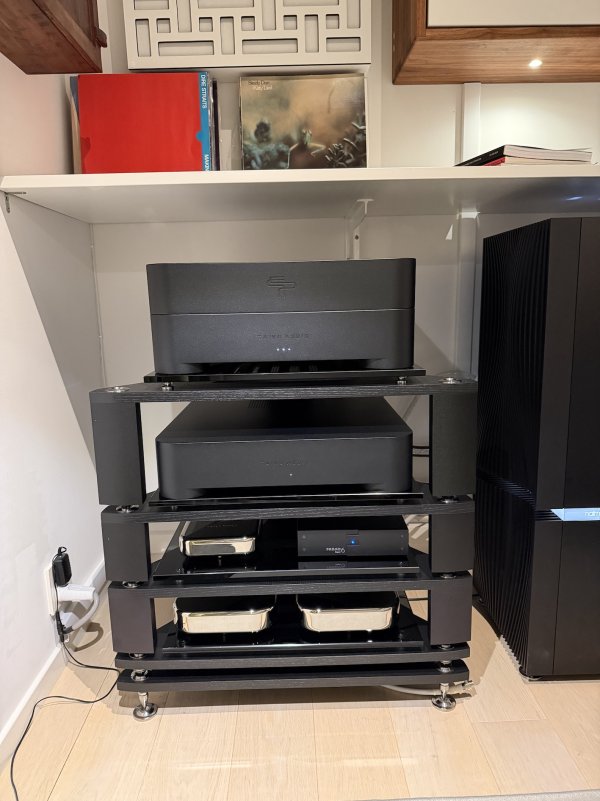
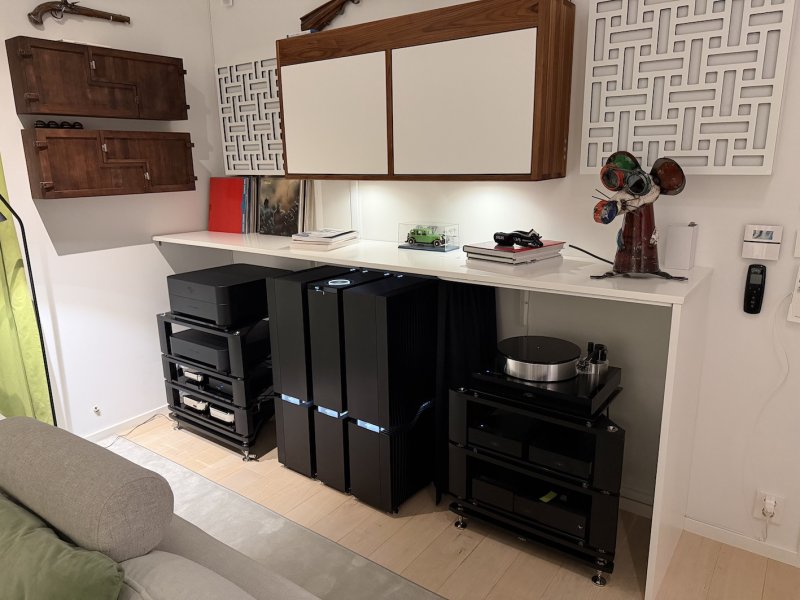
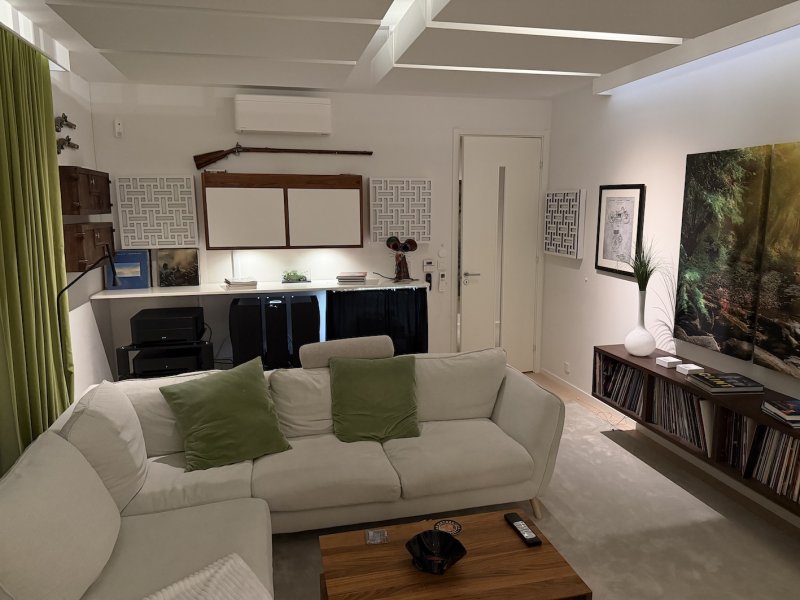
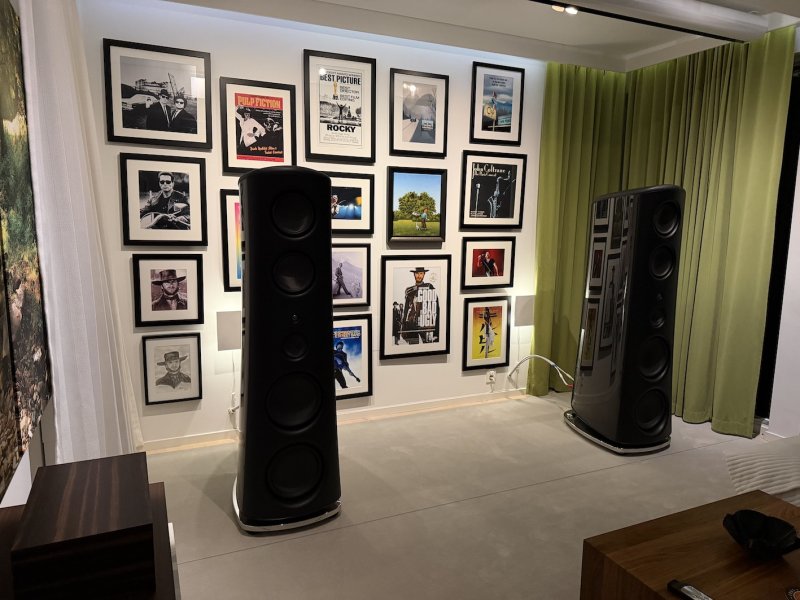
I've been lurking here since I ordered my Olympus I/O almost a year ago.
Now I want to share some thoughts and give some feedback on the Olympus I just received.

It's been very interesting to read about all the posts about Olympus sound quality!
The wait have been hard

It's also been frustrating to read about the production issues.

I founded and owned a production company for 31 years and I really understand all the difficulties that a fast growing company can go through.
Of course, these are positive issues that not every company will face, but for the end customer it can be a problem.

Hifi has been one of my main hobbies for about 40 years.
I've tested and owned many different components over the years.
I even worked in a really nice hifi shop in the early 90s.

Today I received the heavy black packages
I plugged it in and everything worked straight away.

I know about the burn-in period, but it sounds amazing from a cold start!
It sounds just “right”, very nuanced, nothing is exaggerated, I hear small quiet instruments that I have never heard before. (Yes, a cliché but still) The soundstage is incredible and the bass is solid, just right!
The wait was longer than I thought but it was worth it!

Keep up the good work team Taiko!

IMG_0310.jpegIMG_0312.jpegIMG_0320.jpegIMG_0317.jpeg
 
Hi,

I am having an issue of playing failure. I am currently using analog card and set a specific for recharge. It stopped playing when it changed to recharge mode automatically. I have to restart the server in order to play the music again. Please advise. Thanks.

Kin
It's always best to send your issue to support@taiko.com so it does not get missed here.
 
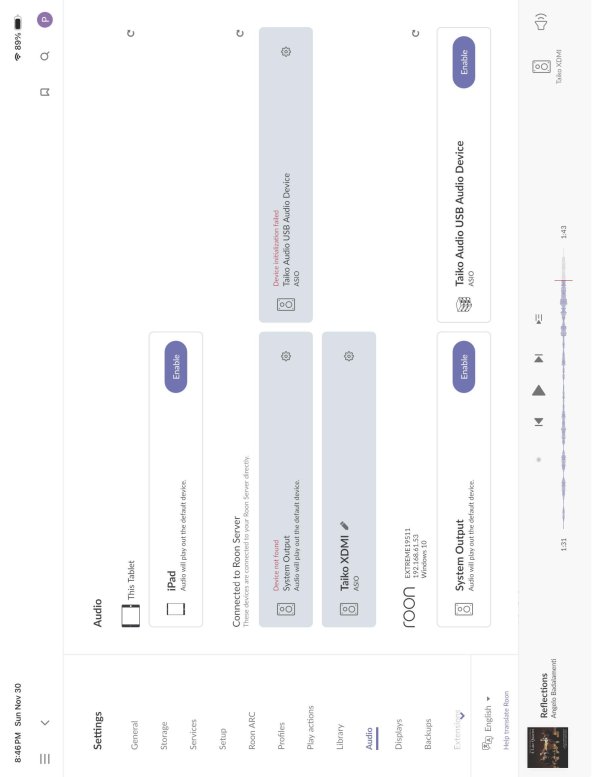
I have recently taken delivery of the Olympus + IO. IO was ordered with AES/ EBU to go to CH Precision C10 DAC. This was to replace a Taiko Extreme that was connected to same DAC via USB. So far, haven't been able to get the Olympus to work. Specifically, it worked for about 2 minutes (sounded good o_O), then the DAC returned clocking error and lost signal completely. I've tried clocking AES to the audio input, as suggested by CH Precision, but it too worked for a minute, and then same lost signal. I'm using the default Taiko XDMI ASIO source in Roon, with all the parameters at the default settings.

Separately, I tried plugging the Extreme USB back in and it works fine. I then tried USB from the Olympus, which does not work. I noticed on Roon the Taiko USB Audio Device returns a "Device Initialization failed" message. Roon screen below.

Anyway, I do have a support tag open...I think...but just wanted to see if other Olympus IO AES users (if any here) had the clock errors, and if there was some particular setup fix.
 

Attachments

  • Roon.jpg
    Roon.jpg
    218.9 KB · Views: 20
I have recently taken delivery of the Olympus + IO. IO was ordered with AES/ EBU to go to CH Precision C10 DAC. This was to replace a Taiko Extreme that was connected to same DAC via USB. So far, haven't been able to get the Olympus to work. Specifically, it worked for about 2 minutes (sounded good o_O), then the DAC returned clocking error and lost signal completely. I've tried clocking AES to the audio input, as suggested by CH Precision, but it too worked for a minute, and then same lost signal. I'm using the default Taiko XDMI ASIO source in Roon, with all the parameters at the default settings.

Separately, I tried plugging the Extreme USB back in and it works fine. I then tried USB from the Olympus, which does not work. I noticed on Roon the Taiko USB Audio Device returns a "Device Initialization failed" message. Roon screen below.

Anyway, I do have a support tag open...I think...but just wanted to see if other Olympus IO AES users (if any here) had the clock errors, and if there was some particular setup fix.

@vjayh - We are on the case. Thanks for posting. It will be great to hear from others using AES/EBU or S/PDIF to a CH Precision DAC.
 
  • Like
Reactions: ctydwn
I've been lurking here since I ordered my Olympus I/O almost a year ago.
Now I want to share some thoughts and give some feedback on the Olympus I just received.

It's been very interesting to read about all the posts about Olympus sound quality!
The wait have been hard

It's also been frustrating to read about the production issues.

I founded and owned a production company for 31 years and I really understand all the difficulties that a fast growing company can go through.
Of course, these are positive issues that not every company will face, but for the end customer it can be a problem.

Hifi has been one of my main hobbies for about 40 years.
I've tested and owned many different components over the years.
I even worked in a really nice hifi shop in the early 90s.

Today I received the heavy black packages
I plugged it in and everything worked straight away.

I know about the burn-in period, but it sounds amazing from a cold start!
It sounds just “right”, very nuanced, nothing is exaggerated, I hear small quiet instruments that I have never heard before. (Yes, a cliché but still) The soundstage is incredible and the bass is solid, just right!
The wait was longer than I thought but it was worth it!

Keep up the good work team Taiko!

View attachment 162364View attachment 162365View attachment 162366View attachment 162367
A fellow Naim user, nice. Statement looks lovely.

Arun
 
  • Like
Reactions: HasseL
I've been lurking here since I ordered my Olympus I/O almost a year ago.
Now I want to share some thoughts and give some feedback on the Olympus I just received.

It's been very interesting to read about all the posts about Olympus sound quality!
The wait have been hard

It's also been frustrating to read about the production issues.

I founded and owned a production company for 31 years and I really understand all the difficulties that a fast growing company can go through.
Of course, these are positive issues that not every company will face, but for the end customer it can be a problem.

Hifi has been one of my main hobbies for about 40 years.
I've tested and owned many different components over the years.
I even worked in a really nice hifi shop in the early 90s.

Today I received the heavy black packages
I plugged it in and everything worked straight away.

I know about the burn-in period, but it sounds amazing from a cold start!
It sounds just “right”, very nuanced, nothing is exaggerated, I hear small quiet instruments that I have never heard before. (Yes, a cliché but still) The soundstage is incredible and the bass is solid, just right!
The wait was longer than I thought but it was worth it!

Keep up the good work team Taiko!

View attachment 162364View attachment 162365View attachment 162366View attachment 162367

Gorgeous speakers ! :)

Cheers,

Thomas
 
  • Like
Reactions: audio42 and HasseL
Any news on V2?
My biological clock is ticking.
 
Brief update:

After being unsuccessful in using the AES output from the Olympus IO, the SPDIF so far works. So pivoting for now to a SPDIF. Here's hoping that Taiko may eventually do more XDMI partners for DACs like CH Precision.
 
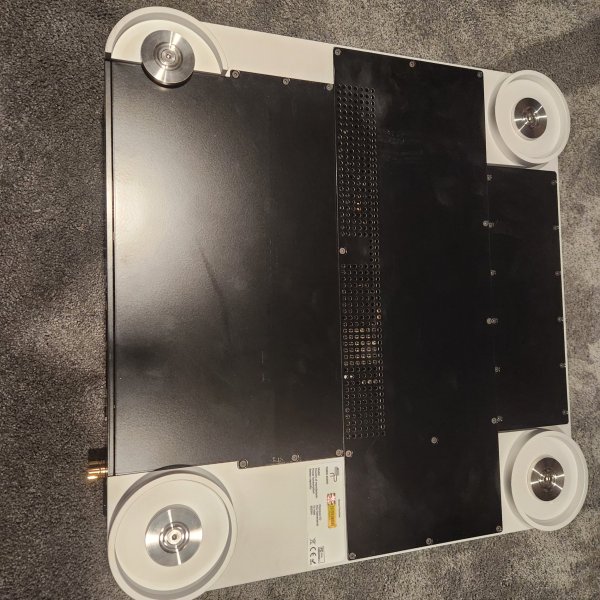
I have a question for anyone who's installed the Hifistay Absolute Point feet. Do the mounting plates get attached to the Olympus or I/O and the feet fit into them without being physically attached? 1000015165.jpg
 

About us

  • What’s Best Forum is THE forum for high end audio, product reviews, advice and sharing experiences on the best of everything else. This is THE place where audiophiles and audio companies discuss vintage, contemporary and new audio products, music servers, music streamers, computer audio, digital-to-analog converters, turntables, phono stages, cartridges, reel-to-reel tape machines, speakers, headphones and tube and solid-state amplification. Founded in 2010 What’s Best Forum invites intelligent and courteous people of all interests and backgrounds to describe and discuss the best of everything. From beginners to life-long hobbyists to industry professionals, we enjoy learning about new things and meeting new people, and participating in spirited debates.

Quick Navigation

User Menu

Steve Williams
Site Founder | Site Owner | Administrator
Ron Resnick
Site Owner | Administrator
Julian (The Fixer)
Website Build | Marketing Managersing