Add warmth / smoothness to my system recommendations

Charles001

Member
May 11, 2023
15
0
6
63
What are the most effective ways to add warmth or smoothness to the system? You could rank them as well and please provide examples of actual components you are using. Thank you.

1) Hybrid SS with tube buffer

2) Hybrid tube preamp stage with SS output stage

3) Tube preamp + SS amp

4) Tube amp

5) Class A SS amp with zero/low feedback

6) High bias Class A/AB with zero/low feedback
 
warmth was inherent in my speaker so I just added neutral components that didn't add any shifts in tone to my system. and took care of room/speaker coupling and now my system sounds warm with warm mixes and neutral with neutral mixes
 
What are the most effective ways to add warmth or smoothness to the system? You could rank them as well and please provide examples of actual components you are using. Thank you.

1) Hybrid SS with tube buffer

2) Hybrid tube preamp stage with SS output stage

3) Tube preamp + SS amp

4) Tube amp

5) Class A SS amp with zero/low feedback

6) High bias Class A/AB with zero/low feedback
Really good tube power amp with EL84,EL34,KT66,211,845 tubes works wonderful for warmth-but only with really good output transformers.
The cheapest I know of - vintage Leaks,Dynacos,Quads and Radfords.
 
Purity Audio used to make unity gain tube buffers that worked great for adding a touch of “tube warmth” to an high end system. They built a 300B based unit for me.


But, I’d go to more “fundamental” solutions first: speaker/chair placement, room treatments, warmer speakers, Bacch processing, etc.
 
  • Like
Reactions: DasguteOhr
Purity Audio used to make unity gain tube buffers that worked great for adding a touch of “tube warmth” to an high end system. They built a 300B based unit for me.


But, I’d go to more “fundamental” solutions first: speaker/chair placement, room treatments, warmer speakers, Bacch processing, etc.
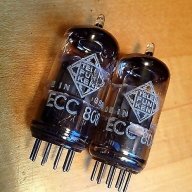
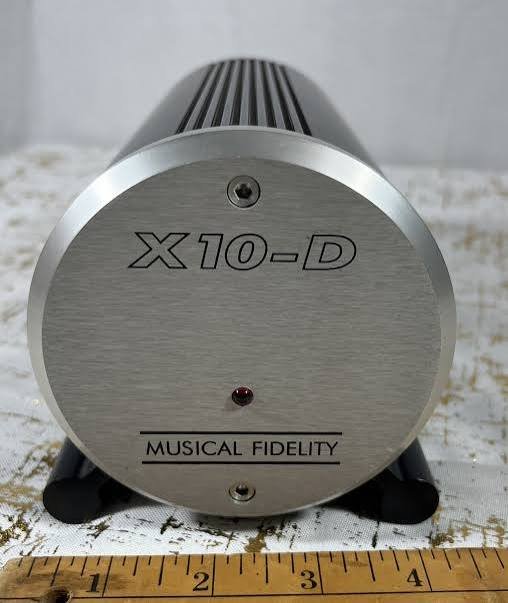
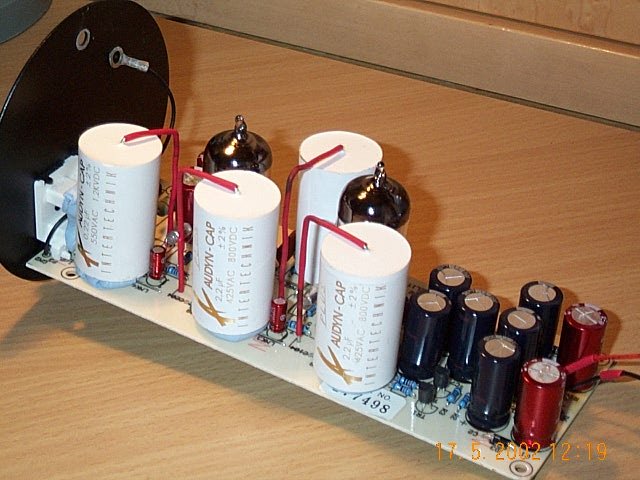
20 years back musical fidelity make x 10d tube buffer,that thing sounds really good when use with cd players. But the trick is wired that stereo buffer in mono one buffer for one chanel. I had arcam cd player 70 with two x 10d buffers that thing sounds better as much expensive transport/ dac solution really.


images (45).jpegDcp_4580.jpg
 
Like others have suggested, SPEAKERS.
I have found that if the speaker possesses an inherent brightness it is virtually impossible to completely eliminate it.
You can do a lot of changes and work on the system but you will be fighting an uphill battle.
 
Could be your room and speaker set up. Some room treatments can go a long way...
 
Change power cable(s)? Many times power cabls do affect how 'hardness' in the sound is preceived. A suitable power cable can make a big difference.

Any DIY in your blood? ;) An absolute huge advantgage of DIY is that you can tweek so many aspects of the sound system chain...
e.g. changing one's preamp output caps (selecting something that works for you) makes quite a big of a difference. But also things like interconnect cable, speaker cable thickness and speaker internal cable thickness affects the sound and ballance. E.g. I gathered that my speakers were a bit to hot at the high tweeter frequencies - so I changed my speakers internal tweeter cable to a bit thicker version, giving a bit more emphasis to the tweeter lower range. This was perfect for me.
 
Ideas.

Adjust speaker position, bass balance and toe in or out for tweeter. Cross tweeter axis well in front of listening position. Speaker rake perhaps. Change interconnect from source to Cardas Golden Cross/Reference or other similar IC.
 
Last edited:
I agree with lots of comments above. Without knowing OP’s system, room and frequency response, it’s really hard to give advice. Even if we are to directly answer the original question, what is the budget?

My additional thoughts are that sometimes systems don’t sound warm because there is too much electrical noise in the streamer or DAC. But understanding the speaker and room resonance and frequency response would be very helpful as a first step before going tube or class A.
 
Tube CD payer , tube amplifier and duelund tinned copper cable. I have a Sony cdp333esd modified Nos ,with tube output , I have changed all the wire inside of the coax speaker to duelund tinned copper 16awg and 12awg for speaker cable + the crossover caps from mundorf to Jupiter copper/ duelund silver foil bypass cap. The biggest impact were the cables.
 
Really good tube power amp with EL84,EL34,KT66,211,845 tubes works wonderful for warmth-but only with really good output transformers.

Some of those tubes are much warmer than the rest and for some peculiar reason there is a 211 in that list but a 300B is missing.

Imho cheaper transformers with copper wire on steel cores sound much warmer than amorhous or nano cores, especially when silver wire is involved.

Permalloy is definitely a champ of warmth as are paper coupling caps.
 
Here are my system details and speaker setup. I’m using a Volumio Rivo Plus, Topping D90 III Discrete / Laiv Micro DAC, Parasound A23, and Wharfedale Linton speakers. Cabling includes a DH Labs HDMI 2.1 cable for I²S, DH Labs Mirage USB, Mogami 2534 XLR, and DIY Belden 5T00UP 10-gauge speaker cable.

The speakers are pulled 4 ft (to the tweeter) from the front wall. They are 10.7 ft apart with a 10.7° toe-in. My main listening position (MLP) is about 9 ft from the tweeter plane, placing me roughly 20° off-axis line within the 30° 3dB horizontal dispersion plane. There are no constraints from the side walls, so I do not treat the first reflection points. The floor is carpeted, and I have diffusers on the front wall behind and between the speakers. I also have excellent distance from the MLP to the back wall. A large sofa is positioned at the MLP, and I do not notice any standing-wave or sound lingering issues. I also used Wiim dsp to measure the room frequency response and it turns out the SPL curve is reasonably flat within +- 3dB, with bass roll off around 40 hz.

The Linton’s bass is nimble and articulate—one of the primary reasons I like these speakers. The soundstage is huge with pin-point focus: wider than the speakers, as tall as the performer, and deep enough to create a “walk-in” presentation. That’s the second major reason I’m fond of the Lintons.

However, with some poorer recordings, the treble can sound a bit hot to my ears. That’s why I’m here to explore ideas to gently tame the treble so I can keep these speakers and continue enjoying them.

 
Last edited:
I agree with lots of comments above. Without knowing OP’s system, room and frequency response, it’s really hard to give advice. Even if we are to directly answer the original question, what is the budget?

My additional thoughts are that sometimes systems don’t sound warm because there is too much electrical noise in the streamer or DAC. But understanding the speaker and room resonance and frequency response would be very helpful as a first step before going tube or class A.
Please see my system and speaker setup information above. My budget for a possible tube preamp is around $2,000, with an absolute maximum of $2,500. Thank you.
 
Here are my system details and speaker setup. I’m using a Volumio Rivo Plus, Topping D90 III Discrete / Laiv Micro DAC, Parasound A23, and Wharfedale Linton speakers. Cabling includes a DH Labs HDMI 2.1 cable for I²S, DH Labs Mirage USB, Mogami 2534 XLR, and DIY Belden 5T00UP 10-gauge speaker cable.

The speakers are pulled 4 ft (to the tweeter) from the front wall. They are 10.7 ft apart with a 10.7° toe-in. My main listening position (MLP) is about 9 ft from the tweeter plane, placing me roughly 20° off-axis line within the 30° 3dB horizontal dispersion plane. There are no constraints from the side walls, so I do not treat the first reflection points. The floor is carpeted, and I have diffusers on the front wall behind and between the speakers. I also have excellent distance from the MLP to the back wall. A large sofa is positioned at the MLP, and I do not notice any standing-wave or sound lingering issues. I also used Wiim dsp to measure the room frequency response and it turns out the SPL curve is reasonably flat within +- 3dB, with bass roll off around 40 hz.

The Linton’s bass is nimble and articulate—one of the primary reasons I like these speakers. The soundstage is huge with pin-point focus: wider than the speakers, as tall as the performer, and deep enough to create a “walk-in” presentation. That’s the second major reason I’m fond of the Lintons.

However, with some poorer recordings, the treble can sound a bit hot to my ears. That’s why I’m here to explore ideas to gently tame the treble so I can keep these speakers and continue enjoying them.

well then the issue is the recording and unfortunately there are reordings like that and you have to live with it not gut your whole setup because of that
 
Ideas.

Adjust speaker position, bass balance and toe in or out for tweeter. Cross tweeter axis well in front of listening position. Speaker rake perhaps. Change interconnect from source to Cardas Golden Cross/Reference or other similar IC.
Pls see above my speaker setup. I try Cardas Clear IC before. It render noticeable smoother sound and as detailed as DH Labs but it seems to compromise the dynamic and bass response as compared to DHL cables I retained. I am currently trying out Veritas IC and I2s cable.
 
Purity Audio used to make unity gain tube buffers that worked great for adding a touch of “tube warmth” to an high end system. They built a 300B based unit for me.


But, I’d go to more “fundamental” solutions first: speaker/chair placement, room treatments, warmer speakers, Bacch processing, etc.
Please take a look at my speaker setup information above. I will explore Bacch soundstage enhancement and crosstalk cancellation. They have put forth a trial version for download. I went through the steps but coinccidently caught a virus. Not sure if related to that particular site. But it never occurs to me Bacch will help on timbre tuning.
 
warmth was inherent in my speaker so I just added neutral components that didn't add any shifts in tone to my system. and took care of room/speaker coupling and now my system sounds warm with warm mixes and neutral with neutral mixes
I had the Lintons in my main system and the Buchardt S400 II as my second system. The S400 II is inherently a warmer speaker, so I actually pair it with neutral components to prevent it from becoming too warm. The issue I’m discussing here is with my main system. As you can see from my description, the Lintons have a large soundstage and nimble bass—qualities that keep me from even considering replacing them. I just want to finally tame the treble a bit so I can continue enjoying them.
 
Lot of used Schitt Freya+ are available on Usaudiomart.at reasonable price.

 
Please see my system and speaker setup information above. My budget for a possible tube preamp is around $2,000, with an absolute maximum of $2,500. Thank you.
Okay. I understand your system much better now. it is a very revealing system. So I can see why it might sound bright at times.

The first thing that comes to mind would be to not toe in your speakers at all.
You can see the stereophile measurement of your/similar speaker:
Not toe-in your speaker (which would be the equivalent to toe-ing out by 10 degrees) would tame the treble slightly and give you a warmer sound. The main problem with this is that it would mess with your soundstage. So you’ll likely have to move both speakers closer to each other slightly to balance the soundstage and snap the centre image in place again. It might only take moving them a few inches. This would be the first thing I would try first.

Otherwise, I agree with your assessment that your best bet in your price range is a tube preamp but they’ll probably lower the resolution of your system slightly. I think Schitt Freya+ is a great suggestion. And you get 15 days to return it in the USA but you would have to pay $50 for restocking but that’s a small amount to pay for demoing.

However, I also wanted to point out that if I were to upgrade your system, I would suspect the primary contributor to brightness is the DAC (and maybe streamer). But not all DACs have good digital volume control and to replace your system with a different DAC/streamer and maybe an analog preamplifier can become quite costly.
 

About us

  • What’s Best Forum is THE forum for high end audio, product reviews, advice and sharing experiences on the best of everything else. This is THE place where audiophiles and audio companies discuss vintage, contemporary and new audio products, music servers, music streamers, computer audio, digital-to-analog converters, turntables, phono stages, cartridges, reel-to-reel tape machines, speakers, headphones and tube and solid-state amplification. Founded in 2010 What’s Best Forum invites intelligent and courteous people of all interests and backgrounds to describe and discuss the best of everything. From beginners to life-long hobbyists to industry professionals, we enjoy learning about new things and meeting new people, and participating in spirited debates.

Quick Navigation

User Menu

Steve Williams
Site Founder | Site Owner | Administrator
Ron Resnick
Site Owner | Administrator
Julian (The Fixer)
Website Build | Marketing Managersing